
Lieferung heute & morgen

Qualitätsgarantie

Willkommens-Angebote freischalten: KOSTENLOSE Lieferung | Bis zu 80 % RABATT | Kostenlose 30-Tage-JoyPlus-Testphase
App herunterladen
A multi-function cooker can combine a rice cooker, electric cooking pot, slow cooker, steamer and pressure cooker in one appliance. However, models vary significantly in capacity, controls and safety features. If you focus only on the number of programmes or a high wattage, you could end up with an appliance that is too small for everyday use, difficult to clean or unsuitable for certain cooking methods.
The stated capacity usually describes the volume of the pot, not the recommended amount you can actually fill it with. Soups, rice and dishes containing lots of liquid need room to boil and release steam. A 1.0- or 1.6-litre mini multi-cooker is therefore generally suitable for one person or a couple. For family meals and meal prep, models with a capacity of around 5.7 to 7.6 litres are more practical.
An electric cooking pot with two heat settings is suitable for noodles, soups, rice or an electric hot pot. However, it does not automatically replace a pressure cooker. Conversely, a 7-in-1 multi-cooker with pressure cooking, steaming and a keep-warm function requires more familiarisation and countertop space.
The key question is whether the programmes suit the way you cook. If you mainly prepare ramen, pasta and vegetables, you often do not need app control or a wide range of automatic programmes.
A non-stick coating can make cleaning easier, but it must not be used with metal utensils. With stainless-steel inner pots, robust materials and a dishwasher-safe design are important. Before buying, you should also check whether the lid, sealing ring, steaming insert and power cable can be removed.
Use your usual portion sizes as a guide:
Also check the external dimensions. A multi-cooker for a small kitchen should fit beneath wall cabinets and have sufficient clearance from walls and other appliances. For camping and travel, weight, cable storage and the power supply are more important than a large selection of programmes.
Wattage describes the appliance’s electrical power consumption and provides an indication of how quickly it heats up. On its own, however, it says little about cooking performance. A 300 W/600 W appliance with two settings may be sufficient for smaller portions. Models with 1,000 watts generally heat larger quantities more quickly, but naturally require more power.
Separate settings for gentle simmering and rapid boiling are useful. For a slow cooker, low, consistent heat is more important than the highest possible power output. A noodle cooker or hot pot, on the other hand, benefits from a fast heating phase.
Look for clear information about:
With pressure cookers, the lid and steam valve must only be used as described in the instructions. Electric pots without a pressure function must not be sealed afterwards or overfilled. During use, the appliance should be placed on a stable, heat-resistant and well-ventilated surface.
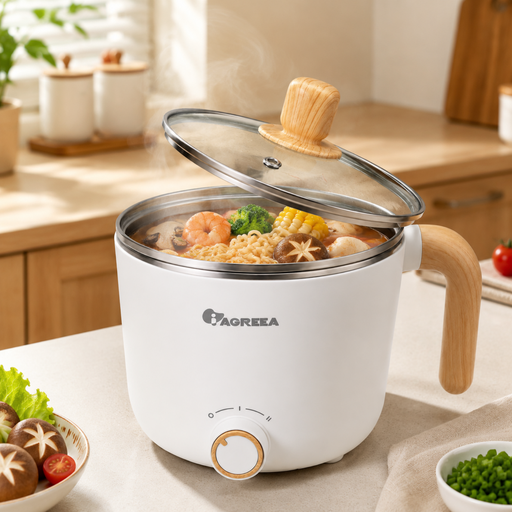
Why this product suits the profile: This compact electric cooking pot is designed for 1 to 2 people and is suitable for soups, rice, pasta, vegetables and small hot-pot meals.
The capacity and intended use are clearly designed for small portions. This means you do not end up buying an oversized appliance for simple everyday meals.
1.0-litre capacity, 300 W/600 W dual heat setting and stainless-steel inner pot.
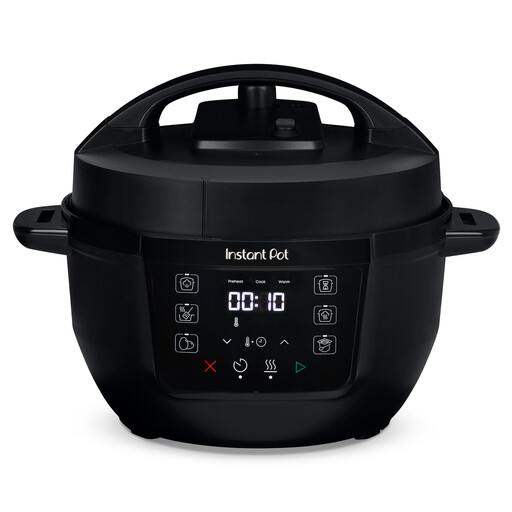
Why this product suits the profile: This model combines pressure cooking, slow cooking, searing, steaming, egg cooking, yoghurt making and keeping food warm in one appliance.
The pressure function has a lockable lid and a separate steam-release device. This makes the safety-critical operating steps clearer than with improvised solutions.
3.8-litre capacity and dishwasher-safe stainless-steel inner pot according to the product description.
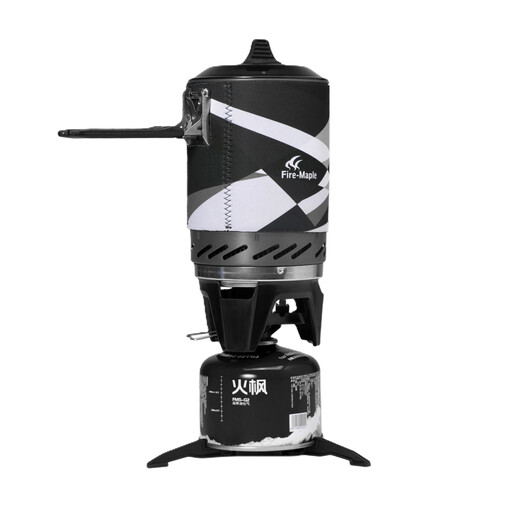
Why this product suits the profile: This nesting cooking system is designed for solo travel, hiking, camping, fishing and emergency equipment, and uses threaded gas canisters.
Its intended use as a portable cooker is clear. However, the required isobutane gas canister is not included and must be factored in separately.
1-litre pot, integrated design and hard-anodised aluminium with a heat-resistant coating.
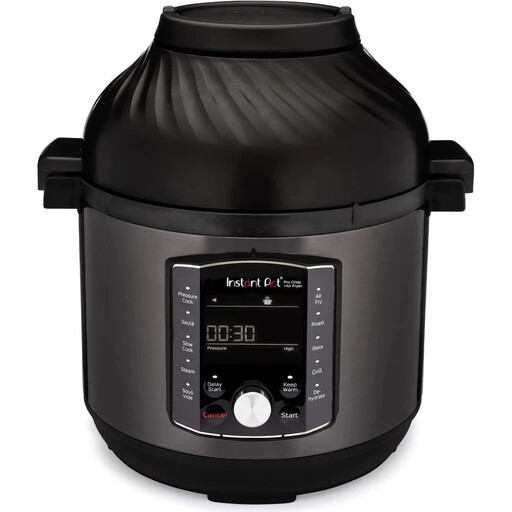
Why this product suits the profile: Two removable lids combine pressure cooking and air frying. The large capacity is suitable for family portions, batch cooking and small gatherings.
The two lids clearly separate the functions. This means you do not have to use a small pot for large quantities, and pressure cooking is not confused with open-lid air frying.
7.6-litre capacity, plus stainless-steel inner pot and dishwasher-safe components according to the product description.
We have put together a complete, regularly updated list of products that fully meet these strict selection criteria and the safety regulations applicable in the EU.
For single households and students, a 1.0- to 1.6-litre mini multi-cooker can be a practical choice if you often prepare small portions of rice, pasta, soup or porridge. A larger pressure-cooker model offers more programmes, but takes up more space and is mainly worthwhile for batch cooking.
Costs depend on the power rating, cooking time and frequency of use. A 600 W appliance running for 20 minutes uses 0.2 kilowatt-hours in theory. The actual cost depends on your personal electricity tariff. Faster programmes can reduce the running time, but a higher wattage does not automatically mean lower overall costs.
Its lifespan depends on the build quality, care and frequency of use. Clean the pot after every use, remove food residue from the lid and valve, and use only wooden or silicone utensils with non-stick coatings. With pressure-cooking models, the sealing ring and valve should be checked regularly according to the instructions and replaced if worn.