
Lieferung heute & morgen

Qualitätsgarantie

Willkommens-Angebote freischalten: KOSTENLOSE Lieferung | Bis zu 80 % RABATT | Kostenlose 30-Tage-JoyPlus-Testphase
App herunterladen
A multi-function cooker can prepare rice, pasta, soups, vegetables and small one-pot meals, making it a useful alternative to several small kitchen appliances. For singles, couples, students and small families, a compact appliance is often practical. However, a long list of product claims does not automatically lead to the right purchasing decision.
Typical pitfalls include:
For one person or a couple, 1.0 to 1.2 litres is often enough. A mini rice cooker or electric cooking pot of this size is suitable for smaller portions, pasta, porridge, vegetables and simple soups. Appliances with a capacity of 2 litres are often suitable for two to three people. For small families, 3 to 4 litres is more practical, while a 5.7-litre multi-cooker can accommodate larger portions and meal-prep dishes.
Important: The manufacturer’s stated capacity refers to the volume of the cooking pot and not necessarily the recommended quantity of food. With liquids and foods that foam, you should observe the markings inside the pot.
A basic rice cooker usually operates with just a few switches and a keep-warm function. A multi-function cooker may offer additional modes for porridge, steaming, slow cooking or sautéing. A pressure cooker or electric pressure cooker, on the other hand, requires a secure lid and steam system, as well as clear instructions for releasing the pressure.
The wattage indicates the electrical power, but it is not the sole measure of quality. Compact models with 300 or 600 watts are designed for smaller quantities. A 1,000-watt multi-cooker or a 4-litre rice cooker with 860 or 930 watts can heat larger quantities more quickly. Timers, preset functions and LED displays are particularly useful when preparing meals in advance.
A non-stick inner pot makes it easier to remove rice and reduces cleaning time. At the same time, you should only use suitable utensils to avoid damaging the surface. Removable, dishwasher-safe parts make maintenance easier.
A stainless-steel cooking pot is generally uncoated and versatile. With conventional cookware, you should check whether it is suitable for your hob. An induction-compatible pot set requires a suitable magnetic base. Statements such as “suitable for induction, gas, electric and ceramic hobs” are more specific than general claims about versatility.
If you often prepare pasta or vegetables, you could also choose a steamer or a tall pot with a steamer insert. An air fryer, on the other hand, specialises in hot-air cooking and does not replace a pot for rice or soups.
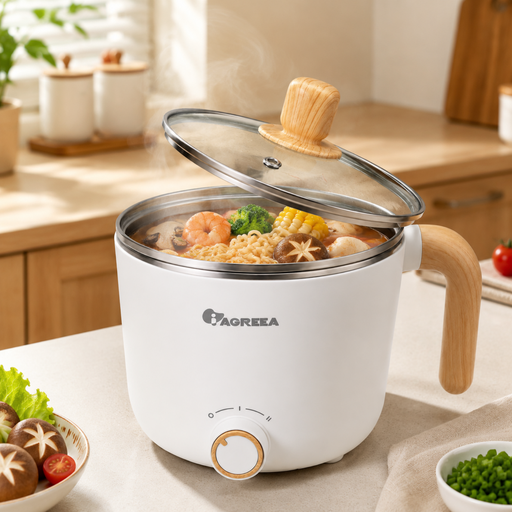
Why this product suits this profile: The compact mini cooker is designed for 1–2 people and is suitable for rice, pasta, soup, vegetables, eggs and small hot-pot meals.
The capacity and external dimensions are clearly stated. Two power levels of 300 and 600 watts avoid an unnecessarily complicated choice of programmes.
1.0-litre format, stainless-steel inner pot and glass lid. The compact design is ideal for small kitchens and student accommodation.
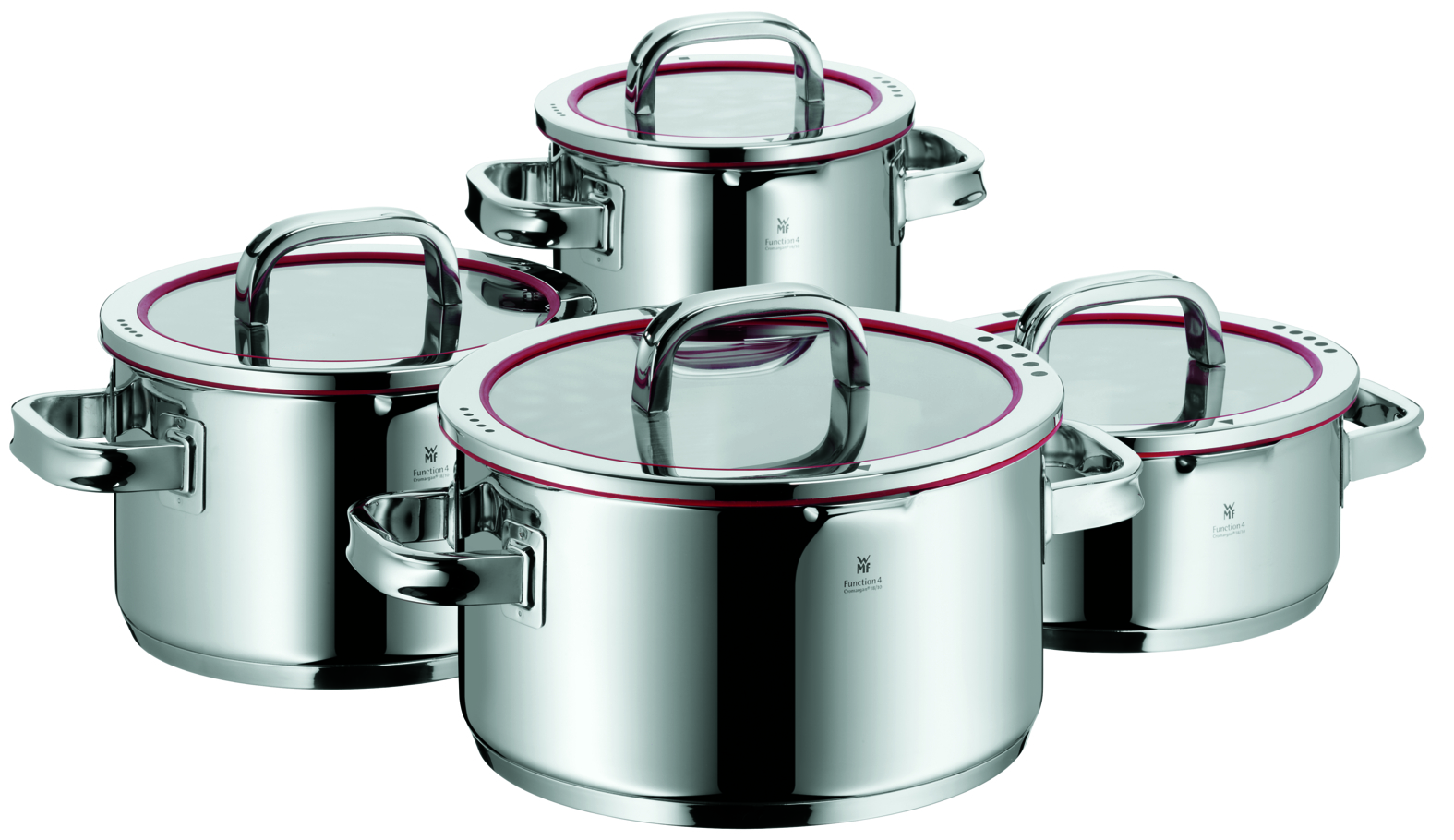
Why this product suits this profile: This four-piece cookware set includes several pot sizes and a frying pan, and is designed for induction, gas, electric and ceramic hobs.
The Cromargan 18/10 stainless-steel material, internal measurement markings and four marked pouring positions are specific, easy-to-verify features.
Three pots with capacities of 1.9, 3.4 and 5.7 litres, plus a 20-cm frying pan. The parts are dishwasher-safe.
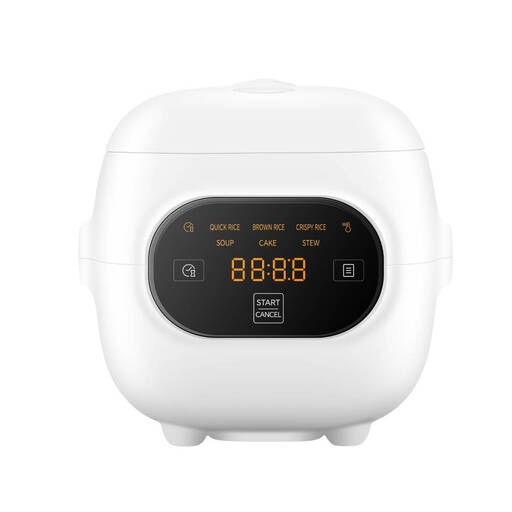
Why this product suits this profile: With a capacity of 1.2 litres, six one-touch programmes, a 24-hour preset function and a keep-warm function, this appliance is designed for singles and couples.
The functions are clearly labelled on the control panel. The removable inner pot, described by the product information as dishwasher-safe, makes cleaning easier.
The stated features include an LED display, removable lid, steaming insert, measuring cup and rice paddle.
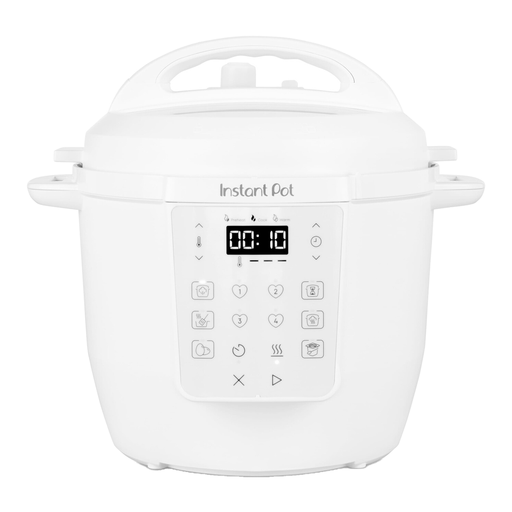
Why this product suits this profile: The 5.7-litre multi-cooker is designed for households of up to six people and combines pressure cooking, slow cooking, sautéing, steaming, yoghurt making and keeping food warm.
The range of functions is clearly described. For pressure cooking, the product specifies a locking lid, release switch and several safety features.
5.7-litre capacity, 1,000 watts and a stainless-steel inner pot. According to the product description, the lid and pot are dishwasher-safe.
We have put together a complete, regularly updated list of products that fully meet these strict selection criteria and the safety regulations applicable in the EU.
For two to three people, a 2-litre rice cooker with a ceramic coating, seven cooking functions, a timer and a steaming insert can be a suitable middle-ground option. A 3-litre rice cooker with a keep-warm function provides more capacity without requiring as much space as a large multi-cooker. For rice and porridge, the inner pot should never be used on a gas hob unless the manufacturer expressly permits it.
If you mainly prepare noodles, vegetables or individual hot-pot dishes, a 1.2-litre multi-pot with 500- and 1,000-watt settings offers a flexible solution. For low-fat hot-air cooking, however, a 6.5-litre air fryer with a stainless-steel basket, viewing window and mechanical temperature control up to 200 °C is more suitable. It does, however, require sufficient clearance for air circulation and does not replace a steamer or rice cooker.
For singles and couples, 1 to 2 litres is usually sufficient. Three to four litres is suitable for small families. If you regularly batch-cook or prepare several portions, plan for 5 litres or more. The maximum fill level inside the pot is more important than the capacity stated in the advertising.
Its lifespan depends on use, cleaning, the coating and storage. After each use, the inner pot, lid and steam area should be cleaned according to the instructions. Coated pots should not be used with metal utensils. With pressure-cooking functions, seals and valves should be checked regularly for dirt and wear.
Consumption depends on the power rating, operating time, programme and quantity of food. A 300-watt mini cooker uses less electrical power over the same period than a 1,000-watt appliance, although it will often heat up more slowly. To calculate running costs, multiply the wattage by the operating time. Keep-warm functions should only remain switched on for as long as they are actually needed.