
Lieferung heute & morgen

Qualitätsgarantie

Willkommens-Angebote freischalten: KOSTENLOSE Lieferung | Bis zu 80 % RABATT | Kostenlose 30-Tage-JoyPlus-Testphase
App herunterladen
Multicolour filament can give a model a gradient or two-colour effect without changing filament during printing. At the same time, product descriptions such as “Rainbow”, “Silk”, “Matte” or “High Speed” can quickly lead to the wrong purchase. It is not just the colour names that matter, but also the diameter, material type, spool weight, surface finish and your own printer’s settings.
With Rainbow PLA filament and gradient filament, the colour changes along the length of the filament strand. How many colours are visible on a model depends on its size, layer height and material consumption. A small object may therefore appear predominantly in just one colour direction. If you expect clearly separated colour areas, you should consider Dual-Color PLA filament or Tri-Color PLA filament instead.
Glossy PLA filament reflects light and can make decorative models stand out. However, a Silk finish is more sensitive to printing speed and temperature. Matte PLA filament scatters light, which can make layer lines less noticeable; the colours will appear less glossy as a result. The terms “Silk” and “Matte” do not replace information about the recommended printing parameters.
Filament for FDM 3D printers with a 1.75 mm diameter is generally suitable for printers that use this standard. Even so, users should check the permitted nozzle diameter, extruder path, printing temperature and maximum spool size. With Bowden extruders or a narrow filament path, softer material may require more careful guidance.
For 1.75 mm multicolour PLA 3D printer filament, the printer must explicitly support 1.75 mm filament. PLA can be used with many open-frame FDM printers and is typically used for decoration, figures, prototypes and modelling projects. The specific nozzle and bed temperatures depend on the manufacturer’s instructions and the printing environment.
A vernier calliper can provide a rough check when the spool has been opened. In practice, consistent feeding and a neatly wound spool are also important. Tangling is often caused by a loose loop of filament rather than by the colour gradient itself.
1 kg PLA filament is easier to budget for larger models, multiple figures or frequent printing jobs than smaller spools. The actual net weight should be taken from the product page, as the weight of the spool is not included in the filament weight. A smaller quantity may be suitable for individual test objects, while frequent users will need to change spools less often with a 1 kg spool.
PLA absorbs moisture from the surrounding environment during prolonged storage. Possible consequences include stringing, uneven extrusion, bubbles or a rough surface. The spool should therefore be stored in a sealed bag with desiccant after opening.
According to the manufacturer’s information provided, nozzle temperatures of 195 to 220 °C and a bed temperature of around 60 °C in an open-frame printer can be used as a starting point for Silk PLA. These values are not universal printing instructions. A small temperature and speed test can help you adapt the profile to your printer, nozzle and model. With high-speed filament, it is particularly important to check whether your printer can handle the required flow rate.
The following recommendations group the products by application and the available product information. Before buying, check the specifications and delivery details currently stated on the product page.
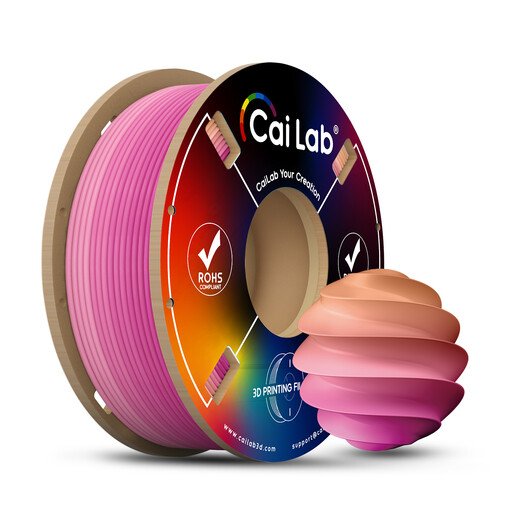
Why this product suits this profile: Rainbow gradient filament provides a colour transition from a single spool, making it suitable for first decorative models, figures and craft projects.
The colour description indicates a gradient, not guaranteed separate colour zones. This makes it easier to plan the expected appearance realistically.
Rainbow colour gradient; PLA material for FDM 3D printers.
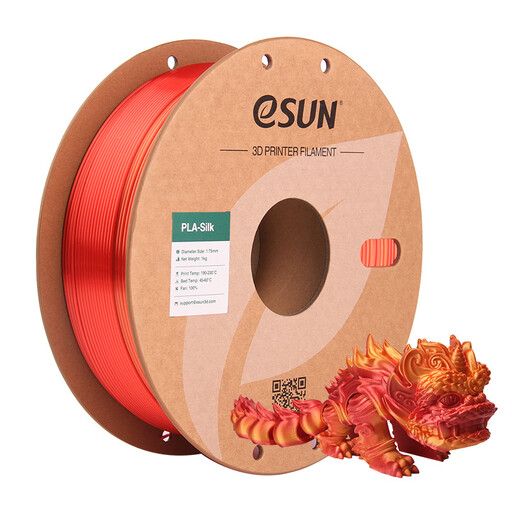
Why this product suits this profile: The combination of 1.75 mm, 1 kg, rainbow colours and a Silk texture is aimed at users who want to combine decorative surfaces with longer printing jobs.
The product description specifies a vacuum-sealed 1 kg spool with desiccant and a formulation designed for high printing speeds. This does not replace testing your own printing profile.
Silk finish; 1.75 mm and 1 kg according to the product description; designed for many FDM printers.
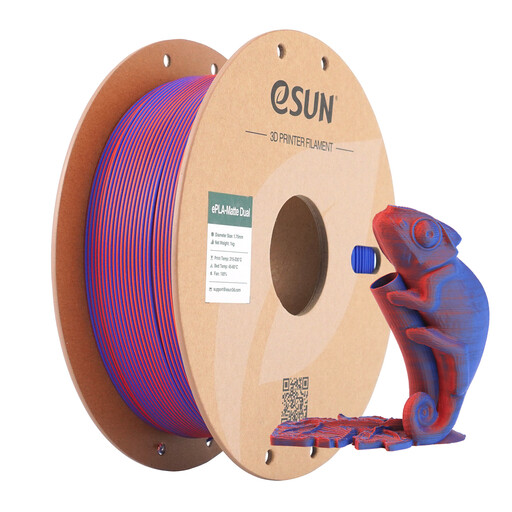
Why this product suits this profile: Two shades and a matte, frosted surface are well suited to modelling, props and objects where less shine is preferred.
The product description points to a softer composition. It is therefore advisable not to set the extruder path too tightly and to carry out an initial test print.
Dual-colour effect; matte surface; 1.75 mm and 1 kg according to the product name.
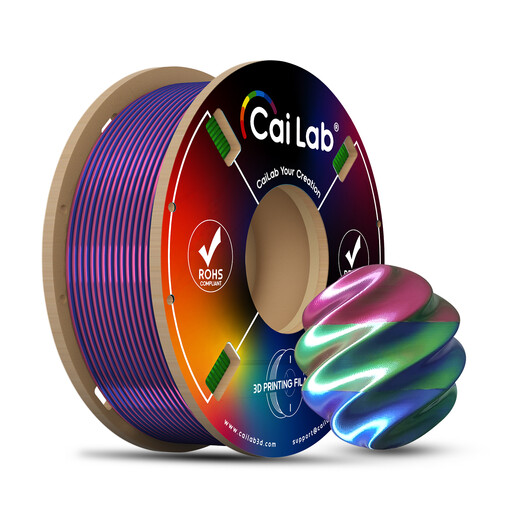
Why this product suits this profile: The tri-colour combination of red, green and blue is suitable for decorative one-off pieces, gifts and artistic models with a glossy effect.
The manufacturer’s information gives a temperature range of 195 to 220 °C for PLA Silk and recommends test prints. This means the colour effect is not left dependent on untested default settings.
Tri-colour combination; Silk texture; manufacturer’s guidance on storage, drying and printing settings.
We have put together a complete, regularly updated list of products that fully meet these strict selection criteria and the safety regulations applicable in the EU.
PEI and glass plates are commonly used for PLA. With glass, an adhesive may be helpful; with PEI, no additional product is often required, depending on the surface. Actual adhesion depends on the condition of the bed, temperature, first layer and model geometry.
A fixed shelf life cannot be stated in general terms without information from the manufacturer. When kept dry, sealed and protected from heat, PLA may remain usable for longer. If you notice stringing, cracking during extrusion or bubbles, drying in accordance with the manufacturer’s instructions may be necessary.
Electricity costs primarily depend on printing time, heated bed, nozzle temperature and printer power consumption. Special multicolour finishes may lead to additional material use because of required test prints or adjusted speeds. A 1 kg spool, on the other hand, often reduces the need for frequent spool changes on larger projects.