For cooks who prepare ingredients in advance
If you prepare ingredients and want to cook them later, plan their storage separately from when cooking will actually begin. A delay-start setting alone does not address the need for refrigeration.


If you regularly cook whole beetroot, a multicooker with a clearly specified pressure-cooking function is worth considering; for peeled, diced beetroot, steaming may be enough. Choose based on portion size, cleaning requirements and the other dishes you plan to cook. A delay-start setting does not replace the refrigeration needed for prepared perishable ingredients.
If you prepare ingredients and want to cook them later, plan their storage separately from when cooking will actually begin. A delay-start setting alone does not address the need for refrigeration.
If you regularly cook whole beetroot, compare the pressure-cooking function, the right steaming accessory and the usable capacity with the amount you usually make.
If you peel and dice the beetroot first, a multicooker with a steaming function may be enough, as long as you do not need pressure cooking for other dishes.
First decide whether you will mostly pressure-cook whole beetroot or steam prepared cubes; plan how to store perishable ingredients separately from the timer.
| Priority | What to check before buying | Who should pay particular attention? |
|---|---|---|
| Safe timing | Check how the ingredients should be stored and read the instructions for the delay-start function. The German Federal Institute for Risk Assessment recommends storing perishable foods in a fridge at 2 °C to no more than 7 °C. | If I prepare ingredients but want to cook them later, I need to plan refrigeration separately from when cooking starts. Around 33% of consumers make safe timing their top buying priority. |
| Cooking whole beetroot | Look for a clearly specified pressure-cooking function, a suitable steaming accessory and instructions for the size of beetroot you plan to cook. Allow for the time it takes to build and release pressure, as well as cleaning. | If I regularly cook whole beetroot, I want a suitable cooking method and enough capacity. Around 27% of consumers prioritise cooking whole beetroot. |
| Steaming diced beetroot | Check for a steam programme and a suitable basket. The German Federal Centre for Nutrition says that peeled, diced beetroot cooks faster than whole beetroot in salted water; this does not provide a fixed cooking time for a particular appliance. | If I am going to peel and dice the beetroot anyway, I want to cook it without paying for an unnecessary extra function. Around 20% of consumers mainly prioritise diced beetroot and steaming. |
| Capacity and cleaning | Compare usable capacity rather than just the stated capacity: Rommelsbacher lists 4 l of usable capacity for the MD 1000, which has a 6-l pot; Tefal lists 3,2 l of usable capacity for the CY754830, which has a 5,0 l capacity. Also check how the parts are cleaned and whether replacement parts are available. | If I am cooking several portions, I want enough usable capacity and straightforward cleaning. Around 20% of consumers make capacity and cleaning their top buying priorities. |
A timer does not chill perishable ingredients. They may need to be kept properly chilled before cooking begins.
Plan how to store the specific ingredients separately from the cooking programme, and follow the storage guidance.
For the pressure-cooking models from Rommelsbacher and Tefal, the stated usable capacity is lower than the overall capacity.
Compare the amount you plan to cook with the stated usable capacity and the fill markings in the instruction manual.
The Russell Hobbs Cook@Home 21850-56 programme list includes steaming; pressure cooking is clearly specified for the Rommelsbacher MD 1000 and Tefal CY754830.
Decide which cooking method you need first, then check the functions of the specific model.
The MD 1000 combines pressure cooking and steaming, making it a possible choice for whole beetroot and other pressure-cooked dishes, provided its usable capacity suits your portion size.
The Turbo Cuisine CY754830 offers pressure cooking and steaming; its stated usable capacity can help you decide whether it suits your portion size.
The Cook@Home Multicooker 21850-56 may suit prepared portions of vegetables if steaming is enough and you do not need pressure cooking.
The Pro-Crisp range may be a good fit if you are planning air-fried dishes as well as beetroot.
These appliances offer functions for steaming prepared portions of vegetables; selected models also have a pressure-cooking function.
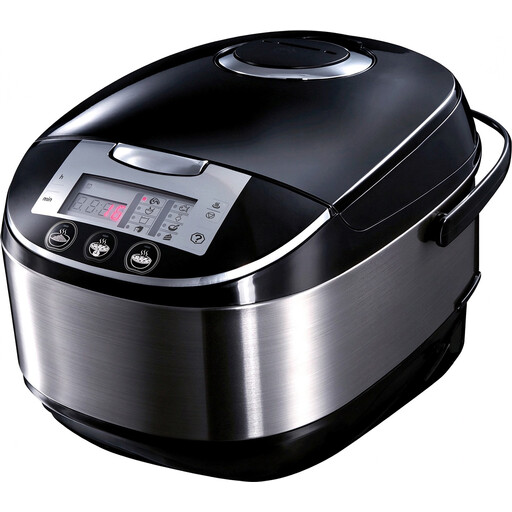 No image available
A steamed vegetables programme is listed for prepared beetroot cubes.
The title lists a 5-l pot and 900 W. The description lists a 24-hour delay timer; this does not replace refrigeration for perishable ingredients.
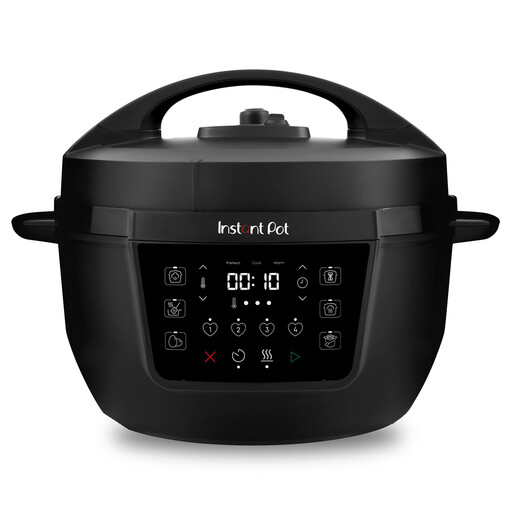 No image available
The listed pressure-cooking and steaming functions are options for whole beetroot or prepared portions.
The product details list a capacity of 7,1 l and up to 8 portions. A dishwasher-safe lid is also listed.
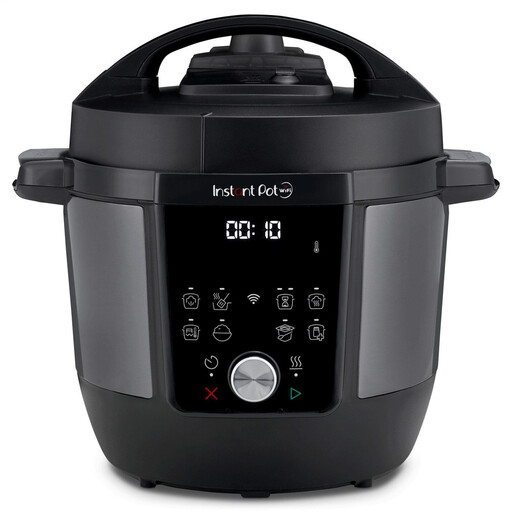 No image available
If you want to pressure-cook whole beetroot or steam prepared portions, both functions are listed in the product details.
The title lists a capacity of 5,7 l. The description lists dishwasher-safe parts.
A delay-start setting alone does not show that this is safe. The German Federal Institute for Risk Assessment recommends storing perishable ingredients in a fridge at 2 °C to no more than 7 °C. The stated timer duration is not a safe period for leaving food at room temperature.
Clean the parts that come into contact with food according to the instructions for your model. For a pressure cooker, check the lid, valve and seal, and use the parts designed for that appliance. Wash the beetroot thoroughly under running water before cooking.
No. According to information from Your Europe, when you buy from a trader in the EU, you generally have a legal guarantee of at least two years from the date you receive the goods. Any manufacturer’s guarantee offered is separate; check its terms for the specific model.
No. According to information from Your Europe, the manufacturer uses the CE mark to declare conformity when applicable EU rules require the product to carry it. It is not an approval from a central EU authority.
For longer storage, the German Federal Institute for Risk Assessment recommends cooling hot food quickly to below 7 °C. If food is kept hot instead, the BfR recommends at least 60 °C throughout; a display for the keep-warm function does not confirm the temperature of the entire dish.