
Lieferung heute & morgen

Qualitätsgarantie

Willkommens-Angebote freischalten: KOSTENLOSE Lieferung | Bis zu 80 % RABATT | Kostenlose 30-Tage-JoyPlus-Testphase
App herunterladen
A multicooker can prepare rice, soups, stews, pasta and steamed dishes in a single appliance. However, not every model is right for every household. If you focus only on the number of programmes or a high wattage, you could end up buying an appliance that is too small, difficult to clean or unsuitable for the way you intend to use it.
Descriptions such as “10-in-1” or “multifunction cooker” may sound impressive. What matters, however, is which functions you will actually use. A rice cooker with a steamer is mainly suitable for rice, grains and vegetables. An electric cooking pot with two heat settings is practical for pasta, soups and simple one-pot dishes. A pressure cooker, on the other hand, cooks under pressure and requires different safety and operating procedures.
Before buying, check:
A 6-litre container does not automatically provide 6 litres of usable cooking space. The Cecotec model has a stated internal capacity of 6 litres, but according to the product description, its usable filling capacity is 5 litres. In addition, many appliances must not be filled right to the brim with liquids.
As a rough guide:
A non-stick cooking pot makes it easier to remove rice, pasta or stews. However, metal utensils, abrasive sponges and harsh cleaning products can damage the surface. Wooden or silicone utensils should be used exclusively with coated inner pots. The manufacturer’s information on the maximum temperature and use in the oven is also important. For example, the inner pot of the Instant Pot Superior must not be used on a hob or in the oven; according to the product description, temperatures above 175 °C may damage the coating.
The external dimensions determine whether the electric multicooker can remain permanently on your worktop. A compact multicooker with a capacity of 1.6 litres fits into small kitchens, student flats or offices. For families, capacities of 5 to 7 litres are more practical, but they require more storage space.
Also consider:
Wattage describes the appliance’s electrical power consumption, not simply its cooking speed. A 600 W appliance may be sufficient for small quantities, while a 1,000 to 1,500 W model heats larger volumes of liquid more quickly. For slow cooking, a low heat setting is more important than maximum power.
An electric cooking pot with two power settings is suitable for simple tasks. Models with continuously variable temperature control allow more precise adjustment when searing, braising or keeping food warm. Also check whether the temperature can be set in degrees Celsius or only through terms such as “low”, “medium” and “high”.
Useful features include:
With an appliance featuring a pressure function, such as a pressure cooker or pressure multicooker, the locking mechanism, sealing ring and pressure-release system must be checked regularly. The lid must not be opened until the pressure has been fully released. A traditional hot pot or steamer without a pressure function is easier to use, but hot surfaces and steam must still be taken into account.

Why this product suits this profile: The 1.6-litre pot with 600 W of power is designed for individual portions, ramen, soups and simple one-pot dishes. Its compact dimensions make it suitable for student flats, offices and small kitchens.
The clearly limited capacity prevents unrealistic expectations about family-sized portions. Automatic switch-off and boil-dry protection are listed as safety features.
Compact design, 600 W of power, non-stick inner surface and simple operation with a single control dial.
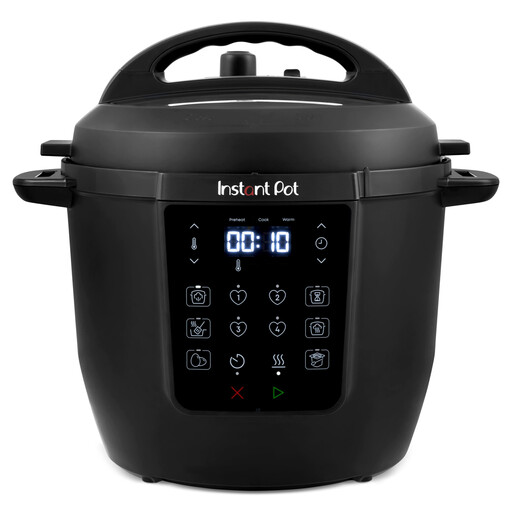
Why this product suits this profile: According to the product description, the 7-in-1 functionality includes pressure cooking, slow cooking, steaming, searing and keeping food warm. The 5.7-litre format is designed for several people.
Several cooking methods are combined in one appliance. Listed safety features include a locking lid, overheating protection and a controlled steam-release function.
5.7 litres, several automatic programmes, stainless steel inner pot and dishwasher-safe parts according to the supplier’s information.
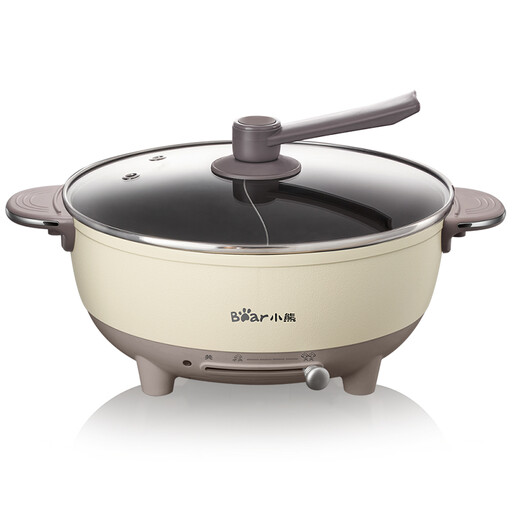
Why this product suits this profile: The 6-litre hot pot features a divided interior, continuously variable temperature control from 0 to 210 °C and 1,500 W of power. This makes it useful for shared meals and different ingredients in one appliance.
The separate compartments help prevent ingredients and flavours from mixing. Boil-dry protection and a detachable power cable are listed as practical safety and storage features.
6-litre capacity, two cooking areas, continuously variable temperature control and a glass lid.
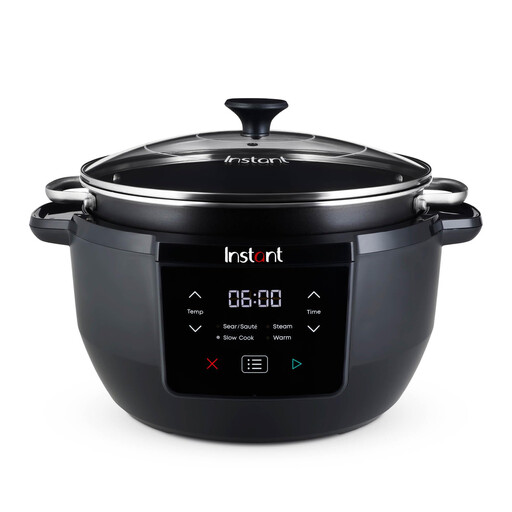
Why this product suits this profile: Its stated capacity of 7.1 litres is designed for larger meals and up to ten portions. Slow cooking, steaming, searing and keeping food warm cover typical family dishes.
The large capacity reduces the risk of choosing an appliance that is too small for family-sized portions. At the same time, the manufacturer points out the temperature limits of the coated inner pot.
7.1 litres, EasyGrab handles, adjustable time and temperature, and dishwasher-safe components according to the product description.
We have put together a complete, regularly updated list of products that fully meet these strict selection criteria and the safety regulations applicable in the EU.
Running costs depend on power, operating time and your electricity tariff. The simple calculation is:
Power in kilowatts × operating time in hours × electricity price per kilowatt-hour = electricity costs
A 1,000 W appliance uses 1 kWh after one hour of operation. A 600 W model uses 0.6 kWh over the same period. Automatic switch-off and keep-warm functions can affect consumption. It is therefore worth checking how long you actually need to keep a meal warm.
For a longer service life, the inner pot and lid should be cleaned after every use in accordance with the instructions. The electrical base must not be immersed in water. Steam valves, seals and coatings should be checked regularly for residue, cracks or peeling.
A rice cooker is primarily designed for rice and often also for porridge or steaming. Depending on the model, a multicooker offers additional cooking methods such as braising, searing, slow cooking, keeping food warm or pressure cooking. If you mainly cook rice, a rice cooker may be sufficient; for a wider variety of dishes, a multifunction cooker is more flexible.
For two people, 2 to 3.5 litres is often sufficient. A multicooker for families with a capacity of 4 to 6 litres offers more room for several portions. For meal prep or regular entertaining, 6 to 7 litres may be useful. Pay attention to the usable filling capacity, not just the manufacturer’s stated capacity.
Its service life depends on use, care, the coating and the availability of replacement parts. Damaged seals, lids or inner pots should only be replaced with suitable original or approved parts. If there is visible damage to the cable, plug, housing or non-stick coating, the appliance should no longer be used.