Cooking for a group
If you’re preparing one batch of curry for everyone, check that the meat, sauce and vegetables will all fit within the permitted fill level before choosing a multicooker.


For a tight schedule, choose a multicooker that can sear and pressure cook. If the group wants to follow the cooking process and adjust the seasoning together, braising or slow cooking is a better fit. Plan your batch around the permitted usable capacity, and allow extra time for preheating and full pressure release: Tefal lists 3.2 l usable capacity from a 5.0 l total capacity for the CY7548, while the Instant Pot Duo manual says you must wait for the pressure to release fully before opening the lid.
If you’re preparing one batch of curry for everyone, check that the meat, sauce and vegetables will all fit within the permitted fill level before choosing a multicooker.
If the meal needs to fit into a set class timetable, look for a model that can sear and pressure cook in the same appliance. Allow for preheating and pressure release as well as cooking time.
If the group wants to keep an eye on how the curry is cooking and adjust the seasoning together, an accessible braising process matters more than the shortest possible pressure-cooking time.
When choosing a multicooker for a lamb curry class, the most important features depend on whether you’re prioritising a single batch for the group, a tight schedule or a cooking process everyone can follow.
| What matters | What to check | Who is it important to? |
|---|---|---|
| Usable capacity | Check the usable capacity and fill markings of the specific model against your recipe. Tefal lists 3.2 l usable capacity from a 5.0 l total capacity for the CY7548. | If I want to cook the meat, sauce and vegetables for everyone in one batch, the recipe must fit within the permitted fill level. For around 33% of consumers, portion capacity is the top priority. |
| Cooking time within the class schedule | Check whether the model can sear and pressure cook, and allow extra time for preheating and full pressure release. The Instant Pot Duo manual says you must wait for the pressure to release fully before opening the lid. | If the class is on a tight schedule, I want to combine steps in the appliance without overlooking the waiting time. For around 27% of consumers, the class timetable is the main concern. |
| Following the cooking process together | Check the manual for the specific model to see whether it has a braising or slow-cook function; this does not automatically mean it can pressure cook. | If the group is going to check how the curry is cooking and adjust the seasoning along the way, I need a method that keeps the curry accessible. Around 20% of consumers put demonstrations first. |
| Cleaning and serving | Check the cleaning instructions for the pot and lid, and how to use the keep-warm function. The German Federal Institute for Risk Assessment recommends keeping heated food at a temperature of at least 60 °C throughout until it is served. | If there’s cleaning to do after cooking or you need to wait before serving, I want to plan these steps safely and practically. For around 20% of consumers, handling and serving come first. |
The pot’s total capacity and its permitted usable capacity are not the same. Tefal lists 5.0 l total capacity and 3.2 l usable capacity for the CY7548; the manual also limits how full the pot can be when pressure cooking.
Check your recipe against the fill markings and the instructions for the exact model you’ve chosen.
If the permitted capacity isn’t enough for a class-sized batch, you may need to cook in multiple batches, adding to the class time.
Preheating and pressure release are in addition to the set cooking time. You must wait for the pressure to release fully before opening the lid, as stated in the Instant Pot Duo manual.
Allow separate time for searing, preheating, pressure release and seasoning the curry after opening the lid, and follow the instructions for your chosen model.
Make sure your class schedule includes the time needed for pressure build-up and full pressure release.
The label ‘Keep Warm’ alone doesn’t tell you what temperature the curry reaches throughout. The German Federal Institute for Risk Assessment recommends keeping heated food at a temperature of at least 60 °C throughout until it is served.
If you’ll be serving the curry later, check its temperature. For larger quantities that need to be chilled, the German Federal Institute for Risk Assessment recommends using several shallow containers so the food cools quickly.
According to Rommelsbacher, the MD 1000 MeinHans can sear, pressure cook, braise and slow cook. The manufacturer lists 4 l usable capacity in a 6-l pot.
For the Turbo Cuisine CY7548, Tefal lists searing, pressure cooking and slow cooking, as well as 3.2 l usable capacity from a 5.0 l total capacity.
The Instant Pot Duo manual covers pressure cooking and safety guidance. A manual for a 5.7-l multicooker also lists Sauté, Slow Cook and Keep Warm.
Krups says the Cook4Me Touch CZ9128 offers guided recipes on screen, searing and pressure cooking, with 4.0 l usable capacity from a 6.0 l total capacity.
COSORI Germany offers a 5.7 l electric pressure cooker with several cooking programmes.
The products listed include multicookers for searing and pressure cooking, as well as appliances for slow cooking. For your class, the key is to choose a cooking method that suits your needs and a model with enough permitted capacity.
 No image available
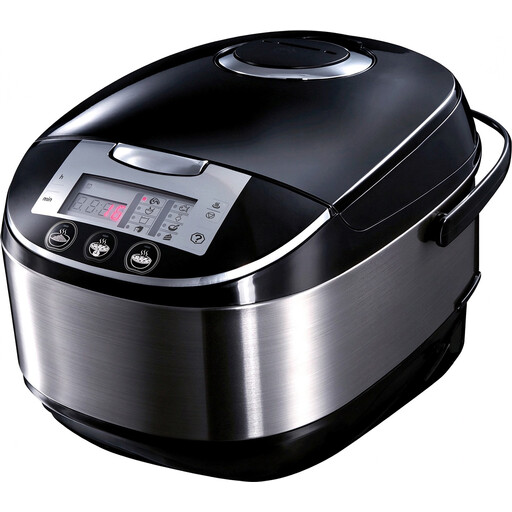
The product description lists slow cooking and stews, making this a possible choice for a class focused on slower cooking methods.
The title specifies 5 L and 900 W; the description lists 11 programmes, a digital display, a programmable timer and an automatic keep-warm function.
 No image available
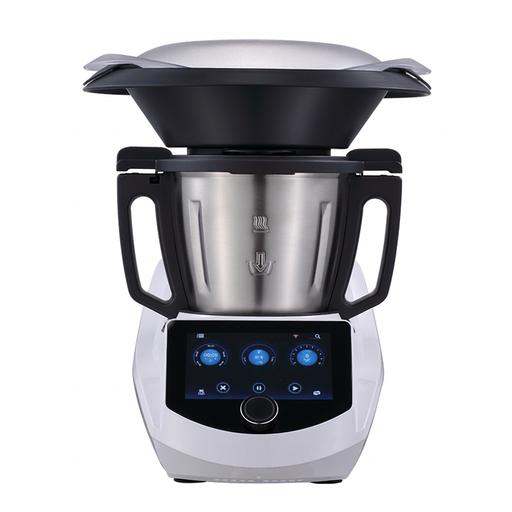
If you want to sear meat and aromatics in the appliance before pressure cooking, the product description lists both Sauté and pressure cooking.
It also lists slow cooking and a colour display with step-by-step instructions.
 No image available
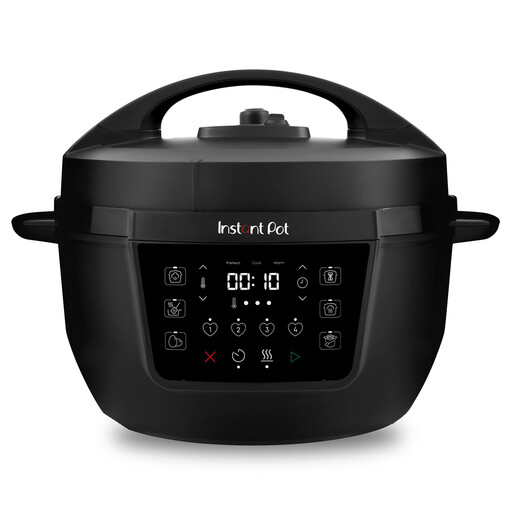
The product description lists both searing and pressure cooking, as well as slow cooking, making this a possible choice for a class where you want to do everything in one appliance.
The description lists a 7.1 L capacity, a wider cooking surface, guided cooking indicators, and a dishwasher-safe lid and inner pot. Check the manual for the permitted fill level.
 No image available
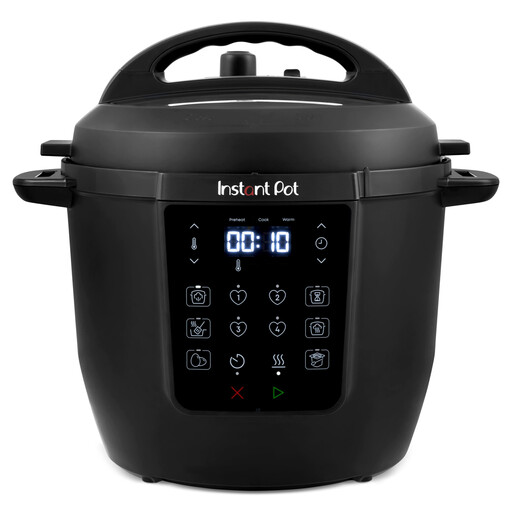
The listed functions include searing and pressure cooking, as well as slow cooking, so you can adapt the cooking method to suit your class.
The product description lists a 5.7 L capacity, a stainless-steel inner pot, a cooking progress indicator, a pressure release switch, and a dishwasher-safe lid and inner pot. The permitted fill level is set out in the manual.
 No image available
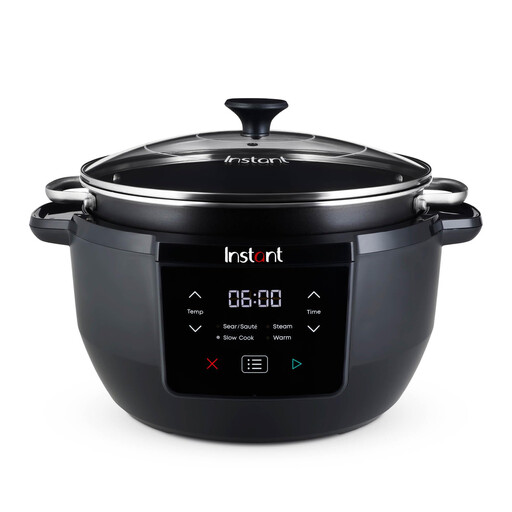
If the group wants to follow the braising process, the description lists slow cooking with adjustable time and temperature, as well as Sauté for searing before switching to slow-cook mode.
The title specifies 7 L; the description also lists steaming and a removable inner pot with handles. According to the description, the inner pot isn’t suitable for use in an oven, on a hob or on an induction hob. Temperatures above 175 °C may damage the coating.
No, not just because the programme has ended. The Instant Pot Duo manual says you must wait for the pressure to release fully before opening the lid. Always follow the manual for the specific model you’ve chosen.
The German Federal Institute for Risk Assessment recommends keeping heated food at a temperature of at least 60 °C throughout until it is served. If you need to chill a larger quantity later, it recommends dividing it between several shallow containers so it cools quickly. The words ‘Keep Warm’ alone don’t guarantee that the curry will reach this temperature.
You can’t determine this solely from the description ‘weekend cooking class’. § 43 IfSG requires a certificate before someone first carries out the activities covered by the law in a commercial capacity. § 42 IfSG excludes private domestic activities and includes, among other things, handling meat. If you’re running a commercial class, check the details of your activities with the relevant public health office rather than assuming the private household exemption applies.
If the goods are faulty, you may be entitled to statutory remedies against the seller. These are separate from any voluntary manufacturer’s guarantee. The German consumer advice centre explains that, as a rule, the retailer is responsible for ensuring the goods are free from defects for two years.