Households where people eat at different times
If you don’t all eat at the same time, you need a reliable plan for keeping food warm or reheating it later. The BfR recommends keeping food at a minimum of 60 °C throughout while it is being kept warm.


A multicooker with a keep-warm function is suitable for serving pumpkin soup at different times only if the soup reaches at least 60 °C throughout while being kept warm. The BfR recommends this temperature, but the programme duration alone does not prove that it is maintained. If you can’t ensure this, or the soup is to be eaten later, cool it quickly to below 7 °C and reheat it to at least 70 °C throughout for two minutes before serving, as recommended by the BfR for kitchen hygiene. Then compare the usable pot capacity, the cooking method you need and whether you’ll have to blend the soup separately to make it creamy.
If you don’t all eat at the same time, you need a reliable plan for keeping food warm or reheating it later. The BfR recommends keeping food at a minimum of 60 °C throughout while it is being kept warm.
When making several portions, it’s important to know how much you can actually put in the pot. So compare the usable capacity and allow space to cool the food quickly.
If you want a creamy consistency, check whether a blending function is explicitly listed. Cooking and keeping food warm won’t automatically do the blending for you.
When meals are served at different times, make sure you can serve the soup safely first. Then consider portion size, whether you’ll need to blend it, and which cooking method best suits your routine.
| What matters | What to check before buying | Who it matters most to |
|---|---|---|
| Keeping food safely warm | Use a food thermometer to check whether the soup reaches at least 60 °C throughout; the BfR recommends this temperature when keeping food warm. | When we eat in shifts, I want to know the soup really stays hot enough throughout, rather than relying on the programme duration. Around 36% of consumers would put safe serving first. |
| Usable capacity | Compare the amount of soup you plan to make with the usable capacity and fill mark of the specific model. | When making several portions, I want to know how much soup will actually fit in the pot, rather than looking only at its stated capacity. Around 29% of consumers would prioritise portion size. |
| Creamy consistency | Check the instructions and what’s included for an explicitly stated blending or purée function; otherwise, plan to blend the soup separately. | If I want to serve creamy pumpkin soup, I want to know whether the appliance will blend it or if I’ll need to do an extra step and clean another appliance. Around 21% of consumers would prioritise their preferred consistency. |
| Cooking method and controls | Check whether you really need pressure cooking, simmering or slow cooking, and follow the instructions for the exact model. | If my routine would benefit from different cooking methods, I want to be able to use the functions I need without overlooking extra pressure-cooking precautions. Around 14% of consumers would prioritise cooking flexibility and ease of use. |
Tefal lists a 5.0 l capacity and 3.2 l usable capacity for the CY7548; the Rommelsbacher MD 1000 has a 6 l pot capacity and 4 l usable capacity. Base the amount you plan to make on the usable capacity and fill mark of the specific model.
Compare the usable capacity and fill mark with the number of portions you want to make.
A keep-warm programme doesn’t prove that the soup reaches at least 60 °C throughout. The BfR recommends this temperature when keeping food warm.
Measure the temperature of the soup. If you can’t ensure it stays safely warm, cool it quickly and reheat it later.
The cooking and keep-warm functions listed for the appliances covered here don’t prove that they have a built-in blending function.
Check the instructions and what’s included for an explicitly stated blending function, or plan to blend the soup separately.
A separate blender may take up extra space and mean another item to clean.
Tefal describes the Turbo Cuisine CY7548 as a multicooker with pressure-cooking and browning functions.
According to Rommelsbacher, the MD 1000 MeinHans combines soup-making and pressure cooking.
According to Russell Hobbs, the Good to Go 28270-56 offers cooking programmes without a listed pressure-cooking function.
The Instant Pot Duo instructions describe pressure cooking and a keep-warm function that can be switched on or off automatically.
The Joybuy products below include slow cookers and multicookers with different stated capacities and cooking functions for preparing meals to serve at different times. A keep-warm programme doesn’t prove that the soup reaches a particular temperature.
 No image available
An option to consider if you’re looking for a cooker that specifically lists soup-making as a function.
The product name lists a 2.6 l capacity, two manual heat settings and a steamer insert; it also describes the coating as non-stick.
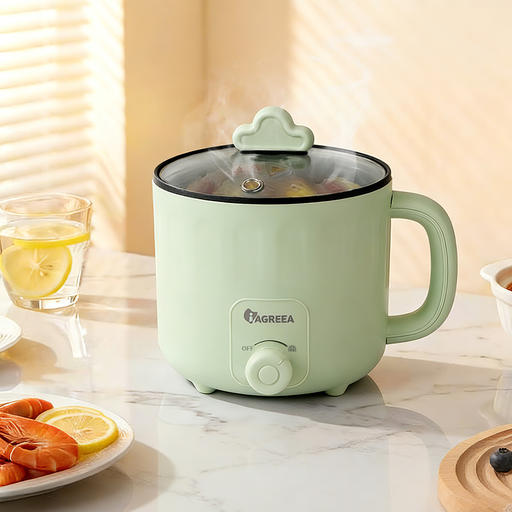 No image available
This compact cooker could suit smaller portions of soup, and specifically lists a soup function.
The product information gives its capacity as 1.6 l. The description also mentions automatic shut-off and boil-dry protection.
 No image available
An option to consider if you’re looking for a cooker described as a soup maker that also has a pressure-cooking function.
The product name lists a 4.1 l capacity and micro-pressure technology. The description mentions several inner pots and a steamer insert. After cooking, wait a few minutes before opening the lid to avoid steam burns.
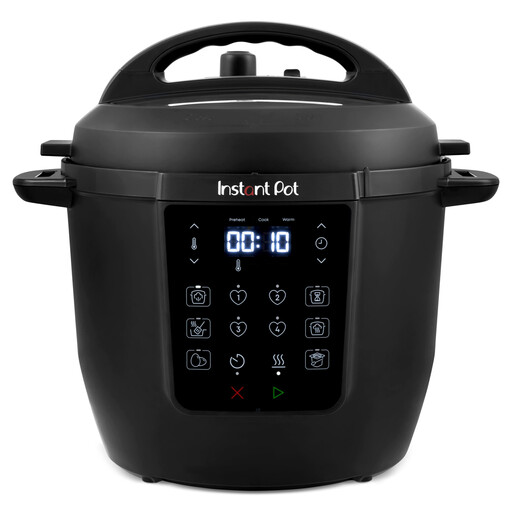 No image available
If you want an appliance that combines pressure cooking and keeping food warm, check the functions and instructions for this specific model.
The product description lists a 5.7 l capacity, as well as browning, steaming and keep-warm functions. Follow the model’s instructions on fill limits and pressure release.
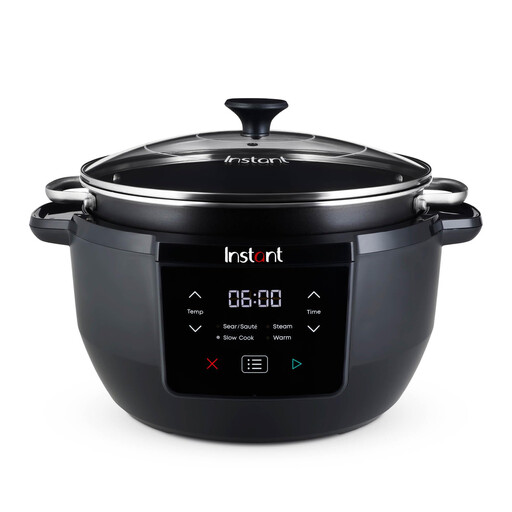 No image available
An option if you want to slow-cook food and use a keep-warm function.
The description lists a 7 l capacity, up to 10 portions and a removable inner pot. According to the product information, the pot isn’t suitable for use in an oven, on a hob or on an induction hob.
No. The BfR recommends keeping heated food at a minimum of 60 °C throughout until it is eaten. Check the temperature of the soup itself, as a function or a long programme duration doesn’t prove that it has reached this temperature.
For longer storage, the BfR recommends cooling food quickly to below 7 °C and keeping it chilled. When reheating, its kitchen hygiene guidance recommends at least 70 °C throughout for two minutes.
Check the usable capacity and fill mark for the specific model rather than relying on the stated pot size alone. Tefal lists 3.2 l usable capacity from a 5.0 l total capacity for the CY7548; Rommelsbacher gives the MD 1000 a 4 l usable capacity in a 6 l pot.
Not automatically. Check whether a blending or purée function is explicitly listed for the exact model; if not, you’ll need to blend the soup separately.
Follow the instructions for your specific appliance on fill limits and pressure release. The Instant Pot Duo instructions warn against opening the pot until the pressure has been fully released; these instructions don’t automatically apply to other models.