What should you look for?
First decide how you’ll handle the later meal, then choose a cooking mode and capacity to suit the amount of beans you’re making.
Braise or simmer without pressure
Best for: Gently combining pre-cooked beans with sauce or other ingredients.
Consider: Slow cooking needs planning and doesn’t prove that the finished dish can then be kept safely hot.
A pressure multicooker for other dishes, too
Best for: If you regularly want to pressure cook or sear as well as make bean dishes.
Consider: Pressure cooking isn’t necessary for tinned beans alone. When using the pressure function, follow the instructions for your model on filling, the lid and pressure release.
Portion, chill and reheat later
Best for: If mealtimes are far apart or you can’t be sure the whole dish will stay at the right temperature while being kept warm.
Consider: You’ll need suitable containers and an extra reheating step, but you won’t have to rely on the stated duration of a keep-warm function.
| Priority |
What to check before buying |
Who is it important to? |
| Keeping food safely hot |
Check the keep-warm mode and any model-specific limitations. Check the temperature in different parts of the dish, or cool it and reheat it later instead. |
If I want to serve the food later, the temperature throughout the bean dish matters to me, not just the keep-warm time setting. Around 36% of consumers prioritise keeping food safely hot when buying. |
| Gentle braising |
Check the instructions for the specific model for simmering, braising or slow cooking, and how to use the relevant function. |
When I’m heating pre-cooked beans in sauce, I want to be able to control the setting appropriately without needing to pressure cook. Around 29% of consumers prioritise gentle braising. |
| Usable capacity |
Compare the usable capacity and fill markings with the total amount of beans and sauce you plan to cook. |
If I’m cooking for several mealtimes, the whole batch needs to fit in the pot. Around 21% of consumers pay particular attention to suitable portion and batch sizes. |
| Cleaning and everyday use |
Check the cleaning instructions, pot material and availability of replacement parts for the model. |
If the appliance is used frequently, I want to be able to look after the pot and other key parts easily. Around 14% of consumers prioritise easy cleaning and long-term use. |
Multicookers at Joybuy
This selection includes appliances with slow-cook, simmer or braise settings for beans and sauce, as well as multicookers with additional cooking functions. The models vary in their stated capacity and available features.
 No image available
IAGREEA Slow Cooker, 2.6 litres
An option for smaller quantities if you want to slow cook beans and sauce or let them simmer gently.
The product lists two manual heat settings and a removable steaming tray.
The description advises against frying at high temperatures.
View at Joybuy
 No image available
Bear DDZ-J25G2 Slow Cooker, 4.1 litres
This multi-pot model is designed to cook several dishes at the same time.
The specifications list a 2.5-litre main pot and four inner pots, each with a capacity of 0.4 litres, as well as slow cooking.
Steam may escape during use. Once cooking is complete, leave the appliance to stand for a few minutes before opening it.
View at Joybuy
 No image available
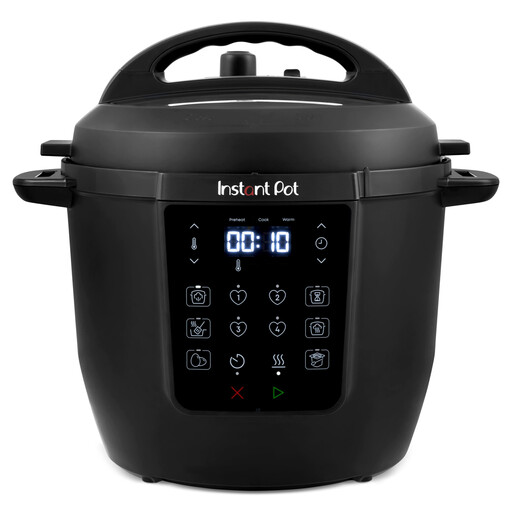
Instant Pot Classic EU, 5.7 litres, Black – 112-2000-01-EU
An option if you want to combine slow cooking for your bean dish with other cooking functions.
Features include pressure cooking, slow cooking, searing and keeping warm, as well as a stainless steel inner pot.
The stated capacity is 5.7 litres and, according to the product description, it’s designed for up to six people. A keep-warm function doesn’t prove that the whole dish reaches at least 60 °C.
View at Joybuy
 No image available
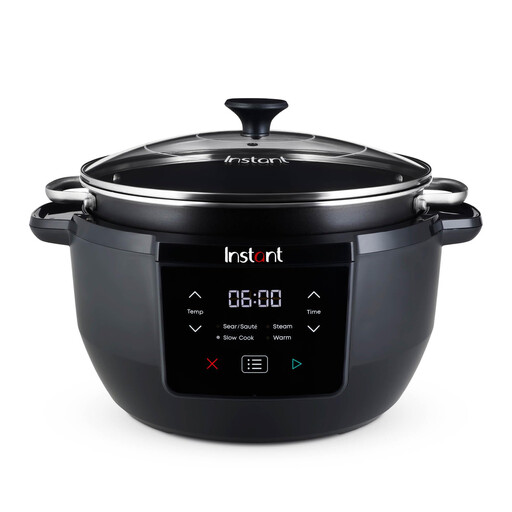
Instant Pot Superior Slow Cooker, 7.1 litres, Grey – 140-6128-01-EU
The adjustable time and temperature settings for slow cooking are useful if you want to cook beans and sauce slowly.
Specifications include a 7.1-litre capacity for up to ten portions, as well as steaming and searing. The appliance also has a keep-warm function.
According to the description, the inner pot isn’t suitable for use in an oven, on a hob or on an induction hob. Temperatures above 175 °C may damage the coating. The keep-warm function doesn’t confirm the temperature throughout the bean dish.
View at Joybuy
 No image available
Midea 9-in-1 Electric Pressure Cooker, 8 litres, Black
An option if you want to use other cooking methods as well as slow cooking in one appliance.
The product specifications list 1,200 W, 12 pre-set menus, slow cooking and a bean programme. It has an 8-litre capacity and is described as suitable for up to ten portions.
The safety instructions say to observe the half-full line when pressure cooking beans. The stated keep-warm time of up to 12 hours doesn’t confirm the temperature throughout the dish.
View at Joybuy
Frequently asked questions
Do tinned white beans need to be pressure cooked first?
No. The BZfE describes pulses from tins or jars as pre-cooked and ready to eat. A suitable cooking mode is therefore all you need to heat them in a stew; different cooking instructions apply to raw or dried beans.
Can I rely on the keep-warm time setting as a safe serving time?
No. The BfR recommends keeping hot food at 60 °C or above throughout. A duration stated for the appliance doesn’t prove that your bean dish will reach this temperature.
What should I do if the next portion won’t be eaten for quite a while?
Only keep the dish hot if you can maintain the required temperature throughout. Otherwise, cool the portions promptly, store them in the fridge and reheat them later. The BfR advises against leaving food for long in the temperature range between 10 and 60 °C when keeping it hot or cooling it down.
What pot capacity do I need for several portions?
Use the stated usable capacity and fill markings to plan, rather than relying only on the larger litre figure in the product name. For example, the manufacturer distinguishes between a 6-litre pot capacity and a 4-litre usable capacity for the Rommelsbacher MD 1000.
What should I know about care and legal information?
Follow the instructions for your specific model, particularly those covering the lid, seals and pressure release, and check that any replacement parts are compatible with your model. The EU describes CE marking as the manufacturer’s declaration that the product complies with relevant EU requirements, not as an independently awarded quality mark. The statutory guarantee should be distinguished from a voluntary warranty; neither confirms that an individual appliance has been assessed for conformity.


