Batch cooks in shared flats
If you make stock for several meals, plan the usable capacity, portioning and space in the shared fridge together.


When making vegetable stock in a shared kitchen, the usable capacity of the pot matters most — the stated capacity doesn’t necessarily tell you how much you can actually fill it with. A pressure multicooker offers extra cooking options, but needs to be used with care; if you want to simmer without pressure, a model with a soup or slow-cook programme could be a good fit. Also check that the appliance will fit in the space you have in mind and that its parts are easy to clean for the next person.
If you make stock for several meals, plan the usable capacity, portioning and space in the shared fridge together.
If you share the hob and worktop, an additional pressure-cooking function may be useful. Everyone using the appliance will need to know how to handle the lid, fill limits and pressure release.
In a shared kitchen, the appliance’s external dimensions, a practical spot to keep it and parts that are easy to clean after cooking all matter.
A good fit if: you’d like to use pressure cooking as well as simmering, and everyone sharing the appliance knows how to operate it.
Things to consider: The lid, fill limits and pressure release all need extra care and cleaning.
A good fit if: you want to simmer stock using a soup or slow-cook programme without handling a pressure lid.
Things to consider: Smaller pots may limit the usable capacity, so plan your batch size and portions accordingly.
In a shared kitchen, your priorities will depend on whether batch size, ease of use, cleaning or available space needs to come first.
| What matters | What to check when buying | Who will find this important? |
|---|---|---|
| Usable stock capacity | Check the usable capacity and fill limits for the specific model; plan for the vegetables and liquid together. | If I’m batch cooking for several meals, I need a suitable batch size and space to portion it out; around 31% of consumers put usable capacity first. |
| Time and pressure controls | Compare the pressure programme, liquid limits and pressure-release instructions for the exact model. | If I share the hob and worktop, I want to be able to plan the cooking and release the pressure safely; around 25% of consumers prioritise timing and ease of use. |
| Cleaning between users | Check which parts can be removed and which are listed as dishwasher-safe in the instructions. | If several people use the appliance, I want to be able to clean the pot and lid easily for the next person; around 25% of consumers prioritise ease of cleaning. |
| Counter space and storage | Check the external dimensions, as well as the space needed to open the lid and allow steam to escape where you plan to use it. | If the worktop or cupboard is shared, I need a permanent spot where the appliance won’t get in the way; around 19% of consumers prioritise counter space and storage. |
For stock, usable capacity matters more than the pot size printed on the box. Rommelsbacher lists 4 l of usable capacity for the MD 1000, which has a 6-l pot; Tefal lists 3.2 l of usable capacity for the Turbo Cuisine CY754830, with a total capacity of 5.0 l. For the non-pressure MRK 650, Rommelsbacher lists 2 l of usable capacity. These figures aren’t interchangeable between models: always follow the fill markings and instructions for the appliance you have.
Storage is part of planning your batch size, too. The German Federal Institute for Risk Assessment (BfR) recommends cooling leftovers to below 7 °C within a few hours. To cool larger quantities, divide them between several shallow containers, then use the refrigerated leftovers within two to three days. So, as well as pot capacity, make room for containers in the fridge.
Pot size and usable capacity aren’t the same thing: Rommelsbacher lists a 6-l pot capacity and 4 l of usable capacity for the MD 1000; Tefal lists a total capacity of 5.0 l and usable capacity of 3.2 l for the CY754830.
Plan your batch size using the usable capacity and the fill limits in the instructions for the specific model.
You may need to cook several batches to make a larger quantity for the freezer, so allow extra time.
A pressure model needs to be operated differently, both when handling the lid and releasing pressure, from a non-pressure appliance with a soup programme. Your choice also affects which steps everyone sharing it will need to know.
Decide whether you really want to use pressure cooking, then follow the instructions for the exact model when setting it up and choosing how much to fill it.
A keep-warm function isn’t a substitute for quickly cooling leftover stock and storing it in the fridge, as recommended by the BfR for home use.
For larger batches, make sure you have clean, shallow containers and enough space in the fridge.
You may need extra containers and space in the shared fridge.
The pressure-capable MD 1000 and the non-pressure MRK 650, with its soup programme, cater for different batch sizes of stock.
The Turbo Cuisine CY754830 combines pressure cooking with slow-cook and sear programmes.
The Duo range offers pressure cooking and other cooking methods; make sure you know the exact model before buying.
The PossibleCooker MC1101EU is described as a non-pressure alternative with slow-cook, sear and keep-warm functions.
This selection includes non-pressure slow cookers for gentle simmering, as well as multicookers and pressure cookers with soup, pressure-cooking or slow-cook functions.
 No image available
Described as suitable for gently simmering soup without a pressure function.
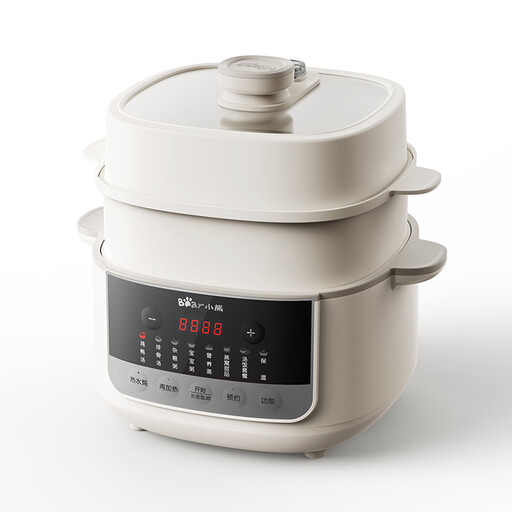 No image available
Described as suitable for soup and slow cooking; the product description mentions micro-pressure technology.
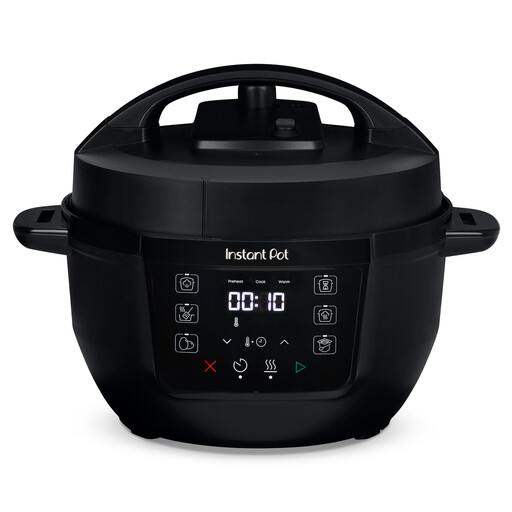 No image available
Suitable for smaller batches if you want to use pressure cooking and slow cooking in one appliance.
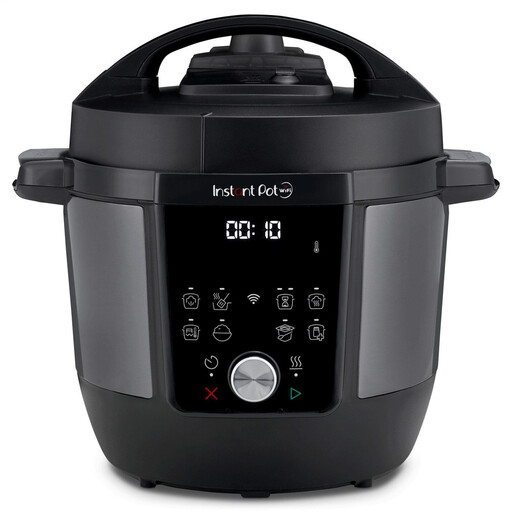 No image available
A good option for larger batches if you want to use pressure cooking and slow cooking; always follow the fill limits in the instructions.
 No image available
The listed Soup/Broth programme is a suitable menu option for stock; follow the instructions when using pressure mode.
No. Release the pressure fully according to the instructions for your specific model, and never force the lid open. The Instant Pot Duo instructions limit the fill level to two-thirds for pressure cooking, or half full for ingredients that expand; don’t assume these limits apply to other appliances.
For home use, the German Federal Institute for Risk Assessment recommends cooling leftovers to below 7 °C within a few hours, dividing larger quantities between several shallow containers, keeping them chilled and using them within two to three days. This is food hygiene advice, not a guarantee of how long every stock will keep.
It depends on the model. Rommelsbacher lists a replacement pot for the MD 1000, while the German Instant Pot shop stocks a replacement sealing ring set for certain 5.7-l models. Before ordering, check the full model number and the stated compatibility.
If CE marking is required for the specific appliance, it must be present. The German Federal Network Agency points out that CE is a declaration by the manufacturer, not an independent quality mark. When carrying out checks, it considers factors including product identity and whether a German-language manual with the required warnings is included.