For hosts making a large batch of stock
If you need enough stock for several guests in one go, compare the usable capacity and maximum fill level of the specific model.


For a larger batch of stock, a large multicooker without pressure cooking is worth considering if simmering matters more than pressure cooking. A pressure multicooker is a good fit if you want to use pressure cooking alongside other programmes. The key is the usable capacity and the maximum fill level, not just the advertised pot capacity. If the stock needs to wait for your guests, check the temperature of the food rather than relying on the keep-warm function alone.
If you need enough stock for several guests in one go, compare the usable capacity and maximum fill level of the specific model.
If you plan to pressure-cook before your guests arrive, allow for the fill limits and the time it takes for the pressure to release fully, as well as the cooking time.
If you won’t be serving the stock straight away, plan how to keep it hot or cool it down so you can check the temperature of the food.
A good fit if: you want to simmer or slow-cook a larger batch of stock.
The trade-off: This model is not listed as having a pressure-cooking function, and the pot capacity does not automatically indicate how much stock you can make.
A good fit if: you want to use pressure cooking and other cooking methods in one appliance, and the ingredients and liquid will stay within the fill limit.
The trade-off: You’ll need to factor in the time needed to build up pressure and release it fully.
A good fit if: you want to make a smaller batch and prefer straightforward dial controls.
The trade-off: Check that the vegetables and liquid will fit within the usable capacity.
| What matters to you | What to look for when buying | Who will value this most? |
|---|---|---|
| Usable capacity | Compare your recipe quantity and portion size with the usable capacity and maximum fill level of the specific model. | If I want to make stock for several guests in one go, there needs to be enough room for the liquid and vegetables. Around 33 % of consumers prioritise making a large enough batch. |
| Cooking method and timing | Check the pressure-cooking function and the instructions for the exact model; allow time for the pressure to release as well as for the set cooking time. | If I plan to pressure-cook before my guests arrive, I want to factor pressure release into my schedule too. Around 27 % of consumers prioritise timing and cooking method. |
| Keeping hot and cooling | If keeping the stock hot for a while, measure its temperature; for leftovers, plan to use shallow containers and make room in the fridge. | If the stock needs to wait until it’s time to serve, I don’t want to rely on a keep-warm indicator alone. Around 20 % of consumers prioritise keeping food hot safely or chilling it for later. |
| Using it after the dinner party | Compare the programmes you need, cleaning instructions and replacement parts using the full model number. | If I want to use the appliance after the dinner party too, the cooking methods, care requirements and availability of replacement parts all matter to me. Around 20 % of consumers focus on everyday use. |
For the pressure models in this comparison, the stated usable capacity is lower than the pot capacity. The vegetables and liquid must both fit within the maximum fill level.
Plan your recipe quantity and portion size, then check the usable capacity and fill limits listed for the specific model.
If your planned quantity doesn’t fit, you may need to cook it in more than one batch.
A keep-warm function alone does not prove that the stock has reached the required temperature throughout. The Federal Institute for Risk Assessment recommends keeping heated food at a minimum of 60 °C throughout until it is eaten.
If you’re keeping the stock hot for a while, measure its temperature. If you want to save leftovers, cool them down promptly.
With a pressure multicooker, you need to add the time it takes to build up and release pressure to the set cooking time. Do not open the lid until the pressure has been released fully.
Allow for pressure release as instructed in the manual for the model you buy, and never force the lid open.
Building up pressure and releasing it safely both take extra time before you can serve.
The MeinHans MD 1000 is worth considering if you need both pressure-cooking programmes and the option to cook without pressure.
The PossibleCooker MC1001EU is an option for simmering and slow cooking, without a stated pressure-cooking function.
The Turbo Cuisine CY7548 is a pressure-cooking option with dial controls, suited to smaller planned batches.
The Duo range is relevant if you’re looking for an electric pressure multicooker and seals listed as compatible with specific models.
This selection includes pressure multicookers and slow cookers for soup or stock. Depending on the quantity you plan to make, compare the stated capacity, cooking method and fill limits for each model.
 No image available
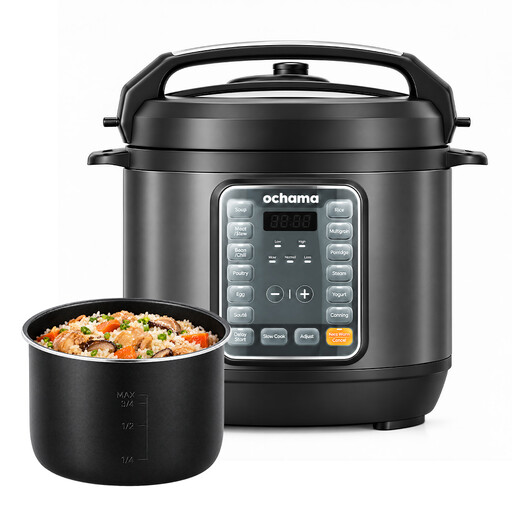
For larger quantities of soup or stock, if you want to pressure-cook and then keep it warm.
8 l capacity, 1300 W, pressure cooking and slow cooking; ceramic non-stick coating, timer and keep-warm function. Observe the maximum fill line and release all the pressure before opening.
When keeping stock warm for a while, the function alone does not prove that it is at least 60 °C throughout; measure the temperature of the food.
 No image available
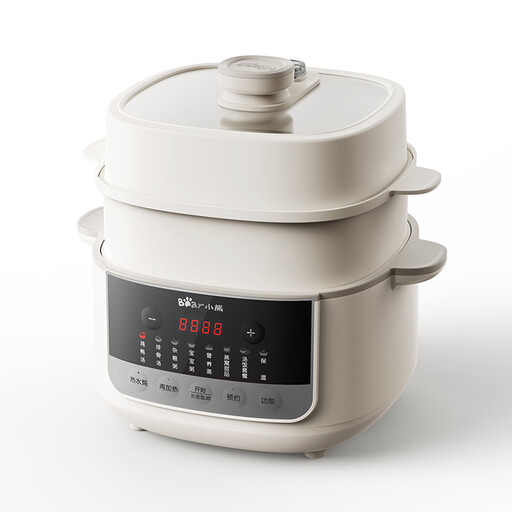
An option if you’re looking for a slow cooker with a soup-making function and separate containers for different ingredients.
4,1 l according to the product name; the description lists a 2,5-l main pot and four 0,4-l inner pots. Slow cooking, steaming and Micro-Pressure Technology are listed. The container capacities do not automatically indicate how much stock you can make in them.
Steam escapes during use. Observe the maximum water line and wait a few minutes after cooking before opening.
 No image available
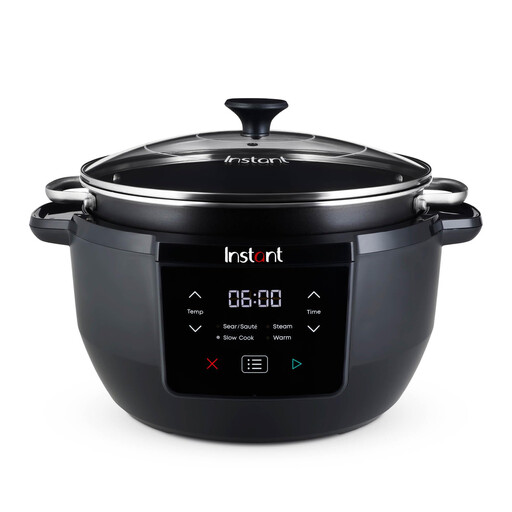
For larger quantities of soup or stock if you want to slow-cook and keep it warm rather than pressure-cook.
7 l in the product name; the description lists 7,1 l and up to 10 portions. Slow cooking, adjustable time and temperature, and keeping warm are listed.
According to the product description, the inner pot is not suitable for use in an oven, on a hob or on an induction hob. Keeping the stock warm for a long time does not prove that it reaches at least 60 °C throughout; check the temperature.
 No image available
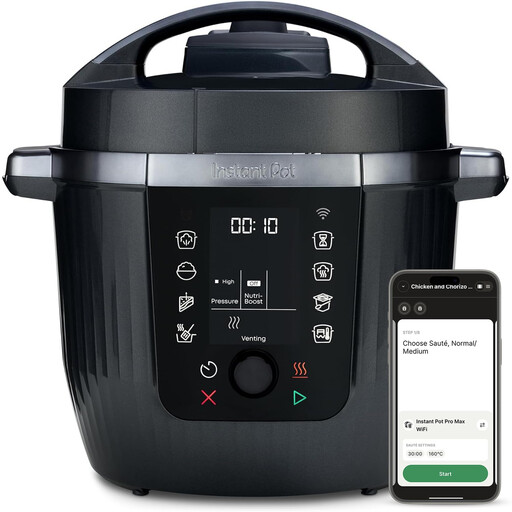
For making soup and stock in a pressure multicooker when you’re catering for a smaller group.
5,7 l, 1200 W and up to six portions according to the product details. Pressure cooking and slow cooking are listed; the inner pot is described as dishwasher-safe. Observe the maximum fill line and do not open the lid until the pressure has been released fully.
When keeping food warm for a while, the function alone does not prove that it is at least 60 °C throughout. Check the temperature of the stock.
 No image available
An option for making stock in a pressure multicooker if you want to factor a delayed start and keep-warm function into your plans.
8 l, 1200 W, pressure cooking and slow cooking are listed. The description includes a soup and stock programme, delayed start and automatic keep-warm function. Observe the fill limits and do not open the lid until the pressure has been released.
The keep-warm function alone does not prove that the stock is at least 60 °C throughout. If keeping it hot for a while, check the temperature of the food.
Don’t decide based on the 5-l figure alone: Tefal lists a usable capacity of 3,2 l for the CY7548. Compare the planned quantity of liquid and vegetables with the maximum fill level of the specific appliance.
No, not while the appliance is still under pressure. The Instant Pot Duo manual says to release the pressure fully and not to force the lid open. For other models, follow the relevant manual.
The Federal Institute for Risk Assessment recommends keeping heated food at a minimum of 60 °C throughout until it is eaten. A keep-warm function alone does not prove that your stock is at this temperature; check it if you’re keeping it warm for a while.
The Federal Institute for Risk Assessment recommends dividing large quantities between several shallow containers and cooling them to below 7 °C within a few hours. Then store the leftovers in the fridge and use them within two to three days.
For electrical appliances covered by relevant harmonised EU rules, the manufacturer uses the CE marking to declare conformity; it is not an independent quality mark. Statutory rights relating to faulty goods are against the seller, while any additional guarantee is voluntary.