
Lieferung heute & morgen

Qualitätsgarantie

Willkommens-Angebote freischalten: KOSTENLOSE Lieferung | Bis zu 80 % RABATT | Kostenlose 30-Tage-JoyPlus-Testphase
App herunterladen
A multi-cooker can complement several kitchen appliances or replace an electric cooking pot in a small household. But there are clear differences between mini multi-cookers, electric hot pots, pressure cookers and traditional soup pots. If you focus only on wattage or the number of advertised programmes, you could end up with an appliance that’s too small for everyday use, difficult to clean or unsuitable for your hob.
This buying guide from the Joybuy Product Recommendation Officer will help you avoid common purchasing mistakes and choose a model that suits your household, studies, family, camping trips or travels.
A stated capacity of 5 litres doesn’t automatically mean you can safely fill the pot with 5 litres of food. When cooking soup, pasta or hot pot, leave room for steam to rise and ingredients to move around. 1.0 to 1.6 litres is often enough for one person. Couples can usually manage with around 2.0 to 2.6 litres, depending on the dish. Families benefit from appliances with a capacity of around 3.8 litres or more.
Pressure cookers also have fill-level markings inside the pot. Don’t exceed them.
An electric hot pot with two heat settings is usually suitable for noodles, soup, porridge or simple simmering. But it won’t necessarily replace a pressure cooker or a programmable multi-cooker. Check whether it genuinely includes functions such as steaming, sautéing, slow cooking, keeping warm or pressure cooking.
A slow cooker also works differently from a high-powered appliance: it’s designed for longer, gentler cooking, not quick searing.
The word ‘non-stick’ alone tells you little about the material, care requirements or lifespan. Check the coating details, whether metal utensils can be used and how the appliance should be cleaned. Ceramic or plastic coatings should generally be used with wooden, silicone or plastic utensils. Scouring pads and harsh cleaning products can damage the surface.
If you’d prefer an uncoated option, stainless steel hot pots and soup pots are alternatives. However, food may stick more easily if the temperature and amount of liquid aren’t carefully controlled.
When choosing an appliance, consider not just its capacity in litres but also how much room you have on your worktop and in your cupboard.
A small pot is easier to store. But if you regularly cook meals for several people, a model that’s too small could mean having to cook more often.
Wattage affects how quickly water heats up, but it isn’t the only measure of quality. A 300- or 600-watt mini multi-cooker is designed for small portions, rice, pasta and soup. Models with 1,000 watts heat larger quantities of liquid more quickly, but need a suitable heat-resistant surface.
At least two heat settings or variable temperature control are useful. They let you switch between bringing food to the boil quickly and simmering gently. Automatic shut-off and overheating protection are important safety features. For electric appliances, look for boil-dry protection too.
A traditional hot pot for induction needs a suitable magnetic base. For stainless steel models, check that they’re explicitly listed as compatible with induction, gas, electric and ceramic hobs. An electric cooking pot, on the other hand, plugs directly into the mains and doesn’t depend on a hob.
The following differences between materials are worth noting:
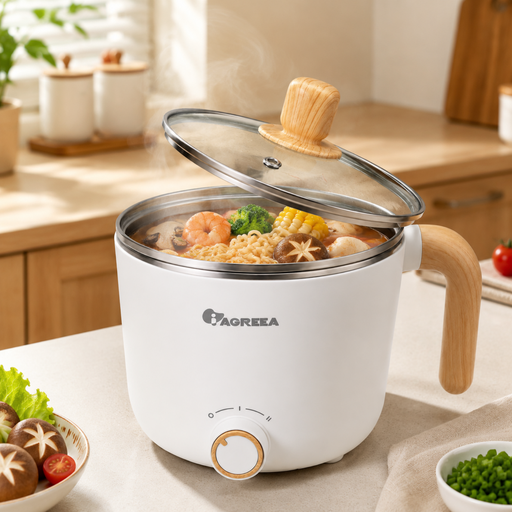
Why this product suits this household: The 1.0-litre capacity is designed for one or two people. With 300- and 600-watt settings, you can choose between gentle cooking and faster heating.
Its clearly defined capacity helps prevent a small appliance from being mistaken for a family cooker. The stainless steel inner pot doesn’t need a non-stick coating.
Compact dimensions, a stainless steel inner pot and several cooking options for noodles, soup, rice and vegetables.
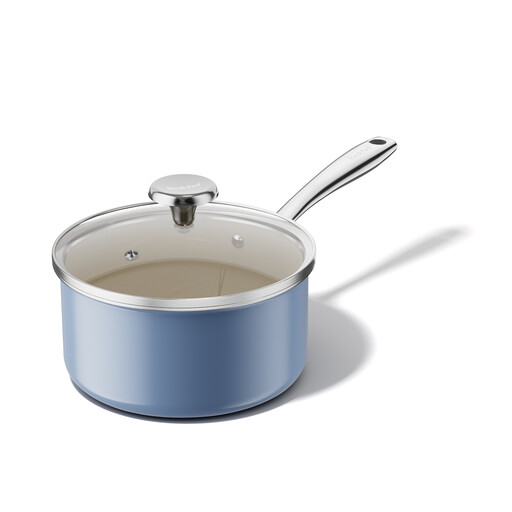
Why this product suits this household: This 2.5-quart pot combines a reinforced aluminium core with a ceramic coating described in the product details as PFAS-/PFOA-free. It’s suitable for sauces, soups, pasta and porridge.
The product details clearly specify the material, coating, maximum oven temperature and cleaning instructions. This means you can check care requirements and compatibility before you buy.
Listed as suitable for all hob types, with a glass lid and stainless steel handle. It’s also specified as oven- and dishwasher-safe.

Why this product suits this household: With a 5-litre capacity, 1,500 watts of power and four cooking modes, this model is designed for families, entertaining and anyone who regularly prepares larger quantities.
Its larger capacity and variable power settings make it better suited to soups, hot pot and stews than a compact cooker designed for one person.
Four functions, a glass lid, a removable power cord, a non-stick inner surface and boil-dry protection, according to the product description.
We’ve put together a complete, regularly updated list of products that meet these strict selection criteria and fully comply with the safety regulations in force in the EU.
Before using any pot for the first time, clean it according to the instruction manual. Stainless steel cookware may have manufacturing residues; for coated appliances, it’s best to rinse them carefully without using abrasive cleaners. Place an electric cooking pot on a stable, heat-resistant surface. Don’t immerse the main appliance, cable or plug in water.
Power consumption determines running costs. A 1,000-watt appliance theoretically uses 1 kWh in an hour; in practice, the heating element won’t necessarily run continuously, depending on the temperature control. Short cooking times can keep consumption down, while a slow cooker stays on for many hours. So compare wattage, cooking time and how you’ll typically use the appliance, rather than looking only at its maximum power.
1.0 to 1.6 litres is usually enough for individual portions. If you often cook ahead or plan to save leftovers for the next day, you could choose a model with a capacity of around 2 litres.
No. A pressure cooker cooks under pressure, so it needs a locking lid and controlled steam release. An electric hot pot with a glass lid normally cooks without pressure. The product description must explicitly state that it has a pressure-cooking function.
There’s no reliable way to give a general lifespan. It depends on heat, utensils, cleaning products and how often you use it. Avoid metal cutlery, overheating the pot while empty and abrasive sponges. If the coating cracks, chips or starts to peel, stop using the pot.