
Lieferung heute & morgen

Qualitätsgarantie

Willkommens-Angebote freischalten: KOSTENLOSE Lieferung | Bis zu 80 % RABATT | Kostenlose 30-Tage-JoyPlus-Testphase
App herunterladen
A multifunction blender is designed to replace several kitchen appliances: a countertop blender, smoothie maker, ice crusher, juicer or meat-grinder blender. In practice, however, appliances differ considerably in motor power, container size, material, operation and cleaning. If you focus only on a high wattage or a long list of functions, you may end up buying an appliance that does not suit your household in everyday use.
This buying guide explains which specifications really matter and which common marketing traps you should avoid before buying a multifunction blender.
A 1000-watt blender may initially sound powerful. However, wattage primarily describes the motor’s electrical input power. It does not automatically tell you how evenly ingredients will be processed, how long the appliance can run continuously or whether the container is suitable for hard ingredients.
You should also consider:
A high-performance blender with several speed settings may be more versatile in everyday use than an appliance with a higher wattage but more limited controls.
Terms such as “juicer”, “meat-grinder blender” or “blender with ice crusher” should be checked against the included accessories. It is important to find out whether separate attachments, containers or blades are included and how they can be cleaned.
A combination appliance with lots of accessories may require more storage space. For small kitchens, a compact electric blender or portable blender may therefore be more practical than a large complete system.
Residue tends to collect around blade mounts, seals and hard-to-reach edges of the container. Look for components that can be taken apart, dishwasher-safe parts and clear operating instructions.
A CE mark indicates conformity with relevant EU requirements. However, it is not an independent quality seal and does not replace checking the technical specifications, safety information and retailer details.
A compact smoothie maker is often sufficient for simple smoothies made with soft fruit. If you regularly want to process frozen fruit, ice cubes, vegetables, nuts or soup ingredients, a robust motor and suitable blade arrangement are more important.
Useful features include:
Product specifications should always be considered together. An appliance with 600 watts and a 1.5-litre container may be sufficient for everyday kitchen tasks, while a 1000-watt blender may offer more power reserve for larger quantities.
A 1.5-litre container is suitable for several portions and family households. For a single portion on the go, a cup holding around 0.59 litres is sufficient. Also check whether the stated figure refers to the total or usable filling capacity.
A blender with a glass container is odour- and flavour-neutral and may be suitable for soups, sauces and larger preparations. However, glass is heavier and can be damaged by impacts. Stainless-steel containers are robust and practical for portable models, but they do not allow you to see the blending process directly.
For daily use, the blender should ideally be easy to take apart. A portable blender with a USB-C connection may offer greater flexibility when you are out and about, but it has a smaller capacity and runs on a battery. With battery-powered appliances, you should consider the charging time, stated cycles per charge and permitted operating time.
Particular care is required when handling hot liquids. Check the operating instructions before adding soup or other warm ingredients. When crushing ice, only use the ingredients and quantities specified by the manufacturer.
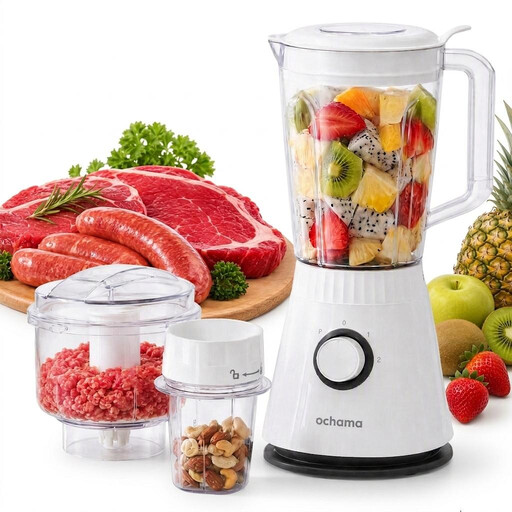
Why this product suits this profile: The 600-watt blender with a 1.5-litre container handles typical tasks such as preparing fruit and vegetable drinks, chopping ingredients and making smaller dishes.
The clearly stated power and container size make comparisons easier. Before buying, check which accessories are actually included.
1.5-litre container, three speed settings and information about easy dismantling and cleaning.
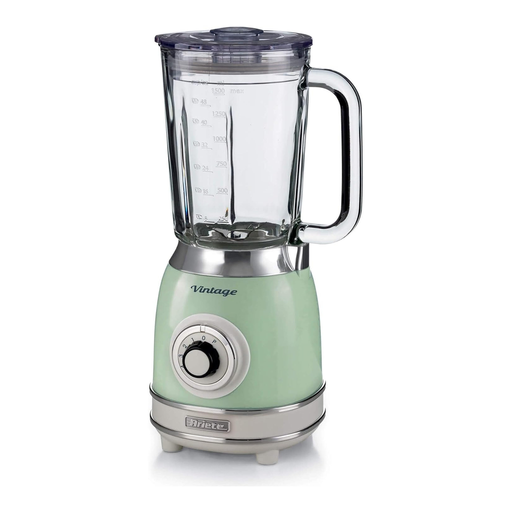
Why this product suits this profile: This blender combines a 1.5-litre glass container with four stainless-steel blades, four speed settings and a pulse function.
The technical specifications go beyond a simple wattage figure. The product description also mentions dishwasher-safe components.
1000-watt motor, 1.5-litre glass container, four speed settings and a stated ice-crusher function.
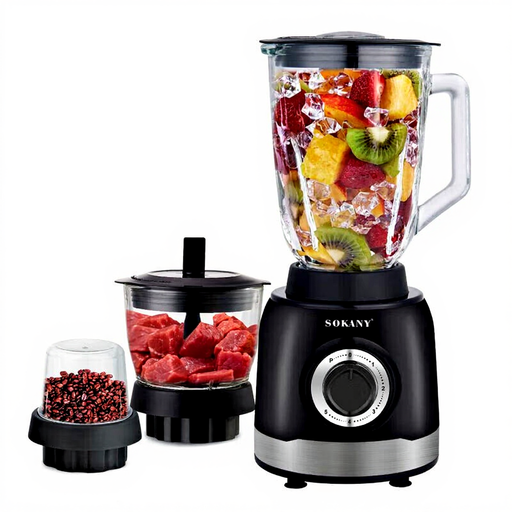
Why this product suits this profile: According to the product description, this model combines a blender, meat grinder, ice crusher and juicer in one appliance. It may appeal to households that use several different preparation methods.
The individual functions are listed in the product description. Before buying, check which attachments are included and how much storage space they require.
1000-watt power rating plus several intended uses for blending, chopping, crushing ice and preparing juice.
We have put together a complete, regularly updated list of products that fully meet these strict selection criteria and the safety regulations applicable in the EU.
Always read the operating instructions for the relevant model before use. The lid must click securely into place, and the maximum filling line must not be exceeded. Never touch the blades while the appliance is running. Unplug the appliance or switch off the battery drive before dismantling, cleaning or changing an attachment.
For cocktails and frozen drinks, a blender with an ice crusher or a separate ice crusher is suitable. A manual ice crusher such as the Secret de Gourmet does not require electricity and can be stored neatly thanks to its compact dimensions. An electric model such as the Ariete 76, on the other hand, operates at 30 watts and has stainless-steel blades; according to the product information, it features a transparent lid with a safety mechanism.
The right power depends on the ingredients and quantities. A smaller appliance may be sufficient for soft fruit and individual smoothies. For ice, frozen ingredients or larger portions, 600 to 1000 watts are relevant technical benchmarks for comparison. However, the blades, container, operating time and manufacturer’s instructions remain decisive.
Not every appliance with a blending function is a traditional juicer. A blender generally chops ingredients into a thicker mixture, whereas a juicer separates liquid and solid components differently. Check whether a dedicated juicer attachment is included.
It is not possible to give a general fixed lifespan. This depends on how often the appliance is used, cleaning, the loads placed on it and whether it is operated correctly. Avoid overfilling, blocked blades and hard objects that are not intended for use with the appliance. Regularly checking the seals, blades and container for damage can help you identify wear at an early stage.