
Lieferung heute & morgen

Qualitätsgarantie

Willkommens-Angebote freischalten: KOSTENLOSE Lieferung | Bis zu 80 % RABATT | Kostenlose 30-Tage-JoyPlus-Testphase
App herunterladen
Choosing a new multifunction oven can quickly become overwhelming. Manufacturers advertise a multitude of features, labels, and technical terms that often create more confusion than clarity. If you don't look closely, you can easily invest in an appliance that doesn't meet your needs or incurs hidden costs. Before you make a decision, it's crucial to understand the most common pitfalls that can lead to buyer's remorse.
A common problem is investing in overloaded "smart" features. App controls and connected programs sound modern, but they often prove impractical in daily life or are no longer used after a short time. Another pitfall is trusting vague marketing terms for self-cleaning. Not every function advertised as "self-cleaning" delivers the same result, and the differences in effectiveness and energy consumption are significant. Finally, relying solely on the energy efficiency class is often misleading, as it only reflects consumption under standardized conditions, not the cost of energy-intensive special programs.
To make an informed decision based on facts rather than marketing promises, you should carefully examine three core aspects. These parameters are decisive for the performance, durability, and operating costs of your new oven.
Calling an oven self-cleaning is easy. However, the technology behind it is what counts.
The Energy Efficiency Class A+ (or higher) is a good starting point, but it doesn't tell the full story. The EU energy label indicates consumption for a standard program (usually conventional top/bottom heat or convection). Energy-intensive functions like pyrolytic cleaning, rapid pre-heating, or full-power grilling are not factored in. A pyrolytic cycle can consume between 3 and 6 kWh, depending on the duration and appliance. Therefore, weigh how often you will use such functions to realistically estimate long-term operating costs.
Modern multifunction ovens offer more than just convection heat. Two functions have proven to be particularly practical:
Instead of making a one-size-fits-all recommendation, we have identified appliances tailored to specific user profiles. This approach helps you find a model that truly fits your lifestyle.
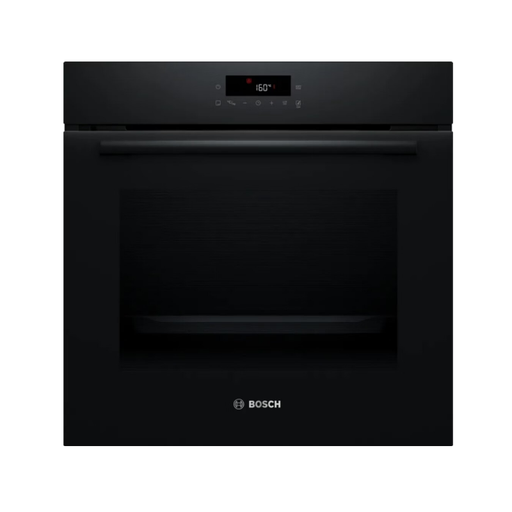
Why it's a great fit: Ideal for users who value precise and repeatable cooking results. The 3D Hotair ensures very even heat distribution on up to three levels, while the 10 automatic programs (AutoPilot 10) simplify the preparation of complex dishes.
This model focuses on proven core functions. The pyrolytic self-cleaning is an effective, chemical-free solution, not an empty marketing slogan. The energy values for standard programs are clearly declared, allowing for a realistic cost assessment.
The combination of pyrolytic self-cleaning and 3D Hotair offers high convenience and consistent baking and roasting results. Operation via the LED touch display is intuitive.
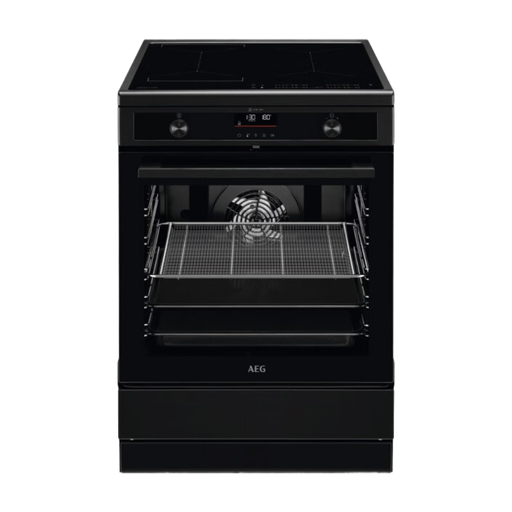
Why it's a great fit: An all-in-one solution that combines a full-featured oven with a fast and safe induction cooktop. With a 73-litre cavity, the appliance is ideal for families and preparing larger meals.
As a freestanding range with an induction cooktop, this is a smart, space-saving solution that simplifies kitchen planning. The integrated pyrolytic function is a true convenience feature that saves valuable cleaning time in a hectic family life.
The combination of a powerful induction cooktop and an oven with pyrolytic cleaning in a single freestanding unit offers a high degree of functionality and convenience.
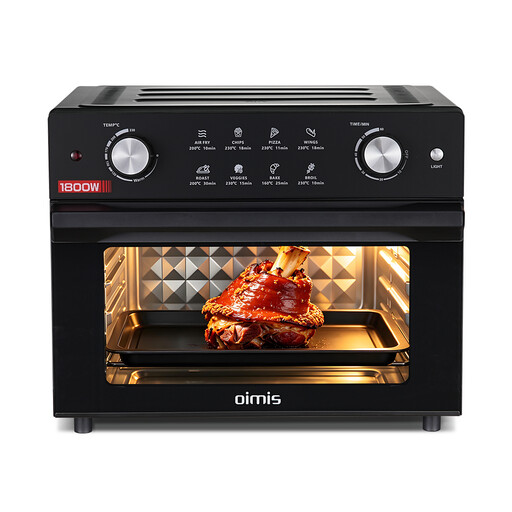
Why it's a great fit: This compact countertop appliance combines the functions of an oven, an air fryer, and a toaster. It's perfect for smaller kitchens, single households, or as a supplementary appliance for lower-fat cooking without having to heat up a large oven.
As an air fryer oven combo, this appliance focuses on useful core functions rather than complex "smart" extras. It delivers a tangible benefit through faster cooking and the ability to air fry with minimal oil, living up to its promises.
A space-saving 3-in-1 appliance that, according to the manufacturer, works up to 50% faster than a conventional oven. The operation via two simple dials for temperature and time is intentionally straightforward.
We have compiled a complete, up-to-date list of products that fully meet these strict selection criteria and UK safety regulations.
A pyrolytic cycle typically lasts two to three hours and heats the oven to about 500°C. This can result in energy consumption of 3.5 to 6 kWh. Assuming an electricity price of 30p per kWh, this corresponds to a cost of approximately ?1.05 to ?1.80 per cleaning cycle. Although these costs are not insignificant, they often replace the need to buy chemical cleaners and save significant manual effort.
Most standard built-in ovens can be connected to a normal 230-volt socket, provided the circuit is protected by a 16-amp fuse. However, models with a very high power rating or sets that include a separate high-power cooktop may require a three-phase power connection. It is essential to check the manufacturer's specifications and consult a qualified electrician if in doubt.
Standard convection uses a fan to circulate the heat generated by a ring element at the back of the oven. 3D Hotair (or 4D) goes a step further: through an optimised fan wheel that changes its direction of rotation and specially designed air outlets, the hot air is distributed even more uniformly on all levels of the oven. This allows for simultaneous cooking of different dishes on multiple shelves without flavour transfer and with perfectly consistent browning results.