
Lieferung heute & morgen

Qualitätsgarantie

Willkommens-Angebote freischalten: KOSTENLOSE Lieferung | Bis zu 80 % RABATT | Kostenlose 30-Tage-JoyPlus-Testphase
App herunterladen
A multifunctional aluminium square can replace several individual tools when measuring, marking and guiding a saw. For joiners, carpenters, roofers, model makers and DIY enthusiasts, it is important that the tool suits the material size and working method in question. An eye-catching appearance or a long list of angles alone says little about how suitable it is in practice.
A multifunctional angle ruler may feature numerous scales and markings. However, if these are shallow, low-contrast or not permanently applied, reading them on dark wood, in dusty conditions or in poor light can be difficult. Look for clear, durable markings and a scale in the units that are relevant to you.
Aluminium is rust-resistant and comparatively lightweight. However, a very thin profile can still bend under pressure, when placed against an edge or when used as a saw guide. Check the product details for material, profile thickness, dimensions and weight. A compact tool is sufficient for occasional marking, while frequent use calls for a more torsion-resistant design.
In theory, an aluminium angle finder can cover several functions. In practice, it is important to know whether the edge sits securely against the workpiece and whether the tool slips while marking. A non-slip surface, a well-made stop or a defined pivot function can make the tool easier to use. Without these details, a versatile scale may create additional checking work when making repeated cuts.
For a DIY measuring tool made from aluminium, aluminium alloy and, where applicable, an anodised surface are relevant details. Anodised aluminium can help improve the surface’s resistance to wear and corrosion. However, this does not mean that the tool is immune to drops, heavy leverage or scratches.
A matt or high-contrast surface can improve readability. What matters most is that the markings are clearly applied and not simply printed onto a protective film. If you are unsure, compare the product images with the technical description.
For many woodworking tasks, 30, 45, 60 and 90 degrees are typical reference points. An angle gauge covering 30, 45, 60 and 90 degrees is particularly practical when making repeated cuts or marking out. A wider measuring range can be useful for roofing work, frame construction or unusual geometries.
Also look for:
A marking gauge and a carpenter’s square are not identical tools for every task. A multifunctional model makes sense if you regularly want to combine measuring, marking and simple saw-guiding functions.
A short tool is easy to store in a toolbox and is suitable for smaller boards, panels or model-making projects. A longer reference edge can provide better guidance on larger workpieces, but it takes up more space.
Before buying, check the following:
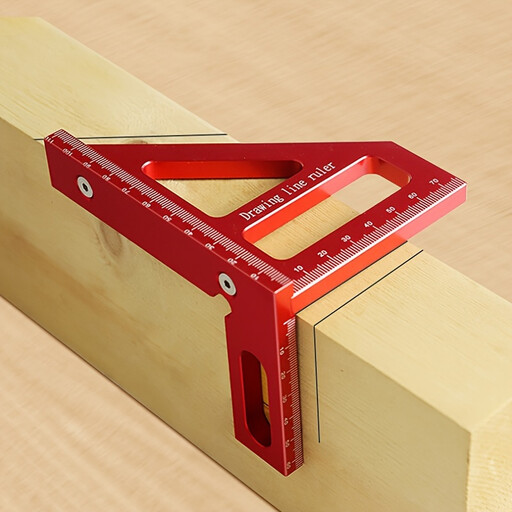
Why this product suits this profile: This compact multifunctional angle ruler is designed for occasional woodworking, technical drawing and smaller DIY projects. The red surface can stand out clearly against the workpiece.
The description mentions a lightweight aluminium body and laser-engraved markings. This puts readability ahead of simply listing numerous functions.
Aluminium construction, compact design and durable laser engravings according to the product description.
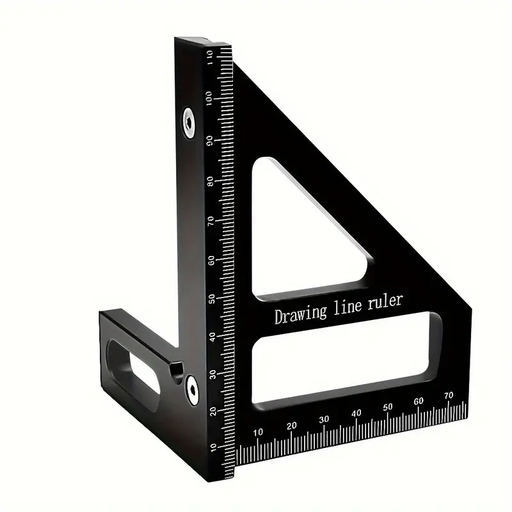
Why this product suits this profile: The black design with white markings is aimed at users who value clear contrast when working on technical drawings, architectural models or woodworking projects.
The product details list several specific angles – 30, 45, 60 and 90 degrees – along with metric and imperial scales. This makes it easier to check whether the range of functions suits your project.
Anodised aluminium, high-contrast laser engravings and integrated lines for the stated standard angles according to the product description.
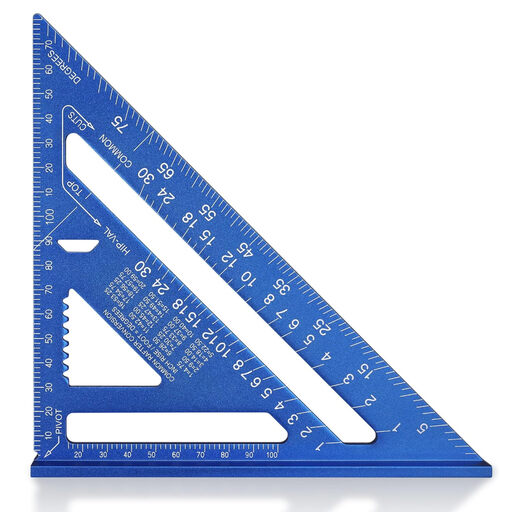
Why this product suits this profile: The 180mm format is aimed at joiners, carpenters, roofers and DIY enthusiasts who want to use a carpenter’s square with additional marking and guiding functions.
The specifications state the exact dimensions, a weight of 233 g, a 0–90-degree scale, and metric and imperial graduations. This makes it easier to compare the tool’s suitability with your intended use before buying.
Functions as an angle finder, mitre square, saw guide, framing square and ruler; aluminium alloy with a matt surface according to the product details.
We have put together a complete, regularly updated list of products that fully meet these strict selection criteria and the safety regulations applicable in the EU.
Before marking out, the edge of the workpiece should be clean and as straight as possible. Place the stop fully against it and hold the tool with light, even pressure. Start by marking with a sharp pencil or marking knife; a thick line can distort the actual cutting position.
When using the tool as a saw guide, make a test cut on a scrap piece first. This will show whether the edge sits securely and whether the marking lines up with the saw blade. After use, wipe the tool dry and store it away from moisture, impacts and bending.
Many models feature markings for 45 and 90 degrees. Before buying, check that these angles are actually specified and that the tool has a sufficiently long, stable reference edge. For safety-critical constructions, the marking should also be checked with a separate measuring tool.
Its lifespan depends on the material thickness, manufacturing quality and how it is handled. Aluminium does not rust like unprotected steel, but it can become distorted by drops, bending or heavy leverage. Dry storage, a protective tool bag and regular visual inspections can help maintain its usability.
The price depends on factors including the aluminium alloy, surface treatment, size, range of scales and additional functions. Do not compare the price alone. Also consider the dimensions, angle range and marking readability that are relevant to your project. A compact model may be sufficient for simple marking tasks, while frequent users are more likely to benefit from a combination of a stable reference edge and several measuring functions.