
Lieferung heute & morgen

Qualitätsgarantie

Willkommens-Angebote freischalten: KOSTENLOSE Lieferung | Bis zu 80 % RABATT | Kostenlose 30-Tage-JoyPlus-Testphase
App herunterladen
A multifunctional food processor promises to combine several appliances into one, saving you space and time in the kitchen. However, the market is flooded with models whose actual performance often falls short of their advertising claims. Before making a purchase, it's crucial to understand the common pitfalls and know which technical features truly matter. This guide will help you make an informed choice.
Many appliances look impressive at first glance but reveal their weaknesses only after daily use. Pay close attention to these three points to avoid a costly mistake:
To ensure your new all-in-one food processor is a genuine asset, you should check the following technical parameters.
Motor power, measured in watts, is a direct indicator of the appliance's capability. For simple tasks like blending soft fruits, a low wattage is sufficient. However, if you also need a dough kneading machine or want to grind nuts, higher power is essential.
A multifunctional food processor is only as good as its accessories. Check which attachments are included and whether they meet your cooking needs.
User-friendliness determines how often you will actually use the appliance.
Instead of making a blanket recommendation, we present various solutions tailored to specific user profiles.
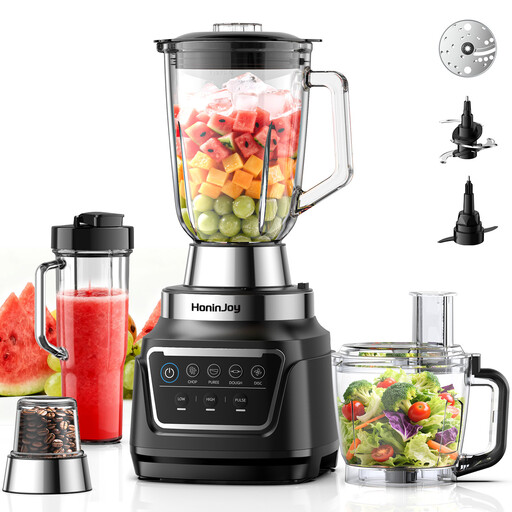
Why This Fits Their Persona: Ideal for home cooks and families who want a single, powerful appliance for daily meal prep—from morning smoothies and chopped vegetables for lunch to freshly kneaded dough for dinner.
With a maximum power of 1300W, this model bypasses the performance trap and handles even tough jobs. The removable parts are dishwasher-safe, directly defusing the cleaning trap.
A comprehensive accessory set, including a 1.5L glass blender jar and a 2L processing bowl, covers nearly all daily cooking needs. Preset programs simplify operation.
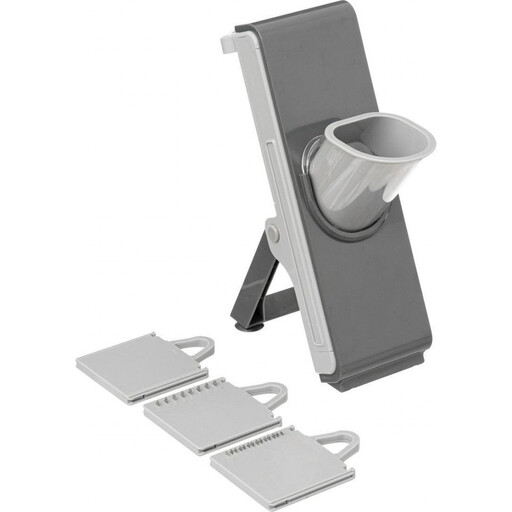
Why This Fits Their Persona: Suitable for users who value perfectly uniform slices of fruits and vegetables and prefer a specialised tool over a motorised attachment.
This tool avoids the "jack-of-all-trades, master of none" trap by specialising in a single task: slicing. It delivers consistent results that some multi-function attachments cannot achieve.
Stainless steel blades and a food holder for safe operation enable precise and repeatable slicing results. The device is dishwasher-safe, making it easy to clean.
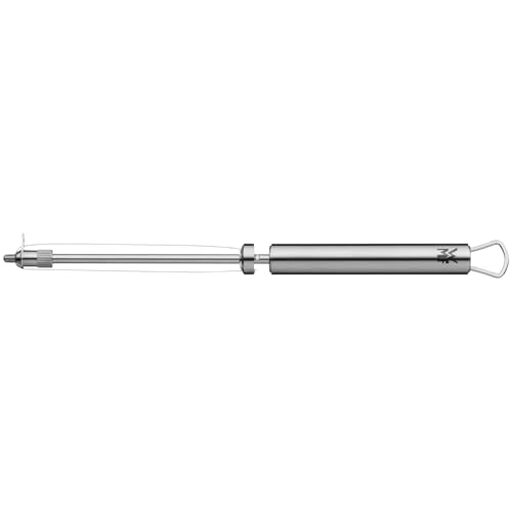
Why This Fits Their Persona: Designed for enthusiasts who frequently process semi-hard cheeses like Gouda or Emmental and need clean, even slices without crumbling—a task where specialised tools often excel.
This tool is the antithesis of a flimsy multi-function attachment. Its Cromargan stainless steel construction and taut wire are optimised for a single purpose, guaranteeing durability and performance.
Made from robust, rustproof 18/10 stainless steel. The wire design ensures consistently even slices for semi-hard cheese. The product is dishwasher-safe.
If you prefer specialised tools over an all-in-one solution, we have curated a selection of products that meet strict selection criteria.
1. How many watts should a good multifunctional food processor have? For basic tasks like blending soups or light smoothies, appliances under 800 watts can suffice. However, if you plan to regularly process hard ingredients like nuts, ice, or tough dough, a model with at least 1000 watts is recommended to avoid motor strain and unsatisfactory results.
2. Are the accessories of a food processor dishwasher-safe? This varies by manufacturer and model and is an important factor in your purchase decision. Look for an explicit "dishwasher-safe" label in the product description. Typically, removable parts like the jar, lid, and blades can be cleaned in the top rack of the dishwasher, while the motor unit should only be wiped with a damp cloth.
3. Can a multifunctional food processor knead heavy dough? Yes, many high-powered models can. A motor with high wattage (over 1000W) and a sturdy dough hook are crucial for this. Lower-powered appliances may struggle or overheat with heavy yeast or bread doughs. While this function is often sufficient for occasional baking, those who frequently process large batches of dough might be better served by a dedicated dough mixer.