
Lieferung heute & morgen

Qualitätsgarantie

Willkommens-Angebote freischalten: KOSTENLOSE Lieferung | Bis zu 80 % RABATT | Kostenlose 30-Tage-JoyPlus-Testphase
App herunterladen
In urban apartments where every square foot counts, multifunctional furniture is more than just a trend—it's a necessity. A sofa that converts into a bed or a table that also offers storage can significantly improve your quality of life. However, the market is flooded with products that often fail to deliver on their promises. Many buyers invest in pieces that quickly prove to be impractical, unstable, or overly complicated.
This guide will help you identify the most common pitfalls and understand the key criteria for making a smart purchasing decision. We'll show you what to look for to find space-saving furniture that truly makes your daily life easier.
Before you invest, it's important to be aware of the typical problems that often only become apparent after the purchase.
To avoid a bad buy, focus on objective and verifiable features. These three parameters are crucial for the longevity and functionality of your new furniture.
The durability of a piece of furniture depends directly on its materials. Pay close attention to the exact material specifications. MDF (Medium-Density Fibreboard) is generally denser and more stable than standard particleboard. For high-stress parts like tabletops or seats, the material's thickness is a key indicator.
An essential metric is the maximum load capacity, specified in kilograms (kg). This value indicates how much weight the furniture can safely support. Especially for seating, beds, and shelves, this specification is a clear indicator of quality that should not be ignored.
For furniture that changes its shape—like height-adjustable tables or sofa beds—the mechanism is the core component. Check what material the moving parts (e.g., hinges, rails, gas springs) are made of. Metal components are almost always more durable than plastic ones. Operation should be smooth and effortless, without requiring significant force.
Don't just measure the available space in your home; compare it with the furniture's dimensions in all of its functional states. A multifunctional sofa might fit perfectly when folded, but how much space does it require when converted into a sleeping area? An extendable dining table must still allow enough room to move around even when fully extended.
Here are some recommendations tailored to specific needs and living profiles, all of which meet the criteria mentioned above.
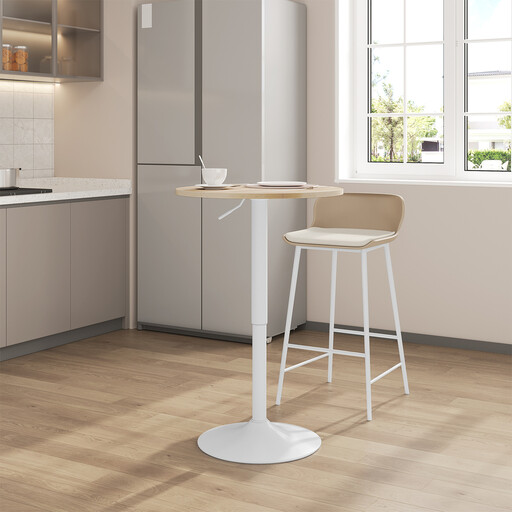
Why This Fits Their Persona: Ideal for small kitchens or living areas. It serves as a dining table, a standing table for parties, or a compact workspace. The height adjustability makes it extremely adaptable for various seating arrangements and uses.
The design, featuring a wide base and non-slip rubber seals, counteracts the typical instability of height-adjustable tables. The lever mechanism is designed for durable and easy operation.
Infinitely adjustable height (70-91 cm) and a 360° rotating tabletop made of easy-care MDF.
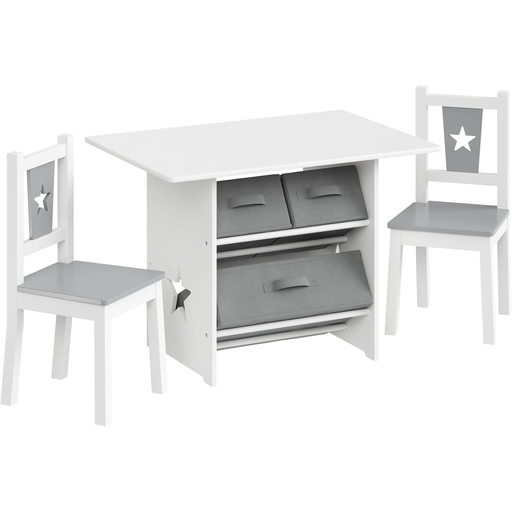
Why This Fits Their Persona: This set is a combination play table, desk, and storage solution. It provides a dedicated space for children to draw, craft, and play, while the integrated fabric bins encourage tidiness. Perfect as children's furniture with storage.
The storage space is easily accessible via the open fabric bins and is practically sized for toys and books. All edges are rounded to minimise the risk of injury, and the reinforced structure under the tabletop and seat ensures necessary stability.
A set including a table, 2 chairs, and 3 fabric bins. The maximum load capacity of 30 kg for the table and chairs is clearly defined. According to the manufacturer, the wood is sourced from FSC-certified forests.
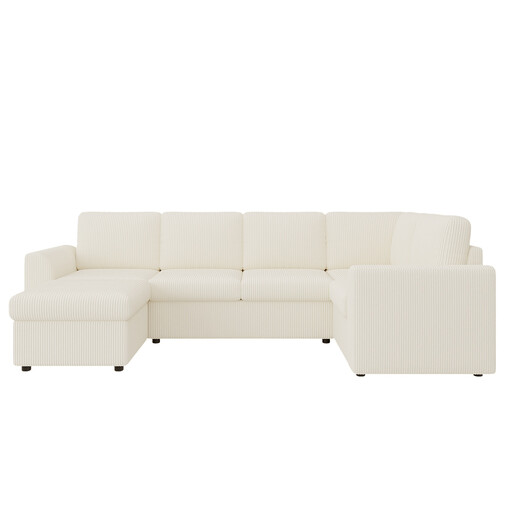
Why This Fits Their Persona: This sofa is a prime example of modern living room furniture. It offers ample seating, a sleeper function for overnight guests, and a movable ottoman that serves as a footrest, extra seat, or a coffee table with integrated storage.
The storage space in the ottoman is generous and practical for blankets or magazines. The sturdy frame construction with pocket springs and high-density foam filling prevents sagging and ensures long-lasting shape retention.
Three functions in one: seating, sleeping, and storage. The ottoman lid can be flipped over to be used as a tabletop. The clearly defined load capacity of 150 kg per seat builds confidence.
We have compiled a comprehensive, up-to-date list of products that meet these strict selection criteria and safety standards.
1. How do you maintain multifunctional furniture to ensure the mechanisms last? Maintenance depends on the mechanism. For metal hinges and rails, it can be helpful to clean them occasionally and treat them with a suitable lubricant according to the manufacturer's instructions. Avoid forcing any mechanisms. Regularly checking and tightening screws can also extend their lifespan.
2. Is "easy-to-assemble" furniture really simple to build? This can vary. An indicator of genuinely simple assembly is numbered parts and illustrated, step-by-step instructions. Products that can be built with minimal tools (often just a screwdriver or an included Allen key is needed) are typically more user-friendly. It's advisable to check if an assembly manual is available online before purchasing.
3. What is the most durable material for space-saving furniture? A solid construction is crucial for durability. MDF offers a good balance of cost and stability and is often more resistant to warping than standard particleboard. For frames and mechanical parts, metal (steel or aluminium) is the most robust choice. Always pay attention to the specified maximum load capacity, as it is a direct indicator of the construction's stability.