
Lieferung heute & morgen

Qualitätsgarantie

Willkommens-Angebote freischalten: KOSTENLOSE Lieferung | Bis zu 80 % RABATT | Kostenlose 30-Tage-JoyPlus-Testphase
App herunterladen
Furnishing compact living spaces presents a unique challenge: every square inch counts. Modern small-space furniture promises to blend style with functionality, but not every product lives up to its marketing hype. This guide will help you avoid common purchasing pitfalls and identify pieces that will genuinely enhance your daily life.
Before making a purchase, it's wise to familiarise yourself with typical flaws that often only become apparent after a few weeks of use.
To avoid buyer's remorse, focus on a few crucial technical features. These define the quality and usability of a piece of small furniture.
The foundation of any durable piece of furniture is its material. A sturdy metal frame, often powder-coated, not only provides stability but also protects against rust and scratches, a feature highly valued in industrial design. For tabletops, E1-grade particleboard with a melamine resin coating is a solid choice. This standard ensures low formaldehyde emissions. The coating also makes the surface water-resistant and easy to clean.
Modern small furniture should offer more than just a surface. Think carefully about the function the piece needs to serve. Do you need a flexible laptop table for working on the sofa? Or are you looking for a coffee table set that can be separated when needed? Models like round nesting tables or a small table with storage in the form of drawers, shelves, or fabric baskets help maintain order in small spaces. A bar table with shelves, for example, can serve as a space-saving counter solution with integrated storage in an open-plan kitchen.
Here are some recommendations tailored to specific user profiles and living situations.
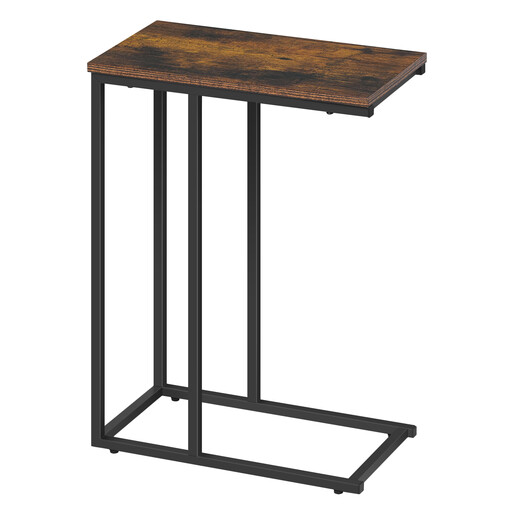
Why this model works: Ideal for first-time renters or students who need a flexible surface. The C-shape allows the table's base to slide neatly under a sofa or bed, making the tabletop perfect for use as a laptop desk or for holding drinks.
The design is specifically engineered to gain stability by sliding under a heavier piece of furniture, thus avoiding the "wobble" trap. The powder-coated metal frame is robust.
Maximum space utilisation with a minimal footprint. According to the manufacturer, the E1 particleboard with melamine laminate is scratch-resistant and water-repellent.
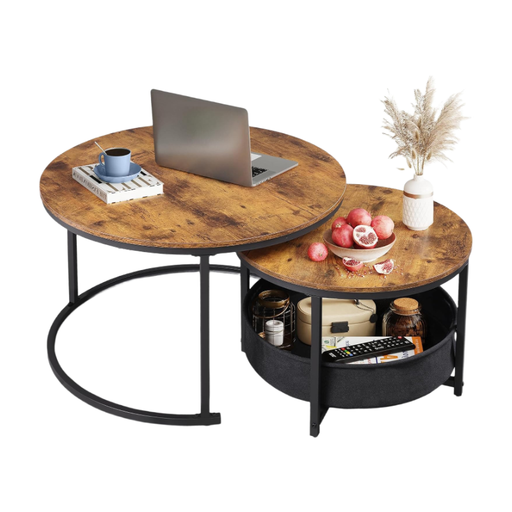
Why this model works: For anyone who loves to reconfigure their decor. This set of two round tables can be used as a coffee table ensemble, separated as individual side tables, or nested together. The fabric baskets offer practical storage.
The set bypasses the impractical dimensions pitfall by offering two separate, flexible elements. The sturdy metal frame ensures both tables have a secure footing.
Flexible 2-in-1 nesting design and integrated storage via fabric baskets for magazines or remote controls.
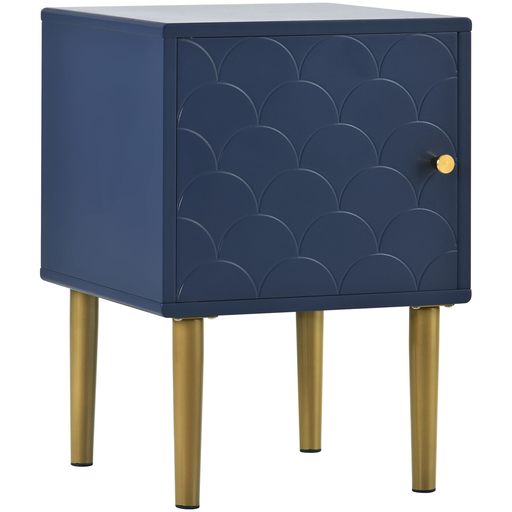
Why this model works: For those who view furniture as a design statement. The unique fish scale pattern and champagne-coloured metal legs make this nightstand an eye-catcher that also provides enclosed storage.
This model goes beyond a simple, smooth surface, offering a textured, decorative front that is less prone to showing minor scratches. The rounded corners are a thoughtful safety feature.
A combination of striking design and functional, enclosed storage. The handle can be mounted on the left or right side as needed.
We have compiled a complete, up-to-date list of products that fully meet these strict selection criteria and comply with current safety regulations.
Look for a solid metal frame and check the maximum load capacity specified by the manufacturer. A higher dead weight can also be an indicator of stability. Models with height-adjustable feet are advantageous as they can compensate for uneven floors and prevent wobbling.
"E1" is a European standard that sets the limit for formaldehyde emissions from wood-based materials like particleboard. Furniture with this classification releases only very small amounts of formaldehyde into the ambient air, contributing to a healthier living environment. These boards are often also finished with a melamine resin layer, which makes them resistant to scratches and moisture.
Generally, no. Most furniture designed for indoor use, especially pieces made from particleboard, is not suitable for outdoor exposure. Moisture and UV radiation can quickly damage the material. For the garden or balcony, you should specifically look for an outdoor table made from weatherproof materials like aluminium (e.g., the Terrabeta outdoor kitchen table) or specially treated wood.