
Lieferung heute & morgen

Qualitätsgarantie

Willkommens-Angebote freischalten: KOSTENLOSE Lieferung | Bis zu 80 % RABATT | Kostenlose 30-Tage-JoyPlus-Testphase
App herunterladen
A multifunctional food processor can combine slicing, grating, chopping, blending and kneading in a single appliance. Depending on the model, this saves space and reduces the number of separate kitchen gadgets you need. At the same time, unclear accessory details, exaggerated performance claims and designs that are difficult to clean can quickly lead to disappointing purchases.
This guide explains which technical details matter before you buy and which appliance could suit different households.
A powerful motor does not automatically mean that an appliance will perform every task equally well. Other important factors include speed control, the blade design, the maximum operating time and the accessories supplied. A 300-watt electric chopper may be sufficient for onions or herbs, while a dough mixer has different requirements for its motor and gears.
Check whether the manufacturer specifies functions such as kneading, grinding, emulsifying or crushing ice. If no information is provided about the permitted operating time, the appliance should not be expected to handle long processing cycles.
‘Lots of functions’ sounds appealing, but what matters is whether the attachments you need are included. For a vegetable slicer, for example, suitable slicing and grating discs, as well as a safe feed tube, are important. A food processor with a dough hook is suited to different tasks from a kitchen chopper with a single blade.
Also check whether accessories can be bought separately and how much storage space they require. Not every vegetable slicer, grater or slicing machine can replace an electric chopper.
Food residue often collects around lid edges, blade mounts and small seals. The description ‘food processor dishwasher-safe’ usually applies only to removable parts, not to the motor unit, cable or mains plug. The manufacturer should also clearly state which components are suitable for the dishwasher.
A secure bowl and lid locking mechanism, a pusher for the feed tube and safe handling of sharp blades are also important. Always unplug the appliance before cleaning it or changing an attachment.
First, make a short list of the tasks you carry out regularly:
The stated bowl volume is not always the same as the usable working capacity. The Philips HR7320/00, for example, is listed with a bowl capacity of 2.1 litres and a working capacity of 1.5 litres. For families, the working capacity is more important because it shows how much food can realistically be processed.
Small containers between 0.5 and 0.6 litres are more suitable for individual portions, dips, herbs or onions. A 2-litre container is more versatile, but requires more space on the worktop and more cleaning.
Glass containers are transparent and, according to product information, absorb fewer odours than some plastic containers. However, they are heavier and can be damaged by sudden temperature changes. Plastic bowls are lighter, but you should check the stated material and maximum filling quantity.
For simple operation, two speed settings plus a pulse function give you easy control over the consistency. Short pulses are particularly useful for onions, nuts or herbs, helping to prevent over-processing. Always follow the manufacturer’s instructions on operating time: processing in short intervals can help prevent overheating.
The following appliances differ significantly in terms of functions, container size and design. The information is based on the respective product details.
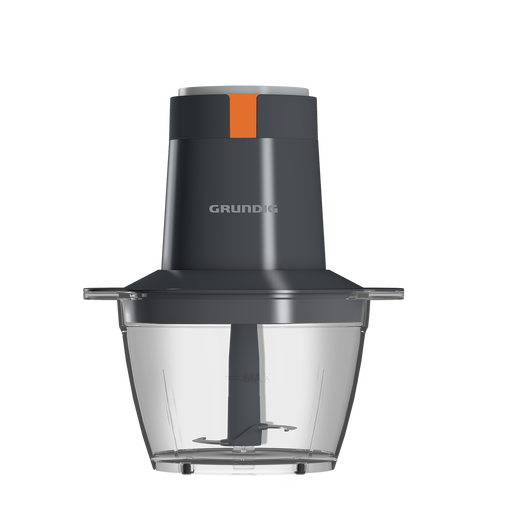
Why this product suits this profile: This compact kitchen chopper is designed for everyday slicing and chopping tasks, while its 0.5-litre glass container takes up very little worktop space.
The two speed settings allow for coarse or finer processing. The safety lock and non-slip base address important everyday safety considerations.
500-watt motor, removable stainless-steel blades and a dishwasher-suitable glass container, according to the product details.
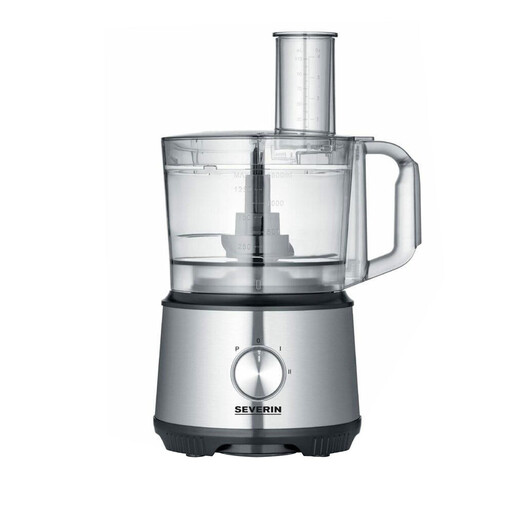
Why this product suits this profile: This model combines several attachments for dough, slicing, chopping, grinding and emulsifying, making it suitable for households with a wide range of regular tasks.
The contents specify each attachment included: dough hook, mill attachment, three disc inserts, blade and emulsifying disc. This makes it easier to assess the available functions before buying.
1200 watts, 1.5-litre bowl and removable dishwasher-suitable parts, according to the product details.
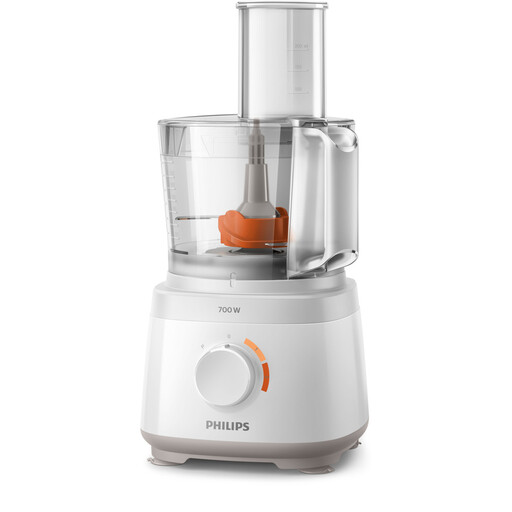
Why this product suits this profile: The combination of a medium-sized working capacity, pulse function and several essential attachments suits families and frequent users who regularly slice, grate or knead.
The product details distinguish between a total volume of 2.1 litres and a working capacity of 1.5 litres. Two speeds, a pulse function and a child lock are also specified clearly.
700 watts, stainless-steel blade, slicing and grating discs, plus removable dishwasher-suitable parts, according to the product description.
We have put together a complete, regularly updated list of products that fully meet these strict selection criteria and the safety regulations applicable in the EU.
For several portions, a working capacity of around 1.5 litres or more is practical. However, the appliance’s suitability also depends on the ingredients and the maximum fill line. For dips, onions or small quantities, a 0.5-litre container is often sufficient.
Its lifespan depends on the materials, care, workload and whether the recommended operating intervals are followed. Blades should only be used for approved foods. The motor unit and cable must not come into contact with water. Regular drying, careful attachment changes and following the instruction manual can help extend the appliance’s service life.
Power consumption depends on the motor rating and the actual operating time. As chopping or grating usually only requires short intervals, the wattage alone is not the deciding factor. For longer applications, follow the specified breaks and avoid leaving the appliance running continuously when it is not needed.