
Lieferung heute & morgen

Qualitätsgarantie

Willkommens-Angebote freischalten: KOSTENLOSE Lieferung | Bis zu 80 % RABATT | Kostenlose 30-Tage-JoyPlus-Testphase
App herunterladen
A multi-function blender is designed to replace several kitchen appliances. Depending on its equipment, it can blend, chop, grind, knead, whisk and process ice. This sounds practical for households with limited storage space. However, appliances vary considerably when it comes to motor power, accessories, capacity and cleaning.
If you focus only on a high wattage or a long list of functions, you can quickly end up buying an appliance that does not suit the way you use it every day. The following criteria will help you assess marketing claims objectively.
A specification such as 1,000 or 1,500 watts initially describes the electrical power consumption or the rated or maximum power – it does not automatically indicate that the appliance can process every type of food. Other important factors include:
An appliance may be suitable for smoothies but not for prolonged kneading or regular grinding. You should therefore check the instruction manual before buying.
A blender with a chopper, whisk, grinding attachment and meat grinder attachment may appear versatile. In practice, what matters is whether the attachments can be changed easily, locked securely and cleaned without hassle. It should also be clearly stated which parts are included in the delivery. “Compatible with additional accessories” does not necessarily mean that those accessories are already included.
Dried-on residue around blade shafts, lids or seals affects hygiene and ease of use. Claims such as “dishwasher-safe” usually apply only to removable parts. The motor housing must not be immersed in water. Breaks between operating cycles are equally important: according to some product specifications, for example, compact 4-in-1 hand blenders may only be operated for a short time and then require a cooling period.
Do not compare wattage alone. Also consider the use intended by the manufacturer. For soups, sauces and soft fruit, a hand blender with variable speed is often sufficient. For frozen fruit, nuts or ice-crushing functions, you need a suitable blade, an appropriate container and clear instructions on processing ice.
Look out for:
Automatic shut-off does not prevent you from exceeding the permitted fill level or operating time.
A blender with a capacity of 1.5 to 1.8 litres is suitable for several portions. A small beaker takes up less space and is ideal for individual smoothies, sauces or baby food. For families and larger quantities of dough, a food processor with a blender and a larger mixing bowl is generally more practical.
You should also check:
Hot liquids require particular care. The lid must be securely fitted, and the instructions must expressly permit warm food to be processed.
A blender with accessories is only efficient if each attachment is suited to the task. An S-shaped blade is suitable for chopping, slicing and grating discs handle cutting tasks, a dough hook is intended for dough, and an emulsifying disc can be used for dressings or sauces, for example.
For everyday use, removable, dishwasher-safe parts are convenient. Nevertheless, sharp blades should be handled carefully by hand. Unplug the appliance before changing attachments and before cleaning it.
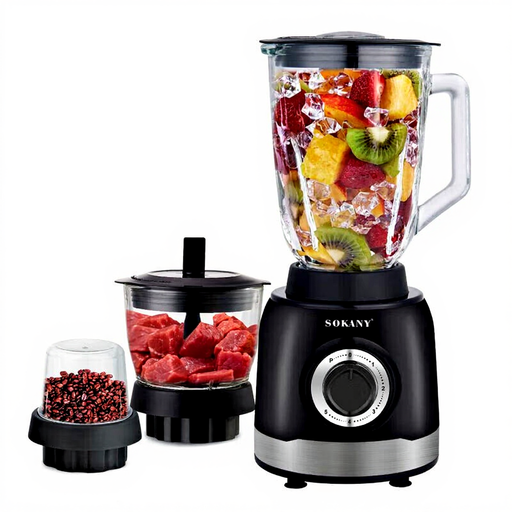
Why this product suits this profile: The combination of blender, meat grinder, ice crusher and juicer appeals to households looking for several essential functions in one compact appliance. The stated motor power is 1,000 watts.
The functions are described as specific attachments. Before buying, check the contents, maximum fill levels and operating times on the product page.
1000 W motor; several stated applications, including chopping, blending and ice processing.
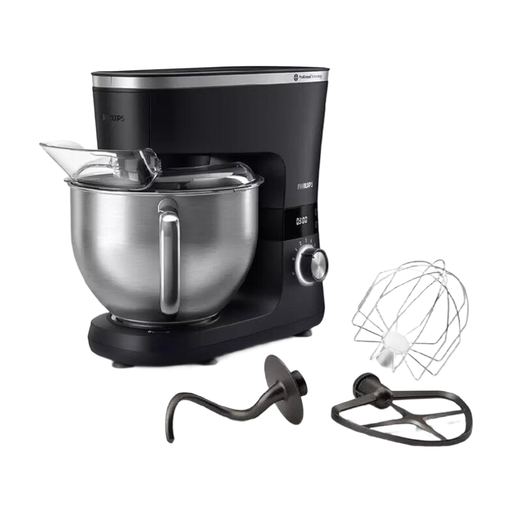
Why this product suits this profile: The 5.5-litre bowl is designed for larger quantities. It also comes with a 1.5-litre blender attachment, making it suitable for families and regular food preparation.
The capacities and eight speed settings are clearly specified. This makes it easier to compare the appliance with your portion sizes, available worktop space and recipes.
5.5-litre bowl; 1,000 watts; eight speed settings; removable parts are dishwasher-safe according to the product description.
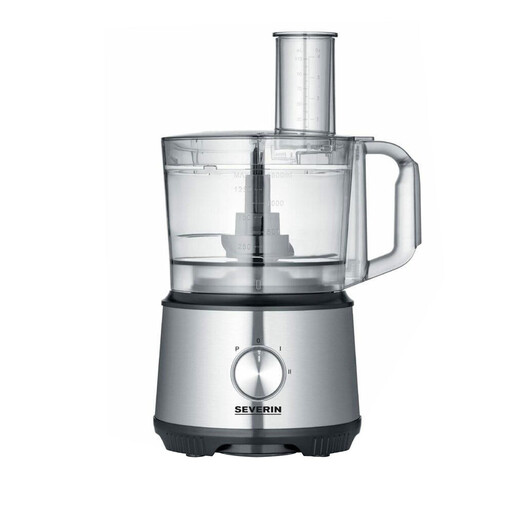
Why this product suits this profile: This food processor handles kneading, grating, slicing, grinding, chopping and emulsifying. It is therefore suitable for users who regularly prepare dough and process ingredients.
Rather than presenting a long, unclear list of functions, it specifies several concrete attachments: a dough hook, grinding attachment, three disc inserts and an emulsifying disc.
1,200 watts; 1.5-litre bowl; several slicing and grating options; parts are dishwasher-safe according to the product information.

Why this product suits this profile: This hand blender combines a blending foot, measuring jug, whisk and chopper. With a 1.8-litre container and touch controls, it is designed for smoothies, soups and sauces at home.
Seven speed settings and a pulse function provide more precise control than appliances with only one or two settings. The removable parts also make cleaning easier.
Stated power of 1,500 watts; 1.8-litre Tritan container; seven settings plus pulse function; safety lock according to the product description.
We have put together a complete, regularly updated list of products that fully meet these strict selection criteria and the safety regulations applicable in the EU.
For a long service life, it is important to follow suitable working practices:
A food processor uses discs and blades designed for different tasks. A smoothie maker with a small container is more suitable for individual portions, while a multi-function food processor with a large bowl can be advantageous for family-sized portions and dough.
There is no one-size-fits-all wattage. Lower power ratings may be sufficient for soft ingredients and simple smoothies. If you regularly process nuts, frozen fruit, ice or dough, you should also compare the blade shape, container, operating time and the manufacturer’s recommendations. Wattage alone is not a reliable measure of quality.
Only if the instructions expressly permit it. Hot liquids can create pressure inside the container and splash out when opened. The lid, fill level and temperature limit must be observed. Depending on the model, a hand blender can be used directly in a saucepan, but it must not be immersed beyond the permitted depth.
Its service life depends on how frequently it is used, the ingredients processed, cleaning and compliance with operating limits. Overloading, using the wrong attachments and prolonged continuous operation can place greater strain on the motor and blades. When buying, it is worth considering clear instructions, robust removable parts and information about available replacement parts or accessories.