A multipack of snack bars may be worth considering if the individual bars work as planned portions in your eating routine. For weight management, the German Nutrition Society says that your total energy intake is what matters; eating more frequent snacks alone is not a proven way to lose weight. So check the nutritional information per bar, along with the ingredients, allergens and how many you’re actually likely to use.
Who are multipacks suitable for?
People who plan their snack portions
You want to decide in advance when you’ll have an individually wrapped bar. The German Nutrition Society focuses on total energy intake when it comes to weight management, rather than recommending a particular number of snacks.
Households that regularly eat snack bars
You’re considering stocking up, but only want to buy as many portions as you’ll actually plan to eat before they reach their best-before date.
People who check ingredients carefully
You check the ingredients list and labelling for milk, soya, peanuts, nuts or gluten in every variety. The sweeteners used may also be an important factor in your choice.
What should you look for when choosing?
Start with the portion you have in mind, then compare the nutritional information and ingredients for the specific variety. Only then can you judge whether the pack size suits your routine.
| Criteria |
What to check when buying |
Who it matters most to |
| Energy per portion |
Check the energy per bar and its weight, not just the figures per 100 g. |
If I plan to have a bar as a regular snack, I want to factor that portion into my total energy intake. Around 33% of consumers put this kind of portion planning first. |
| Protein and fibre |
Compare the figures per bar alongside the energy, sugar and fat content. |
Protein and fibre matter to me in a planned snack, but I wouldn’t judge whether it suits my goals on those figures alone. This is the top priority for around 25% of consumers. |
| Ingredients and allergens |
Read the ingredients list, allergen information, may-contain warnings and consumption advice on the specific pack. |
If I need to avoid certain ingredients or take sweeteners into account, the recipe for each variety determines my choice. This check comes first for around 25% of consumers. |
| How much you’ll use |
Check the number of bars, their weight and their best-before date against how many you plan to eat. |
I don’t want to stock up if some bars don’t fit my planned snacks or end up going uneaten. Around 17% of consumers put this question first. |
Which buying decisions deserve a second look?
-
Taking protein claims as a promise of weight loss
The protein content doesn’t tell you how much energy a bar contains per portion. The consumer advice centre highlights energy balance and a diet that works in everyday life as important to long-term weight management.
Compare the full nutritional information and consider how the bar would fit into your usual eating routine.
-
Adding bars on top of your planned snacks
According to the German Nutrition Society, there’s no proven ideal meal frequency for weight loss; what matters is your total energy intake.
Before buying, decide whether and when a bar will replace another snack, and check the energy per bar.
-
Assuming all bars are the same as one variety
Ingredients vary between recipes. ALDI SÜD warns that a bar containing polyols may have a laxative effect if eaten in excess; the Nature Valley and MAX BALANCE products mentioned have different allergen information.
Check the ingredients, allergens, may-contain warnings and consumption advice on the packaging for each specific variety.
-
Automatically choosing the biggest pack
A higher number of bars is little use if you don’t eat them as planned.
Compare the pack size, weight per bar and best-before date with the number of bars you expect to plan for.
Brands to help guide your choice
ALDI SPORTS
ALDI SÜD’s own-label range includes a nougat-flavoured High Protein bar in a multipack of 3 × 45 g.
- The weight of each of the three bars is shown on the product page, which can help you plan your portions.
- This variety contains polyols; ALDI SÜD warns that eating too many may have a laxative effect. Check the information on the pack you receive, as nutritional values can vary.
Nature Valley
REWE stocks Nature Valley Salted Caramel Protein Bars in a pack of 4 × 40 g.
- REWE lists 199 kcal, 10.4 g of protein and 4.1 g of fibre for a 40 g bar.
- This variety contains peanuts, almonds, soya and milk, among other ingredients. Check the labelling on the specific pack.
MAX BALANCE
EDEKA stocks MAX BALANCE protein bars in several varieties, including White Chocolate-Vanilla as an individual bar.
- EDEKA gives 40 g of protein and 363 kcal per 100 g for this variety; the bar’s weight is also important when planning portions.
- This variety contains milk and soya and may contain traces of peanuts, gluten and nuts. EDEKA notes that details may differ from those on the packaging.
REWE PWR
REWE launched its own-label range in September 2026, initially with six protein bars.
- You can compare the different bars by their individual portion sizes, nutritional information and ingredients.
- Being positioned as a protein range doesn’t, in itself, tell you whether a specific variety fits your planned energy intake.
Snack bars at Joybuy
This selection includes multipacks of protein bars and cereal bars. Compare the individual portion and ingredients for each variety; the pack size alone won’t tell you whether it suits your eating routine.
 No image available
BE-KIND Protein Caramel Nut, 12 × 50 g
The twelve individually portioned bars may suit a planned snack stash. Check the nutritional information per 50 g bar, along with the ingredients and allergen information on the pack.
View at Joybuy
 No image available
Barebells Protein Bar Cookies & Cream, 12 × 55 g
The pack of twelve 55 g bars suits planning individual snack portions. Before buying, read the ingredients and consumption advice for this variety, particularly if sweeteners are important to your choice.
View at Joybuy
 No image available
Corny Free Chocolate cereal bars, 6 × 20 g
Six 20 g cereal bars offer smaller, set portions for planned snacks. Compare the nutritional information per bar and read the ingredients list rather than assuming the product name tells you everything about its contents.
View at Joybuy
 No image available
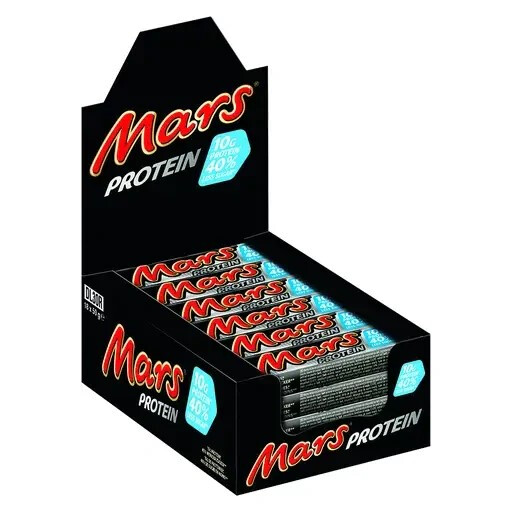
Mars Protein bar, 18 × 50 g
The box of 18 bars may suit you if you’ll genuinely plan to use this quantity for individual snacks. For portion planning, check the energy per 50 g bar on the specific packaging, as well as the ingredients and allergen information.
View at Joybuy
 No image available
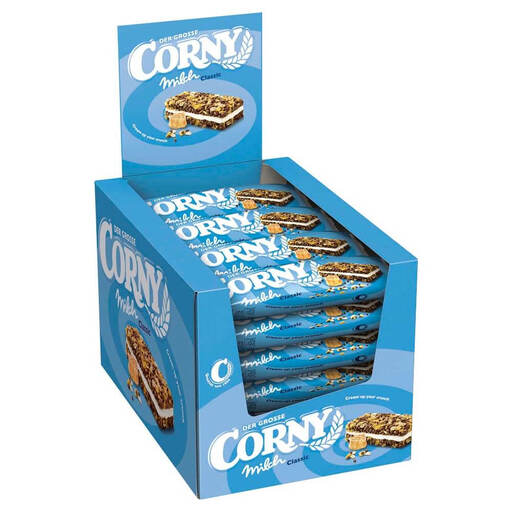
Corny Milk Classic cereal bars, 24 × 40 g
The 24 individually wrapped 40 g bars make a larger stash for planned portions. Before buying, check the energy per bar on the packaging, along with the ingredients and allergen information for this variety.
View at Joybuy
Frequently asked questions
Are multipacks of protein bars automatically a good choice for weight loss?
No. A protein bar may work as a planned snack, but the German Nutrition Society says that weight loss depends on your total energy intake being suited to your needs. So compare the energy per bar and consider whether the snack fits your eating routine.
Should I compare nutritional information per 100 g or per bar?
Both figures have a different purpose: per bar shows you the nutritional values for your planned portion, while per 100 g lets you compare bars of different sizes. For example, REWE lists 199 kcal, 10.4 g of protein and 6.3 g of sugar for a 40 g Nature Valley Salted Caramel bar.
Is a protein or sugar claim on the front enough to help me choose?
No. One claim doesn’t tell you everything about a bar’s nutritional values or ingredients. The consumer advice centre recommends checking the full nutritional information on products making these kinds of claims; make sure you note whether the figures are per 100 g or per portion.
What should I check for allergens in a multipack?
Always refer to the labelling for the specific variety on the packaging. The Nature Valley, ALDI SPORTS and MAX BALANCE examples mentioned have different ingredients and may-contain warnings, so don’t assume that another bar has the same details just because it’s from the same brand or has similar packaging.


