
Lieferung heute & morgen

Qualitätsgarantie

Willkommens-Angebote freischalten: KOSTENLOSE Lieferung | Bis zu 80 % RABATT | Kostenlose 30-Tage-JoyPlus-Testphase
App herunterladen
A multipack of socks is a practical choice, but it can be easy to make the wrong decision when buying. Many styles look similar in product photos, yet differ considerably in material, fit, cuffs and intended use. If you focus only on the price per item, you could end up with socks that are fine for everyday wear but slip during sport or lose their shape after just a few washes.
A pack of six or eight may seem better value at first than a 3-pack of socks. What matters, though, is the price per pair and whether all the styles suit your needs. A 3-pack may make more sense for a mixed wardrobe, while larger packs can be a good option if you wear socks frequently.
Claims such as breathable socks, “Cooling” or “Moisture Wicking” should be checked against the material composition and construction. Cotton can absorb moisture, but how quickly it dries depends on the fabric. Synthetic fibres such as polyester or polyamide are often used in quick-drying sports styles. Bamboo viscose, meanwhile, is not the same as unprocessed bamboo fibre.
Sneaker socks and no-show socks usually sit very low and are designed for shoes with a low-cut opening. Quarter socks, by contrast, cover part of the ankle. A higher leg can be more comfortable with work shoes, walking boots or longer trousers. A low-cut style won’t necessarily suit every shoe.
Check the exact fibre content on the product page. Common options include:
For sports socks, reinforced heels and toes, a well-fitting cuff and cushioning suited to the shape of your shoe are also important. Thick cushioning can make shoes feel tighter, so it won’t suit every fit.
Choose your size by checking the EU size range, rather than relying only on the international S, M, L or XL label. The range includes styles, for example, in sock sizes 35–49. Some ASICS styles cover sizes 35–38, 39–42, 43–46 and 47–49. Depending on the style, Skechers socks are listed in ranges including 35–39.5 or 41–46.
Pay particular attention to:
The lifespan of a multipack of socks isn’t determined by the material alone. Follow the manufacturer’s care instructions and avoid unnecessarily high temperatures. Several of the styles below are not suitable for bleaching; air-drying is recommended for some. Depending on the fibres and elastane content, tumble-drying can affect the fit.
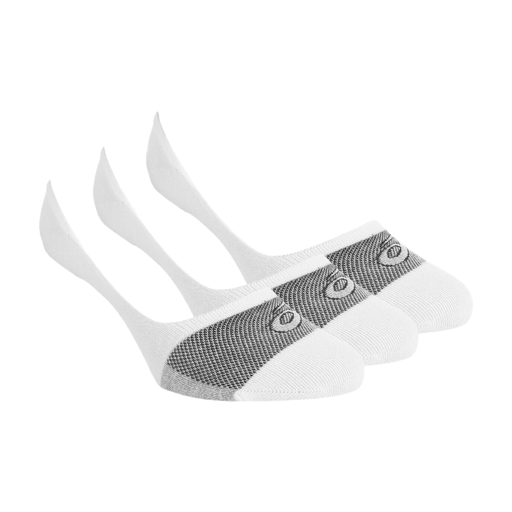
Why this product suits this profile: This 3-pack is an easy way to try short no-show socks for everyday wear, leisure and trainers. It’s listed in EU sizes from 35–38 to 47–49.
The clearly stated size range and 76% cotton content make it easier to compare with products that use very general descriptions.
3 pairs, low-cut design, a toe area described as seamless, and a blend of 76% cotton and 24% synthetic fibres.
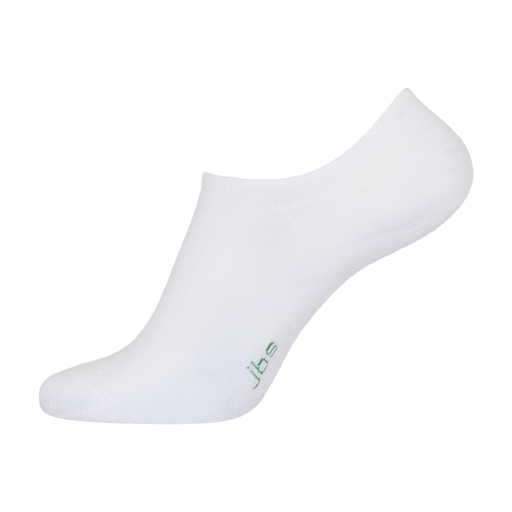
Why this product suits this profile: This seven-pair box is designed for people who change their socks regularly and prefer a clearly stated material composition.
The manufacturer lists 75% viscose from bamboo, 23% polyamide and 2% elastane. This makes it clear what the term bamboo socks means in this case.
7 pairs, sizes 35–38 to 47–48, plus clear care advice: wash at up to 40 °C and air-dry.
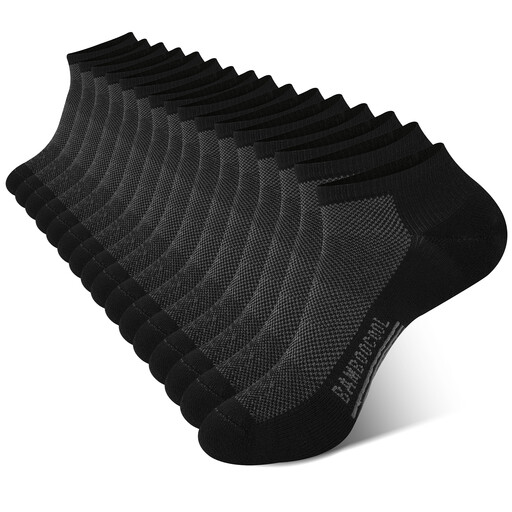
Why this product suits this profile: The low ankle length and 8-pack are aimed at men looking for socks for training, running, leisure and frequent changes.
The product description specifies reinforced heels and toes, a cushioned footbed and moisture-wicking fabric. These details are more useful than vague claims about comfort.
8 pairs, a low-cut design, reinforced areas and a cushioned sole for the stated uses of sport and everyday wear.
We’ve put together a complete, regularly updated list of products that meet these strict selection criteria and fully comply with the safety regulations in force in the EU.
For a single purpose, 3 pairs are often enough as an extra. If you wear socks every day and want pairs to change into between wash days, you could choose a 6- or 8-pack. If you wear different types of shoes, consider a combination of low-cut sneaker socks, quarter socks and longer everyday socks.
Cotton can work well for light activities and everyday wear. For longer or more intense training, also look at the fabric structure, drying properties, fit and reinforced areas. Depending on the style, running socks made with synthetic fibres may handle moisture differently from pure cotton socks.
There’s no reliable way to give a fixed lifespan. It depends on how often you wear them, friction from your shoes, wash temperature, drying method and material blend. Check the heel, toe area and cuffs regularly. Visible thinning or stretched-out cuffs are signs that it may be time for a replacement.