
Lieferung heute & morgen

Qualitätsgarantie

Willkommens-Angebote freischalten: KOSTENLOSE Lieferung | Bis zu 80 % RABATT | Kostenlose 30-Tage-JoyPlus-Testphase
App herunterladen
Multipacks of soft drinks are practical when you need to stock up for several people or a longer period. When shopping online, however, the pack price is not the only factor that matters. Bottle size, sugar content, caffeine, packaging type and storage life all affect whether a multipack is suitable for your actual needs.
A multipack with 24 cans may sound like a lot, but at home it could be used up more quickly than six bottles containing 1.25 litres each. Buyers should therefore compare the total volume in litres and the price per litre.
With Cola Zero and other sugar-free drinks, the ingredients list is crucial. Sweeteners can replace sugar while caffeine may still be present. Anyone wishing to avoid caffeine should look specifically for the “caffeine-free” label.
Statements such as “contains a source of phenylalanine” are also relevant for products containing aspartame. The information on the label should be checked carefully, particularly for children, pregnant women or people with specific intolerances.
Lemonades, iced tea and fruit juice drinks can differ considerably in their fruit content. A product with lemon or mango flavour does not necessarily consist mainly of fruit juice. For an objective comparison, the ingredients list, fruit content and nutritional values per 100 ml are the key factors.
Before ordering, the size of each individual unit should match its intended use. Cans can be handed out individually and do not need any further storage once opened. Larger PET bottles, on the other hand, provide more contents per pack but generally need to be refrigerated after opening and consumed promptly.
A 24-can pack can be a sensible choice for a party with lots of guests. For families or an office with a fridge, 6-packs containing 1.25 litres may be suitable. An iced tea multipack with 2-litre bottles is better suited to high consumption and ample storage space.
Nutritional values per 100 ml make it easier to compare different types of drink. Sugary products such as classic orangeade or certain fruit juice drinks often have higher carbohydrate and sugar values. Sugar-free varieties, on the other hand, contain sweeteners and may include aspartame, acesulfame K or cyclamate, for example, according to the ingredients list.
The relevant labelling should be checked for products containing caffeine. Caffeine-free cola varieties are suitable for situations where you deliberately want to avoid caffeine. None of the drinks mentioned here is associated with any medical or therapeutic effect.
Unopened drinks should normally be stored in a cool, dry place away from direct sunlight. Once opened, the relevant manufacturer’s instructions apply. For several of the products, refrigerated storage and consumption within a few days are recommended.
For events, it therefore makes sense to open only as many large bottles as can be served within a short period. Small cans or individual pouches reduce the amount left over after opening. This is a practical difference between a lemonade multipack for a party and a stock-up pack for everyday use.
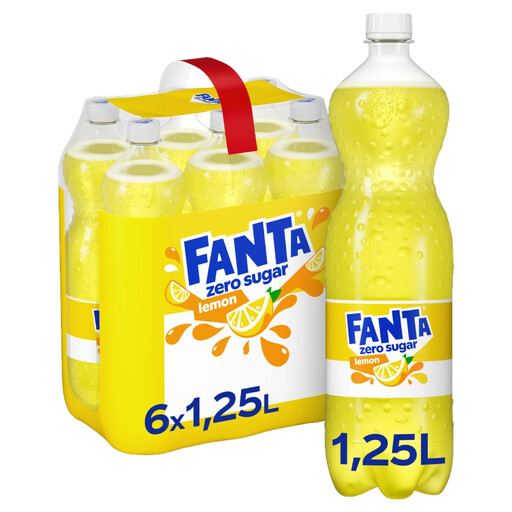
Why this product suits this profile: Six PET bottles containing 1.25 litres each provide 7.5 litres for the home, office or shared meals. According to the product details, this lemon soft drink contains no sugar and no calories.
The pack size and declared total volume are clearly stated. The “Zero Sugar” claim is supported by the nutritional information showing 0 g of sugar per 100 ml.
7.5 litres total volume; lemon flavour; according to the product details, 2 kcal per 100 ml and no sugar.

Why this product suits this profile: The combination of a sugar-free recipe and an explicitly caffeine-free variety is relevant to buyers looking for both features at the same time.
The product name indicates not only Zero Sugar, but also that it contains no caffeine. This helps avoid the common confusion between Cola Zero and caffeine-free drinks.
Six bottles of 1.25 litres each; according to the product details, 0.2 kcal and 0 g of sugar per 100 ml; caffeine-free.
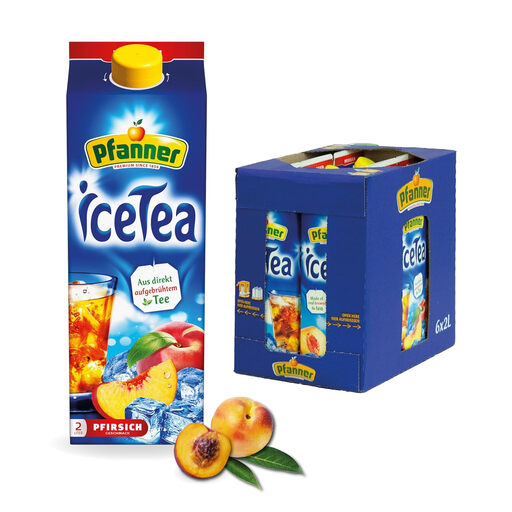
Why this product suits this profile: This iced tea multipack contains six 2-litre bottles, providing 12 litres in total. The format is suited to households, offices and events where drinks are served regularly.
The large volume is clearly stated. Buyers can check in advance whether their fridge, cellar or event space offers enough storage capacity.
Vegan according to the product details; black tea with peach flavour; refrigerate after opening and consume within a few days.
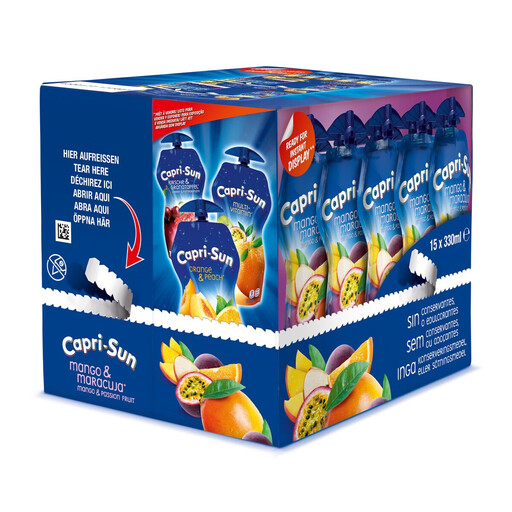
Why this product suits this profile: The 15 individual 0.33-litre portions are easy to hand out and transport on trips, at children’s birthday parties or at events.
The declared fruit content of 10% and sugar value of 9.6 g per 100 ml make the composition easy to understand. This helps prevent fruit flavour from being confused with a sugar-free product.
Convenient 0.33-litre serving format; resealable packaging according to the product description; 10% fruit content.
We have put together a complete, regularly updated list of products that fully meet these strict selection criteria and the safety regulations applicable in the EU.
This depends on the number of people, consumption levels and available storage space. Smaller packs or 0.33-litre drinks are suitable for occasional consumption. For daily consumption, 6-packs containing 1.25 litres or larger iced tea multipacks may be more practical. Stock should be stored in a dry, cool place away from sunlight.
No. Many Cola Zero products still contain caffeine. Anyone wishing to avoid it must check the product name and ingredients list. The “caffeine-free” label is the decisive feature.
The specific recommendation can be found on the packaging. For the products mentioned here, it is often recommended that opened bottles be refrigerated and consumed within a few days. Small cans or individual pouches may be a sensible choice when a drink is not going to be shared or needs to be stored for longer.