
Lieferung heute & morgen

Qualitätsgarantie

Willkommens-Angebote freischalten: KOSTENLOSE Lieferung | Bis zu 80 % RABATT | Kostenlose 30-Tage-JoyPlus-Testphase
App herunterladen
Vitamin-enriched drinks may seem straightforward at first glance: open the bottle, drink and add something extra to your daily routine. However, when buying multivitamin drinks, it is worth taking a closer look at the ingredients, sugar content, serving size and intended use. A colourful label alone reveals little about the actual composition.
A multivitamin juice can contain many added vitamins and still provide a relatively high amount of sugar. Fruit juice concentrate naturally contains sugar. For example, according to the product information, Valensina Multivitamin Juice 100% contains 10.3 g of sugar per 100 ml, even though no additional sugar is added. In a 250-ml glass, that adds up to more than 25 g of sugar.
If you are looking for a low-calorie soft drink, always compare the nutritional values per 100 ml and the recommended serving. “No added sugar” does not mean the same as “sugar-free”.
The percentage of the reference intake does not always apply to the entire bottle. For a 1-litre juice, the information may be given per 100 ml, while an actual serving is considerably larger. With vitamin supplements, effervescent tablets and powders, it is also important to check how much a daily serving contains.
You should therefore check:
A vitamin drink is not automatically a sports drink. An electrolyte drink typically contains minerals such as sodium, potassium and magnesium. An energy drink or energy drink powder, on the other hand, may contain caffeine and taurine. These products are designed for different situations and are not interchangeable.
For regular family use, a classic fruit juice with vitamins may be a good choice in terms of flavour. If you want to reduce your sugar intake, choose a sugar-free vitamin drink, a dilutable concentrate or a powder.
The differences between the options are clear:
The name ACE juice usually refers to a combination of vitamin A or provitamin A, vitamin C and vitamin E. However, the exact recipe can vary considerably. When choosing fruit juice with vitamins, pay attention to the fruit content, the concentrates used and any added sweeteners.
A high fruit content does not automatically mean few calories. Valensina is described as containing 100% fruit and no added sugar, but according to the nutritional information it contains 10.6 g of carbohydrates per 100 ml. Hohes C Plus Sonnen-Vitamin D is also described in the product information as containing 100% juice and 9.4 g of sugar per 100 ml.
Bottles containing 0.5 or 1 litre are suitable for keeping in the fridge and sharing. After opening, many juices must be refrigerated and consumed within three to four days. Powders and effervescent tablets take up less space, but require a glass or drinking bottle.
For concentrates, the mixing ratio is an important cost factor. A small bottle can make many servings, but must not be consumed undiluted. For food supplements, follow the consumption recommendation, warnings and age information on the packaging. They are not a substitute for a balanced diet.
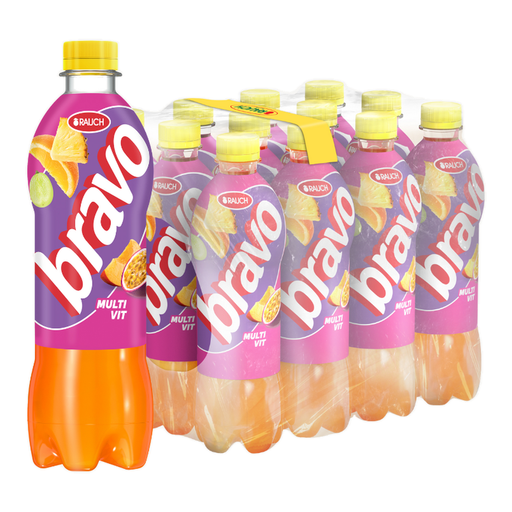
Why this product suits this profile: The 0.5-litre bottles can be used as individual portions and are suitable for the home, work or days out. According to the product information, the fruit blend contains 12% juice and ten vitamins.
The nutritional information states 28 kcal and 6.6 g of sugar per 100 ml. This makes it easier to assess your daily intake instead of focusing only on the added vitamins.
Individual bottles, ten declared vitamins and a practical multipack.
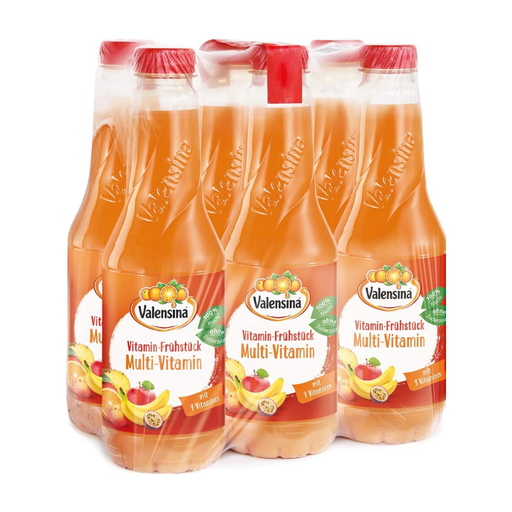
Why this product suits this profile: The juice is described as containing 100% fruit, nine vitamins and one provitamin. It is aimed at households that prefer classic 1-litre bottles.
“No added sugar” is not presented as meaning a low sugar content. The stated 10.3 g of sugar per 100 ml can be checked transparently before purchase.
100% fruit content according to the product description, a large multipack and no added source of sugar.
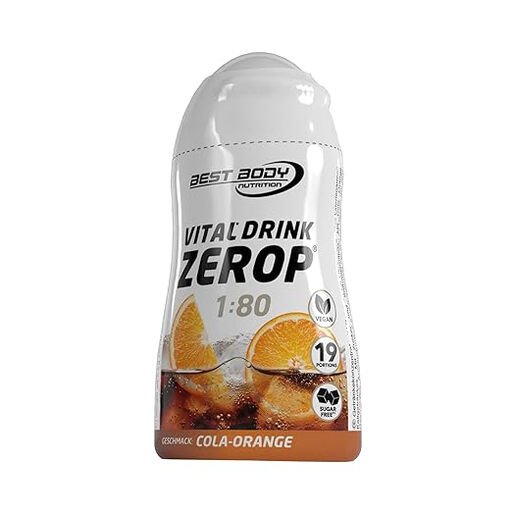
Why this product suits this profile: According to the product information, the concentrate is mixed at a ratio of 1:80 and is suitable for water bottles or sparkling-water makers. It contains vitamins B1 and B6, as well as niacin.
The mixing ratio and information about the prepared drink make the actual yield easy to understand. The concentrate must not be consumed undiluted.
Sugar-free recipe according to the product information, small serving quantity and flexible preparation.
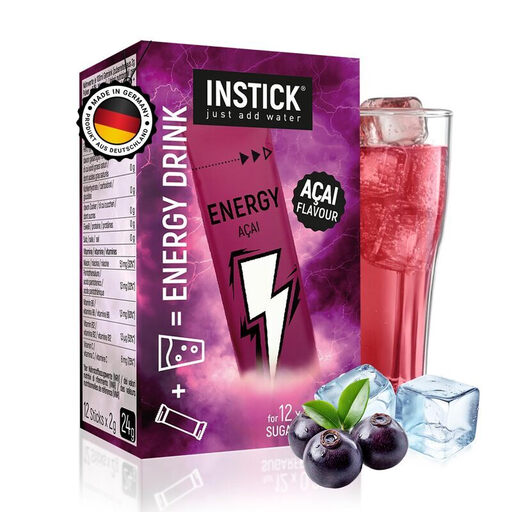
Why this product suits this profile: One stick makes 0.25 litres and contains 52 mg of caffeine, as well as taurine and several vitamins, according to the product information. The sticks are designed for preparing a drink while you are out and about.
The caffeine content, target group and warnings are clearly stated. According to the product information, it is intended for adults and is not recommended for children, teenagers or pregnant women.
Sugar-free recipe according to the manufacturer’s information, individual portions and 52 mg of caffeine per stick.
We have put together a complete, regularly updated list of products that fully meet these strict selection criteria and the safety regulations applicable in the EU.
Water is usually the simplest choice for daily hydration. Multivitamin drinks can add flavour, vitamins or minerals, but depending on the recipe they may also contain sugar, sweeteners or caffeine. The ingredients and nutritional information are therefore what matter—not the product name alone.
Many fruit juices should be refrigerated after opening and consumed within three to four days. The exact time limit is stated on the packaging. Powders, effervescent tablets and unopened concentrates can generally be stored for longer, but should be kept dry, sealed and protected from heat.
This depends on the individual product and its age recommendation. Caffeinated energy drink powders are not intended for children or teenagers. With food supplements, you must consider the dosage, warnings and any existing medical conditions. If you are unsure, it is advisable to ask your GP’s practice or pharmacist.