What should you look for when buying?
First, decide whether a simple setup with built-in microphones will do or whether you need an external microphone or separate inputs. Then consider the room, recording format and your workflow for longer takes and files.
| What matters |
What to check before buying |
Who is this important to? |
| Voice and room acoustics |
Record a test in the room you’ll be using; listen for microphone placement and noise from fans or air conditioning. |
If I’m recording commentary on my own, I want to hear whether my voice is clear from the position I plan to use. Around 36% of consumers would prioritise room acoustics and speech clarity. |
| Microphone connections |
Check the connectors, power requirements and number of inputs you need to use at the same time. |
If I already have a microphone for speaking or want to record several voices, I need compatible connections and, where necessary, separate tracks. Around 29% of consumers would prioritise inputs for external microphones. |
| Longer takes |
Test recording time in your chosen format, storage, power and headphone monitoring. |
If I want to record longer commentary scripts without avoidable interruptions, I want to check storage and power in advance. Around 21% of consumers would prioritise uninterrupted longer takes. |
| Files and editing |
Check WAV support, the USB functionality of the specific model and how to make a backup. |
If I need to share, back up or edit several takes, a clear file workflow matters to me. Around 14% of consumers would prioritise being able to edit and back up their recordings. |
Joybuy products
This selection includes compact voice recorders and digital audio recorders for solo recording, including models with features for app-assisted editing and processing.
 No image available
PLAUD Note Pro Voice Recorder, 64 GB
Its built-in microphones and compact design are made for voice recording; transcription and summaries are handled through the PLAUD app.
64 GB of internal storage; according to the product details, up to 30 hours of continuous recording and compatibility with Android and iOS.
View at Joybuy
 No image available
Mobvoi TicNote Standard AI Voice Recorder, 64 GB
The built-in microphone array and app features are designed for recording speech and processing it into text afterwards.
64 GB of storage; according to the product details, 20–25 hours of continuous recording and Wi-Fi and Bluetooth synchronisation. Ogg is listed as the recording format, so check that it fits your editing and file-sharing workflow.
View at Joybuy
 No image available
Digital Voice Recorder, 64 GB
The product details list voice recording with microphones, as well as transcription and summarisation features.
64 GB of storage; according to the product details, up to 36 hours of battery life and app control for iOS and Android.
View at Joybuy
 No image available
Rexsun L15, 16 GB
For a simple solo setup, the product description lists two microphones and one-button recording.
16 GB of storage; other listed features include headphone playback, USB transfer to a computer and automatic saving when the battery is low.
View at Joybuy
 No image available
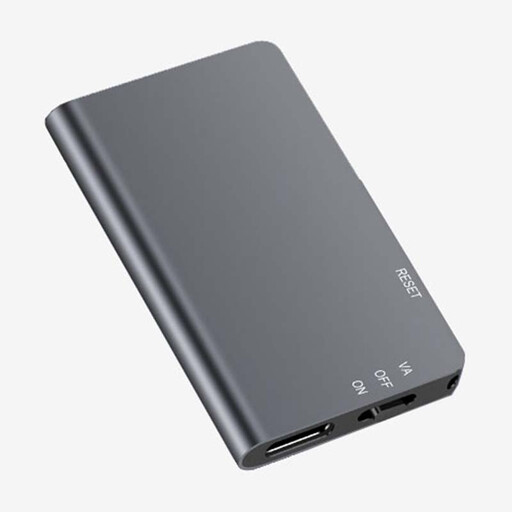
Rexsun L810, 64 GB
One-button recording and A-B repeat can be useful for voice recordings you want to play back or compare later.
According to the product details, WAV recording at 512 kbps and 48 kHz, with up to 22 hours of recording time. Compatibility is listed for Windows, Mac and Android.
View at Joybuy
Frequently asked questions
Does museum commentary have to be recorded in 32-bit float?
No, there’s no general requirement to do so. The DR-05XP and H4essential support 32-bit float; for your commentary, you should still check for room noise, position the microphone carefully and make a test recording. Also check the required delivery format with the client.
How should you prepare for a longer recording session?
Record a short test in your chosen format, listen back, and check your storage and power supply. Back up the original file before editing; the Audacity manual recommends exporting a WAV or AIFF file straight after recording.
What extra costs might come with a recorder that has XLR inputs?
If you don’t already own a compatible microphone, you may also need a microphone, cables, a stand and, where necessary, suitable storage media. Check the connections and power requirements of the specific model rather than assuming that an “XLR” label means you have a complete speaking setup.
Can you simply record other people for the commentary?
You must not record another person’s non-public spoken words on an audio recording without authorisation. Section 201 of the German Criminal Code (StGB) covers this situation; if other people are involved, get permission before recording. Recording your own voice alone in a home studio is a different situation.
Can you use other people’s text or music in a published audio guide without permission?
There’s no blanket yes to this. Section 19a of the German Copyright Act (UrhG) covers making protected works publicly available. For third-party content, check that you have the necessary rights for the specific text or music and the way you plan to distribute it.


