Brands to consider
The model ranges below differ mainly in their connections, recording methods and intended accessories. These details apply to the models and kits mentioned, not necessarily to a brand’s entire range.
RØDE
The smartLav+ is designed for a compatible smartphone TRRS input, while the Lavalier GO has a 3.5 mm TRS connection for compatible microphone inputs or transmitters.
- The model specifications clearly distinguish between plugs and connection types.
- The smartLav+ won’t automatically work with every smartphone; RØDE specifies an adapter for connecting it to a TRS input on the Wireless GO range.
Shure
The wired MVL is designed for compatible portable recording devices with a suitable TRRS input and the required microphone power.
- The MVL instructions specify a clip, windscreen and a distance of 15–25 cm from the mouth.
- This distance recommendation applies to the MVL and isn’t a general rule for every lavalier mic; the connection and power supply must match your device.
DJI
The Mic Mini is a wireless kit. DJI offers versions with one transmitter and one receiver, as well as versions with two transmitters.
- The stated contents make it easier to choose the right number of transmitters for one or two speakers.
- Battery-life and range figures relate to the specified test conditions and don’t promise interference-free transmission in a museum.
Zoom
The F2 combines a portable recorder for one speaker with an included lavalier mic.
- Zoom specifies 32-bit float WAV recording and a HOLD switch for the F2.
- Power, microSD storage and file transfer are all part of the process; the recording features won’t eliminate reverberation or clothing noise.
Sennheiser
The ME 2 is designed for compatible bodypack transmitters in the product families listed by Sennheiser.
- The model specifications state its omnidirectional pickup pattern and compatible transmitter families.
- A 3.5 mm connection alone doesn’t guarantee compatibility with every smartphone or recorder.
Suitable products at Joybuy
The Joybuy products below include wired lavalier microphones and wireless kits for smartphone and camera recording. A matching plug shape doesn’t automatically mean a device is compatible: check your device’s connection first, and check how many transmitters are included with a wireless kit.
 No image available
DJI Mic Mini 2S (2 TX + 1 RX + Charging Case)
This kit, with two transmitters and one receiver, is designed for recording two speakers.
The product description lists internal 32-bit float recording and clip or magnetic attachment. Check that the receiver is compatible with your recording device.
View at Joybuy
 No image available
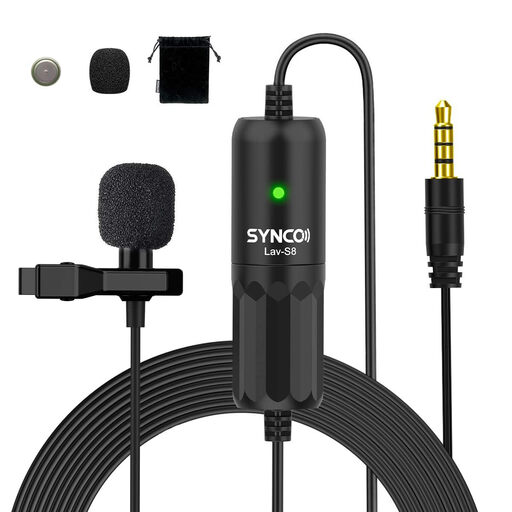
SYNCO S8 Lavalier Microphone for Smartphone & PC Laptop Camera
This wired lavalier mic is an option if you’re looking for a microphone for a compatible smartphone, PC, laptop or camera.
The product description lists a clothing clip, omnidirectional pickup, adapter kit and windscreen. Check that the included adapters work with your particular device.
View at Joybuy
 No image available
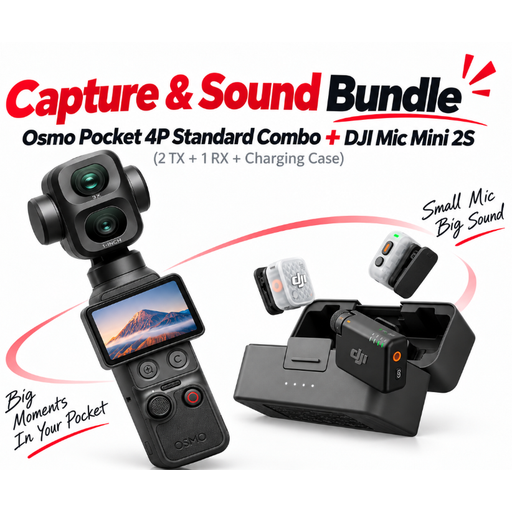
DJI Osmo Pocket 4P Pro Audio Bundle (Pocket 4P Standard Combo + Mic Mini 2S, 2 TX + 1 RX + Charging Case)
This bundle combines a camera with a wireless microphone system. It’s an option if you’re looking for both for mobile recording.
The product description lists two transmitters and one receiver. Check that the contents and recording setup suit your commentary.
View at Joybuy
 No image available
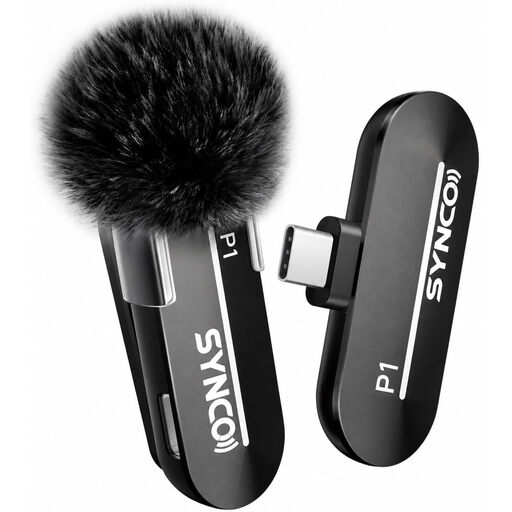
SYNCO P1XT USB-C Wireless Microphone
This wireless kit is designed for recording with a compatible USB-C device if you’d rather not be directly connected to your recording device by a cable while speaking.
The product description lists one transmitter and one receiver. According to the description, Android devices require OTG; iPhone 15/16/17 Pro Max models are also listed. Check compatibility with your specific device.
View at Joybuy
 No image available
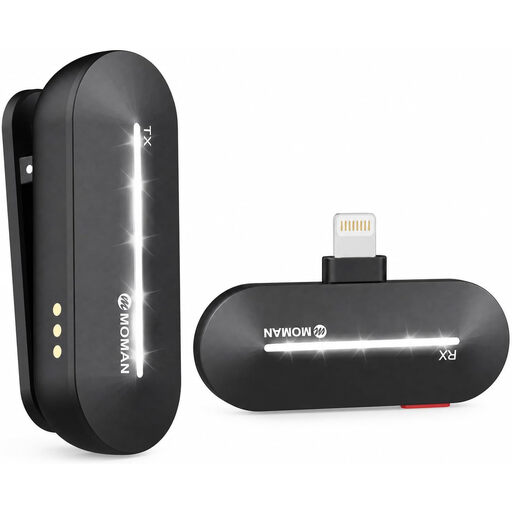
Moman M1CL Wireless Lavalier Microphone, 1TX+1RX
This wireless lavalier mic is an option for the iPhone and iPad models listed in the product description, with a compatible Lightning receiver.
The description lists an omnidirectional capsule and clip attachment. Before buying, check that your device is one of the listed models.
View at Joybuy
Frequently asked questions
How should I attach the microphone before recording my commentary?
Attach it so the capsule is unobstructed and doesn’t rub against fabric, then listen to a test recording while wearing the clothes you plan to use. Shure recommends a distance of 15–25 cm from the mouth for the MVL; this is a model-specific manufacturer recommendation, not a general rule for all lavalier microphones.
Do I need extra accessories for a 3.5 mm lavalier mic?
Possibly, as the plug and microphone input need to be compatible. RØDE specifies a TRRS-to-TRS adapter for using the TRRS smartLav+ with a TRS input on the Wireless GO range; the Lavalier GO is specified as a TRS microphone with plug-in power. Check the specific input on your recording device.
What should I check before making a longer recording with a separate recorder?
According to the manufacturer, the Zoom F2 uses microSD storage and two AAA batteries. Make sure you have enough storage and power, start recording and check with a short test that the file is being created as expected.
Am I allowed to record in a museum and capture other people’s conversations?
This also depends on the rules of the museum and the purpose of the recording. For example, the DDR Museum requires written permission and charges a fee for commercial audio recordings; this house rule does not automatically apply to other museums. Under Section 201 of the German Criminal Code (StGB), recording someone else’s private conversation without permission is a criminal offence. Check the museum’s rules and avoid making such recordings.
Can I use any wireless microphone frequency in Germany?
No. Permitted use depends on the specific frequency band and the applicable allocation conditions. Germany’s Federal Network Agency publishes general allocations for radio applications; its frequency plan was updated in August 2026. Check your wireless model’s frequency and the current allocation that applies to it.


