Commentary recorded from a fixed position
If you speak from the same spot most of the time, a wired lavalier and a suitable way to attach it can keep your set-up simple. Test the recording in the booth with the clothes you plan to wear.


For a mostly fixed speaking position, a wired lavalier is often the obvious starting point, as long as the connection, cable length and recording software are all suitable. A wireless set is worth considering if a cable genuinely gets in the way or you need to mic up several people separately. A recorder is an alternative if you want to save the file independently of your smartphone or computer. Whichever option you choose, record and listen back to a test using the clothes you plan to wear in the booth.
If you speak from the same spot most of the time, a wired lavalier and a suitable way to attach it can keep your set-up simple. Test the recording in the booth with the clothes you plan to wear.
If you want to keep using your smartphone, computer or recorder, make sure the microphone connection, device input, power requirements and recording software all work together. A plug that fits is not enough to confirm compatibility.
A body-worn recorder may be a good fit if you want to save the audio file independently of a smartphone or computer app. For movement or a second voice, a wireless set with the right number of transmitters may be more suitable.
A good fit if: You speak from a fixed position and your device and recording software accept a USB-C microphone as an input.
What to consider: The cable route and whether the device actually recognises the microphone as an audio input must suit your set-up.
A good fit if: Your recording device has an input for the relevant TRS or TRRS connection.
What to consider: TRS and TRRS connections, and the microphone power required, are not necessarily interchangeable.
A good fit if: A cable gets in the way of your movements or you need to mic up two people separately.
What to consider: You’ll also need to factor in the number of transmitters, receiver connection, power supply and wireless conditions.
A good fit if: You want to save the audio file independently of a smartphone or computer recording app.
What to consider: Batteries, storage media and transferring the file later all need to be part of your workflow.
| What matters | What to check before buying | Who should pay particular attention |
|---|---|---|
| Clear speech | Clip and cable routing; listen to a test recording in the booth wearing the clothes you plan to use. | If I want to record clear commentary without distracting clothing or room noise, I’ll check the attachment first and listen to a test. Around 36% of consumers put speech clarity first. |
| The right device connection | Microphone type, device input, power requirements and any adapter needed; then check a saved test recording. | If I want to use my existing smartphone, computer or recorder, the entire signal chain must work, from the plug to the recording app. Around 29% of consumers prioritise the right connection. |
| Recording and playback checks | Start recording, listen to the saved file and, if using a recorder, allow for its power supply and storage media. | For longer commentary, I want to make sure the recording has actually been saved and can be checked. Around 21% of consumers prioritise this. |
| Freedom of movement or a second voice | Check how much movement you need, how many people will be speaking, exactly what’s included in the set and how the receiver connects to your recording device. | If I need to move around or record a second person separately, a wireless set-up that meets my needs matters more than unused range. Around 14% of consumers prioritise freedom of movement or a second voice. |
TRS and TRRS refer to different connection types, and their microphone power requirements may also differ. So, a plug fitting physically does not prove that your recording device can use the signal.
Compare the full connection specifications for the microphone and recording device, then check a saved test recording. Depending on your set-up, you may need a suitable adapter or a different microphone model.
A range figure won’t tell you whether a cable would actually be a problem at a fixed speaking position.
First, work out the cable route you’ll need and how many voices you want to record separately. If you choose a wireless set, check the exact version, receiver connection and power supply; using extra transmitters and receivers also adds steps to your workflow.
A concealed attachment can rub against clothing and affect the recording.
Record and listen back to a section in the clothes you plan to wear before recording the full commentary. Listen out for cable movement, too.
The XS Lav USB-C is a wired option for a compatible USB-C mobile device or computer.
The Lavalier GO and smartLav+ offer different connection options for wired recording.
The V.Lav is a wired 3.5 mm option if your recording device needs to sit further away from your speaking position.
The Mic Mini is a wireless option if movement or separate voices justify the extra set-up.
The F2 with the LMF-2 lavalier offers a recording option with independent storage.
Here you’ll find Joybuy product options for wired and wireless lavalier recording. If you’re considering a wireless set, pay particular attention to what’s included, the connection and the frequency requirements for that specific system.
 No image available
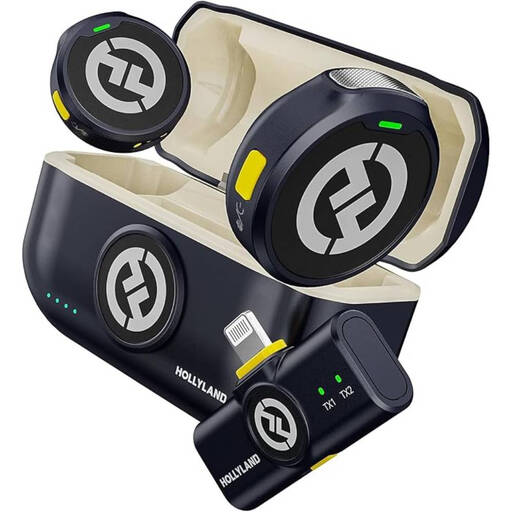
The version with two transmitters may suit you if you need to mic up two people separately.
The product name lists two transmitters, one receiver and a charging case; the product description mentions clip or magnetic attachment and internal recording. Check the receiver connection and the frequency requirements for the specific system.
 No image available
This wireless lavalier may suit you if a cable gets in the way when you’re wearing it.
The product description lists a clip-on transmitter weighing 9 g; the product title specifies 48 kHz/24-bit and a 300 m transmission range. Check that the receiver and connection are suitable for the recording you have planned.
 No image available
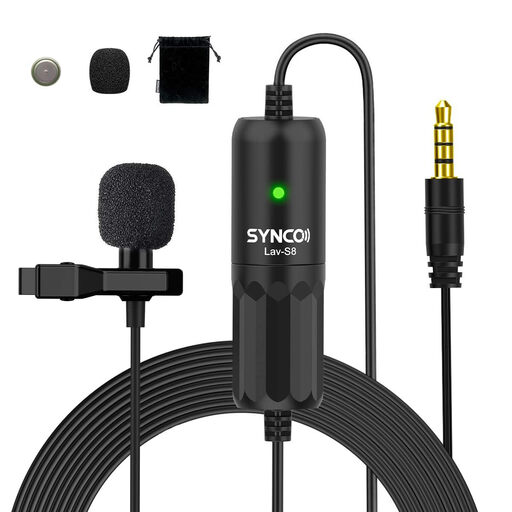
As a wired option, the S8 may suit you if your recording device can use the specified 3.5 mm connection as a microphone input.
The product description lists a clip and a windscreen. Check the connection type, device input and recording software beforehand.
 No image available
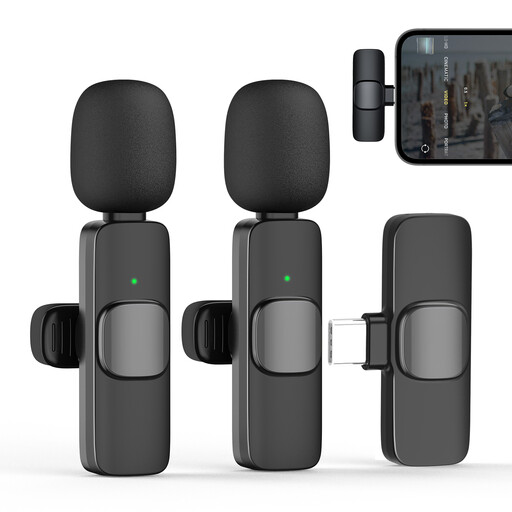
The version with one transmitter and a USB-C receiver may suit you if your recording device supports this receiver as an audio input.
The product title lists Type-C, 2.4GHz, one transmitter and one receiver. Also check the frequency requirements for the specific system.
 No image available
Local backup recording may be useful if you want to save an additional recording on the microphone while using a wireless set-up.
The product description lists TF card backup recording and clip or magnetic attachment; the TF card is not included. Check the receiver connection and frequency requirements for the specific system.
RØDE recommends the chest as a general position, around 20–30 cm from your mouth. Attach the clip and route the cable to minimise fabric rubbing against the capsule, then listen to a test recording wearing the clothes you’ll actually have on. This distance is a manufacturer recommendation, not a setting guaranteed to work for every model.
No, the plug size alone doesn’t confirm compatibility. RØDE specifies TRS for the Lavalier GO and TRRS for the smartLav+; for the smartLav+ with the Wireless GO II, the manufacturer specifies an adapter. Also check the input and microphone power requirements of your recording device.
With the Zoom F2, batteries, a suitable microSD card and transferring the recording later are all part of the workflow. Whether the accessories you need are already included depends on the package you choose.
According to the Bundesnetzagentur, certain wireless microphone frequencies can be used without registration, provided you follow the relevant general assignment and its parameters. Decision 37/2026, dated 15 April 2026, specifies the frequency ranges and technical and operational conditions. This is not blanket approval for every model or frequency band: check the frequency band and conditions for your specific system against the applicable assignment.
The Data Protection Conference resolution on recording telephone conversations does not apply unchanged to a museum commentary recorded by one person alone. If you also record other people, you should assess that separate situation independently.