Which setup is right for you?

Speakers in reverberant spaces

If you’ll be recording most of your commentary from one spot, choosing a close mic position and a way to secure the microphone that won’t cause rubbing noises are important things to consider and test. A test recording will show you how your voice, clothing and surroundings sound together.

Speakers with an existing recording device

If you want to keep using your smartphone, camera or recorder, check the actual microphone input, connector type and any adapter you might need. A socket that looks the same doesn’t necessarily mean the microphone is compatible.

Mobile commentators

If you’ll be moving around while recording or want to capture a second voice, check how many transmitters the set has and whether the receiver is compatible with your device. For longer takes or recordings that are difficult to repeat, a built-in backup recording feature may also be useful.

What should you look for when buying?

Wired lavalier

A good fit if: you’ll be speaking from mostly one spot and can route the cable safely.

Things to consider: check connector compatibility, cable routing and potential rubbing noises.

Compact wireless smartphone set

A good fit if: you’ll be moving around or want to record two people.

Things to consider: the number of transmitters, a compatible receiver connection, charging and wireless operation.

Wireless set with built-in backup recording

A good fit if: a take would be difficult to repeat and you want an additional recording on the transmitter.

Things to consider: setup and file management are additional steps; a backup file won’t eliminate room echo or clothing rustle.

What you need What to check before buying Who is it important to?
Clear voice recording Secure attachment that won’t rub; test recording at the intended location, checked with headphones. If I’m speaking in a reverberant space, I want to record my voice as close as possible without my clothing rubbing against the microphone. Around 30% of consumers put clear sound first.
Compatible device connection Check your device model and microphone input; confirm whether you need TRRS, TRS, USB-C or Lightning, and any adapters. If I want to keep using my existing smartphone, camera or recorder, the connector must work with that specific device. Around 30% of consumers prioritise device compatibility.
Freedom of movement and number of voices Check the number of transmitters and the receiver connection on the specific set; interpret battery life claims in light of the stated test conditions. If I want to move around while recording or capture a second voice, I need a wireless set that’s suited to the job. Around 20% of consumers put freedom of movement and the number of voices first.
Backup for your recording Check for internal recording, how to activate the backup, available storage and how to access the files. If a take would be difficult to repeat, I want to check whether the set I choose can make an additional recording on the transmitter. Around 20% of consumers prioritise having a backup recording.

Common mistakes

  • Relying on noise reduction instead of getting the mic position right

    A noise-processing feature doesn’t prove that it can remove echo in an untreated room. Even placing the microphone close to you won’t automatically prevent echo or background noise.

    Test your planned mic position in the actual space and listen back to a sample recording before making noise-processing features a deciding factor.

    A test recording that can’t be used may mean spending extra time recording.

  • Assuming all 3.5 mm connections are interchangeable

    The shape of the plug and socket alone won’t tell you whether a microphone will work with your camera, smartphone or recorder input. For example, Shure doesn’t guarantee that the smartphone MVL will work with a camera or recorder through a TRRS-to-TRS adapter.

    Before buying, check the connector wiring and compatibility with your specific model and recording device.

    Depending on your device, you may need a suitable adapter or a different microphone.

  • Confusing wireless range or case battery life with guaranteed recording time

    Manufacturers’ battery life claims apply under the conditions they specify. If there’s a wireless signal problem, an enabled internal backup on a compatible set may provide an additional recording.

    Charge the transmitter and receiver before recording, and set up any available backup feature in advance if the take would be difficult to repeat.

    If the recording stops, you may need to repeat the commentary.

Brands and suitable product ranges

Shure

The wired MOTIV MVL is designed for voice recording with a compatible smartphone TRRS input or a CTIA adapter.

  • Shure lists a clip and windscreen as accessories for the MVL.
  • The manufacturer doesn’t guarantee that this model will work with a camera or recorder via an adapter; this doesn’t apply to all Shure microphones.

BOYA

According to BOYA, the wired BY-M1 has a switch for camera and smartphone use.

  • BOYA lists a 6 m cable and an LR44 button cell for the BY-M1.
  • The battery information doesn’t apply in the same way to the separately listed BY-M1S variant.

RØDE

The Wireless Micro is a compact wireless smartphone set with two clip-on transmitters and, depending on the variant, a USB-C or Lightning receiver.

  • The manufacturer lists built-in transmitter microphones, automatic pairing and a charging case.
  • The manufacturer’s claims about level control and sound aren’t independent evidence of performance in a reverberant space.

DJI

The Mic Mini 2 is available in different packages for one or two voices, with a choice of receiver options.

  • DJI lists noise cancellation and level limiting as features of the Mic Mini 2.
  • The manufacturer’s quoted transmitter battery life of around 11.5 hours was measured with noise cancellation switched off, at short range and in interference-free conditions; it isn’t guaranteed for every use.

Sennheiser

The Profile Wireless may suit you if you want a wireless set with a receiver you can monitor and additional recording on the transmitter.

  • According to the Sennheiser instructions, you can activate backup mode if the wireless signal is weak or drops out.
  • According to the manufacturer, internal 32-bit float recording reduces the available recording time compared with standard 24-bit/48-kHz recording because it uses more storage space.

Joybuy product options

The options below include wired lavalier microphones and compact wireless sets for mobile smartphone recording. Before choosing, check that the connection and set configuration suit your recording device and how you plan to use it.
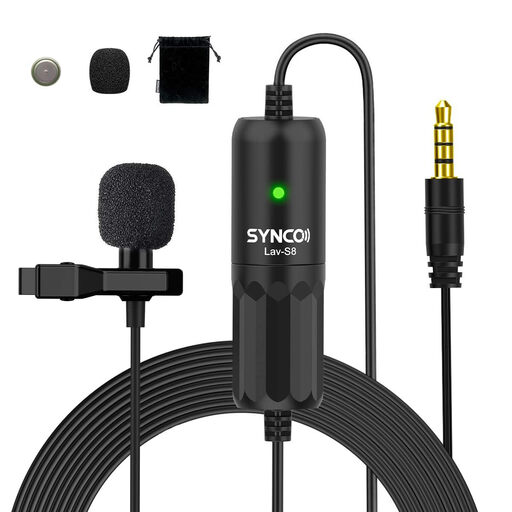
SYNCO S8 lavalier microphone for smartphone, PC, laptop and camera

SYNCO S8 lavalier microphone

May suit a stationary commentary recording, provided the connection is compatible with your recording device.

Listed for use with smartphones, PCs, laptops and cameras; the description mentions a 3.5 mm connection, an adapter kit, a clothing clip and a windscreen.

View on Joybuy
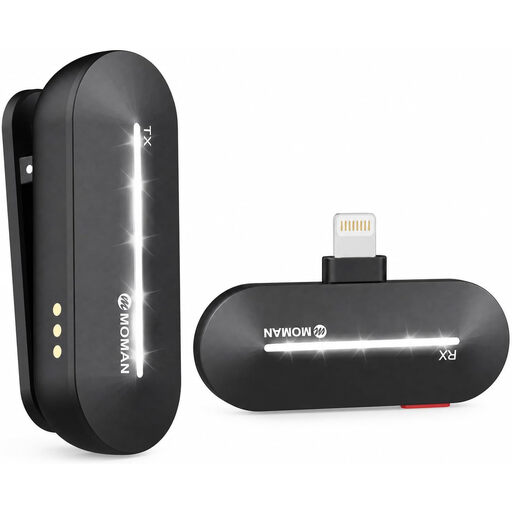
Moman M1CL wireless lavalier microphone for iPhone, 1TX and 1RX

Moman M1CL, 1TX+1RX

Designed for mobile iPhone recording, provided the receiver is compatible with your specific device.

One transmitter and one receiver; listed as compatible with iPhone 14/13/12/11/X. The transmitter clips to your collar.

View on Joybuy
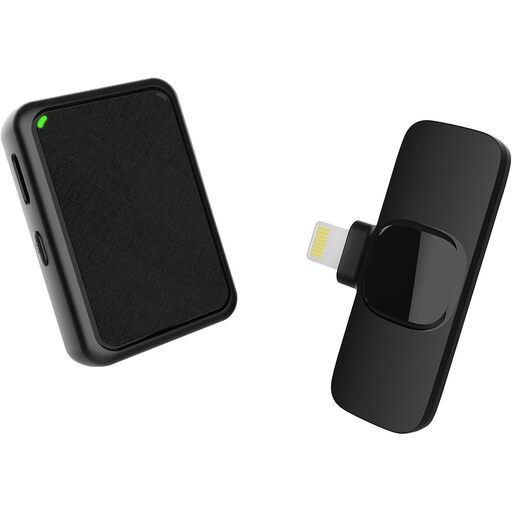
Moman MB1A wireless clip-on microphone with Lightning connection, 1TX and 1RX

Moman MB1A, Lightning, 1TX+1RX

Suitable for mobile iPhone recording, provided your recording device supports the Lightning receiver.

One transmitter and one receiver with a direct Lightning connection; listed as compatible with iPhone 14/13/12.

View on Joybuy
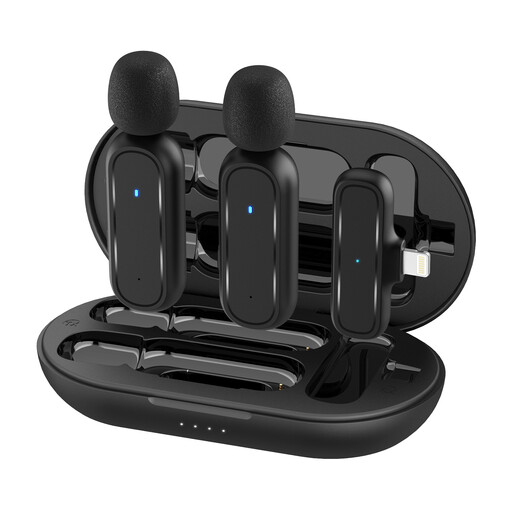
Moman MC1(C) wireless lavalier microphone for USB-C phones, 1TX and 1RX

Moman MC1(C), USB-C, 1TX+1RX

May suit mobile recording with a compatible USB-C phone.

One transmitter and one receiver; the set is listed for USB-C phones. The receiver plugs directly into the USB-C port.

View on Joybuy
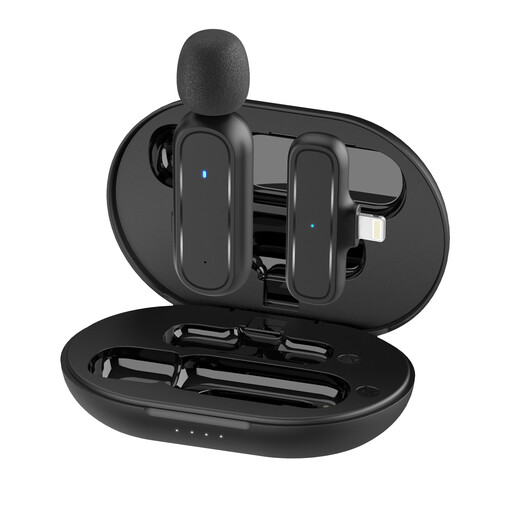
Moman MC1(A) wireless lavalier microphone with Lightning connection for iPhone and iPad, 1TX and 1RX

Moman MC1(A), Lightning, 1TX+1RX

Designed for mobile recording with a compatible iPhone or iPad; the Lightning connection must match your device.

One transmitter and one receiver. The description mentions an omnidirectional microphone capsule, a pop filter and a transmitter that clips to your collar.

View on Joybuy

Frequently asked questions

Where should I attach the microphone in a reverberant room?

Attach the microphone close to your mouth, making sure your clothing won’t rub against it, and listen to a test recording before you start. RØDE suggests around 20–30 cm as a general guide for positioning a lavalier microphone. This distance won’t guarantee a take free from echo.

How can I check whether my device is actually using the lavalier microphone?

Record a short sentence and check it before you start your commentary. First, check the microphone input and connector: according to Shure, the MOTIV MVL is designed for compatible smartphone TRRS inputs or CTIA adapters, and won’t automatically work with a camera input.

What should I check on a wireless set for longer recordings?

Check that the transmitter and receiver are charged, and that there’s enough internal storage if applicable. According to Sennheiser, Profile Wireless 32-bit float recording uses more storage space than standard 24-bit/48-kHz recording.

Can I record commentary in a museum and capture other people’s voices?

You can’t assume that audio-only recording is permitted in every museum; check the rules of the venue if you want to record on site. Section 201 of the German Criminal Code (StGB) deals in particular with the unauthorised recording of another person’s non-public speech. The German Museum’s guidance on permissions for certain types of photography and filming isn’t a blanket rule for audio-only recording or other museums.

Do I need to apply for an individual frequency allocation for every wireless lapel microphone in Germany?

Not in every case: Germany’s Federal Network Agency publishes general allocations with specified frequencies and conditions for radio microphones. Check the frequencies used by your specific model against the relevant allocation, including Regulation 37/2026.