Speakers in echoey or busy rooms
If you can sit close to a securely positioned microphone, you can focus the recording on a single voice. However, this won’t completely eliminate room reflections or steady background noise.


For seated museum narration, a USB condenser microphone with an adjustable stand and headphone socket is a good fit if there’s a computer at the recording spot and the room is generally quiet. If room noise is a problem, a dynamic microphone used close to the speaker may be a suitable alternative, but you’ll need to keep your speaking position consistent. If there’s no computer at your seat, consider a standalone recorder. A test recording will show how your voice and the room sound in that particular spot.
If you can sit close to a securely positioned microphone, you can focus the recording on a single voice. However, this won’t completely eliminate room reflections or steady background noise.
A USB microphone can connect directly to a compatible computer. A headphone socket is useful for listening back to a test recording, if the model you choose has one.
If you want to save the narration directly at your chosen spot, a recorder may be suitable. Try a test recording on site to check whether the built-in microphone position works for capturing an individual voice on its own.
A good fit if: You want to record at a mostly quiet seated spot using a compatible computer, without a separate audio interface.
Bear in mind: Poor room acoustics can mean unwanted sound is picked up too, so check an actual recording made in that spot.
A good fit if: You can speak close to the microphone from a fixed seat and room reflections or steady background noise are a concern.
Bear in mind: You’ll need to keep your speaking position as consistent as possible. An XLR connection also requires suitable additional recording equipment.
A good fit if: You already have a suitable interface or mixer, or want to expand your recording set-up in a specific way.
Bear in mind: The analogue XLR output alone isn’t enough for direct recording to a computer. An XLR connection by itself doesn’t guarantee better sound from your seat.
A good fit if: There’s no computer at the recording spot and you want the device to save the narration itself.
Bear in mind: Built-in microphones don’t automatically provide the close-miked sound needed to isolate one voice. Test the position and room acoustics on site.
| What matters | What to check before buying | Who may find this especially important |
|---|---|---|
| Recording a clear voice despite room noise | Check the microphone’s pickup direction and how it can be positioned at your seat; make a test recording in the actual room. | If I want to record a single voice in an echoey or busy room, I look at the microphone’s positioning and test how much of the surroundings it picks up. Around 33% of consumers put room acoustics at the top of their list when choosing. |
| Easy connection to a computer | Check the USB connection and compatibility with your specific computer. If you choose XLR, factor in the extra equipment you’ll need. | If I want to record on my existing computer without a separate audio interface, I check the connection on the specific model. Around 27% of consumers prioritise a straightforward computer set-up. |
| Consistent positioning and monitoring longer takes | Check the mounting options, desk space and ease of access to the controls. During a test recording, listen through headphones if there’s a socket available. | If I change my posture while reading aloud, I want to be able to position the microphone securely and monitor the recording. Around 20% of consumers prioritise a repeatable speaking position. |
| Recording without a computer at your seat | Check whether the device records on its own or needs another recording device, and what type of storage it requires. | If there’s no computer at my chosen seat, I need a device that can save the narration on its own. Around 20% of consumers put this type of recording set-up first. |
Even a well-positioned microphone can pick up room reflections or steady background noise. A poor recording may mean spending extra time finding a quieter spot or recording additional takes.
Start by testing it from your actual seat. If reflections are distracting, try a dynamic microphone used close to the speaker too, and check that you can maintain the position while speaking.
Connections, stands and included accessories vary by model and version. You may need additional components such as cables, an interface or headphones for your chosen connection.
Before buying, check the positioning, what’s included, the connection and the monitoring options for the exact version you’re considering.
USB can connect a microphone directly to a compatible recording device, while an analogue XLR output requires suitable additional equipment. A recorder can save the recording itself, but its built-in microphones aren’t necessarily designed to capture one voice up close.
First decide whether there’s a computer at your seat, whether you already have a suitable interface and whether you want the device to record on its own.
The MV7+ combines USB-C and XLR for a fixed voice-recording spot, making it an option if you may want to switch connection types later.
The dynamic PodMic USB is designed for close-miking with USB or XLR connectivity. The NT-USB+ is a separate USB condenser option.
The Profile USB is designed for computer recording, with controls that are easy to reach.
The AT2020USB-X is a USB-C condenser option for recording one voice at a desk.
The H1essential is a standalone recorder for situations where there’s no computer at your seat.
This selection includes a dynamic USB/XLR desktop microphone, a USB microphone, portable recorders and lapel microphones for different seating positions and recording set-ups.
 No image available
For recording one seated speaker in a fixed position, if you want to place the microphone close by and connect it to a computer via USB-C.
Dynamic USB/XLR microphone with a cardioid pickup pattern, headphone socket, gain control and included stand. An XLR cable isn’t included; this connection requires suitable additional recording equipment.
 No image available
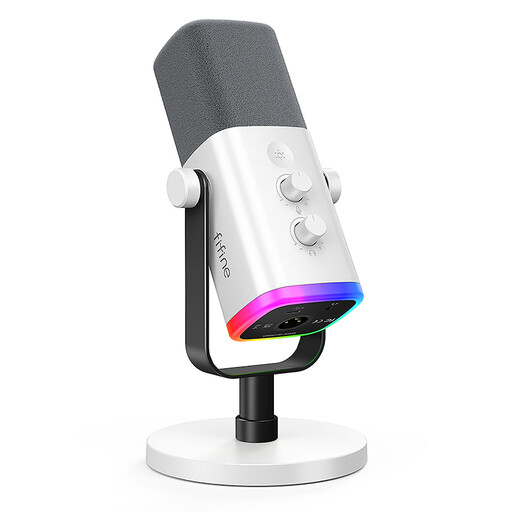
For seated voice recording on a computer, if a USB-C microphone with an adjustable stand suits your planned set-up.
USB condenser microphone with a supercardioid pickup pattern and tilting stand. This microphone can also pick up room noise if the acoustics are poor, so test it at the recording spot.
 No image available
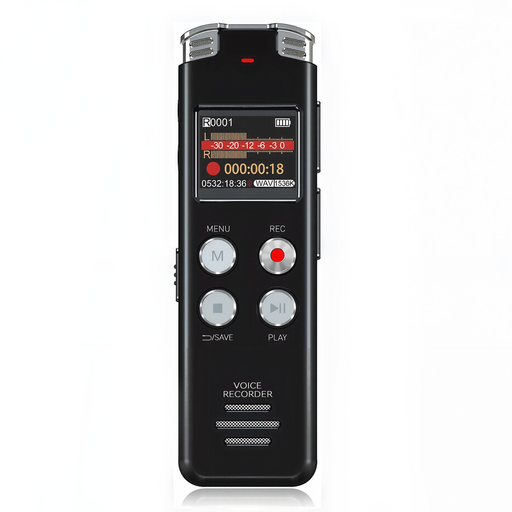
For a seat without a computer, if you want to record the narration on a standalone device and transfer it later.
Portable digital voice recorder with 128 GB; the description lists WAV recording, USB-C and recording via the REC button. Use a test recording to check the microphone position and room acoustics.
 No image available
For seated narration if you’d rather clip the microphone to your clothing than place it on a desk.
Omnidirectional lapel microphone; the description lists a clip, adapters and compatibility with smartphones, PCs, laptops and cameras. Omnidirectional recording doesn’t provide targeted rejection of sound from outside the pickup direction.
 No image available
For seated narration with a USB-C Android device, if a wireless lapel microphone with a collar clip suits your set-up.
The description lists an omnidirectional pickup and a plug-and-play connection. Omnidirectional recording doesn’t provide targeted rejection of sound from outside the pickup direction.
Point the pickup side towards the speaker’s mouth and make a test recording from the actual seat. For this model, RØDE recommends a distance of around 5–10 cm for the PodMic USB; don’t apply this measurement to other microphones without checking first.
Generally, you don’t need a separate audio interface to record directly to a compatible computer, as USB transfers the microphone signal to the digital recording device. An analogue XLR microphone, on the other hand, requires suitable additional recording equipment.
Make a short test recording to check the positioning, plosive sounds and levels. If the model has a headphone socket, you can listen as you speak. The controls and pop filter available or included depend on the specific model.
Your statutory rights are against the seller; a voluntary manufacturer’s or retailer’s warranty is separate. If there’s a fault, the first step may be to have the item repaired or replaced. The Verbraucherzentrale explains the difference; the specific circumstances of the purchase will determine what applies.
If the museum processes personal voice recordings, it needs an appropriate legal basis under Article 6 of the GDPR and must generally inform the person concerned when the data is collected. The Federal Commissioner for Data Protection and Freedom of Information lists consent as one possible legal basis; it isn’t automatically the only one. So clarify the purpose of the recording and any planned publication in advance. Planning to record a speaker doesn’t give permission to inadvertently record other people’s conversations.