Speakers on a museum tour
If you’re moving between rooms, a microphone worn close to the body can keep a consistent distance from your voice. RØDE and Tascam describe clip-on microphone solutions for this kind of use.


For a museum tour, a clip-on microphone worn close to the body is a good choice because it moves with the speaker. At a fixed position, a USB or XLR speech microphone placed close to the speaker may be more suitable. For long takes, check that the entire recording setup has enough power and free storage, and that you can monitor the audio throughout. A portable recorder with built-in microphones may be a better option if you also want to capture the atmosphere of the room, or can place it securely close to the speaker.
If you’re moving between rooms, a microphone worn close to the body can keep a consistent distance from your voice. RØDE and Tascam describe clip-on microphone solutions for this kind of use.
If you’re planning long takes, make sure you account for power, storage, audio monitoring and backups for every device in the setup. RØDE, Zoom and Shure list recording or monitoring features on their respective devices, so check that they suit your chosen setup.
If you can speak close to a permanently mounted microphone, check in advance that it has the right connection for your computer or recording device. Shure lists USB-C, XLR and a headphone connection for the MV7+.
Best suited to: speakers who need to move freely on a tour, with their voice kept front and centre.
Things to weigh up: The wireless connection, battery life and any internal transmitter recording are separate parts of the recording setup. RØDE specifies more than 40 hours of internal storage per transmitter, not 40 hours of battery life.
Best suited to: recording someone on the move with a microphone worn close to the body, without a wireless connection.
Things to weigh up: Check the cable and attachment for rustling with the actual clothes you’ll be wearing. Tascam lists the DR-10L Pro as a discontinued product on its downloads page.
Best suited to: speakers who can stay in the same place and at a consistent distance from the microphone.
Things to weigh up: A fixed setup is less suitable for a tour. Shure lists USB-C and XLR connections for the MV7+.
Best suited to: capturing the atmosphere of the room as well as the speaker’s voice, or when you can place the recorder close enough to them.
Things to weigh up: For good speech levels, you’ll need to position the recorder securely and close enough to the speaker. The Oral History Society recommends using a stand and positioning recorders with built-in microphones carefully.
Best suited to: video recordings where you can point the microphone directly at the speaker.
Things to weigh up: The direction and distance need to be right throughout the recording. A directional microphone is no substitute for one attached to a person on the move.
| Priority | What to check before buying | Who is it important to? |
|---|---|---|
| Consistent distance from your voice while walking | Check how it attaches, how it connects to a transmitter or recorder, and how it performs with the clothes you plan to wear. | When I walk through exhibition rooms, I want the microphone to stay attached to my clothes and pick up my voice from close by. Around 36% of consumers put freedom of movement first. |
| Reliable takes and monitoring | Check the power supply for every device, available storage, headphone connection and file export options for the planned take length. | For a long take, I want to plan for power, storage and monitoring so I can keep track of the recording. Around 29% of consumers put reliable takes first. |
| Recording speech from a fixed position | Check the USB-C or XLR signal path, device connection, mount and a short test take from the intended position. | If the speaker is sitting or standing still, I want a suitable connection and a setup I can repeat. Around 21% of consumers put having a fixed speaking position first. |
| Voice with room ambience or video | Decide in advance whether to isolate the voice or capture the room too; test the position and direction by listening back. | If the atmosphere of the room or a targeted video recording matters too, I want to choose the microphone position and recording approach accordingly. Around 14% of consumers put room ambience or video first. |
RØDE specifies more than 40 hours of internal 32-bit float recording for each Wireless PRO transmitter. This refers to storage capacity, not battery life. According to RØDE, the actual battery life of wireless devices depends on how they’re used.
Check the planned take length and the power supply for each device in the setup separately.
With recorders that have built-in microphones, distance and positioning affect speech levels and handling noise. The Oral History Society recommends setting the recorder up securely and close to the speaker.
Listen to a test recording at the intended location. For a tour, you should also consider a microphone worn close to the body.
Tascam describes the DR-10L Pro as a recorder with a clip-on microphone, but lists it under discontinued products on its downloads page.
If you find a specific listing, check the model version, condition and included microphone individually.
The Wireless PRO is a wireless system with two transmitters, lavalier microphones and internal transmitter recording.
The H1essential is a portable recorder with built-in X/Y microphones and USB microphone functionality.
The MV7+ is a speech microphone for fixed setups, with USB-C or XLR connections.
The MKE 600 is a directional microphone for video or boom setups.
The DR-10L Pro is a portable recorder designed to be worn close to the body and used with a clip-on microphone.
This selection includes lavalier and wireless microphones for recording speech close to the body, as well as microphones for compatible cameras or device connections.
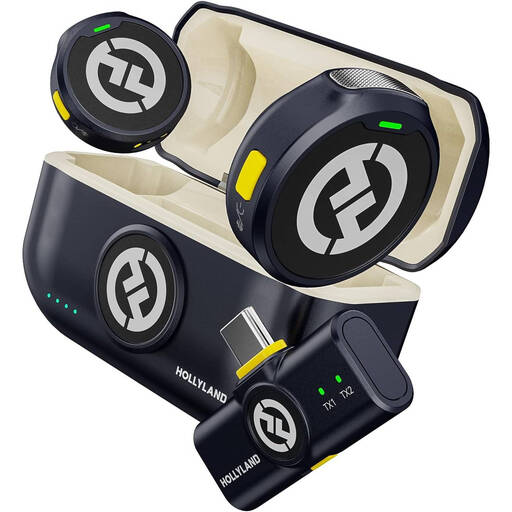 No image available
For recording speech on the move, with a USB-C receiver and two transmitters.
The product description specifies up to 10 hours of transmitter battery life and up to 30 hours in total with the charging case. Battery life and storage capacity are different things.
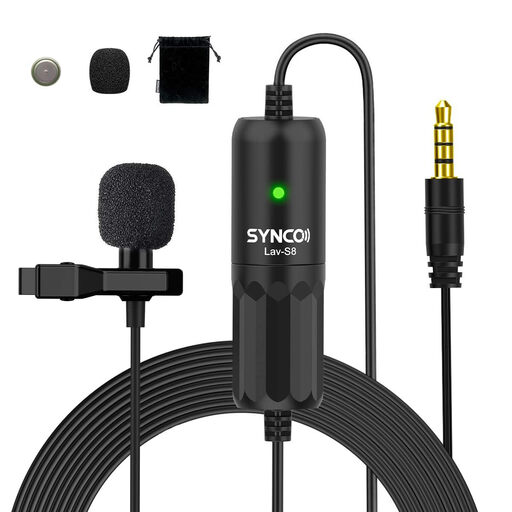 No image available
For recording speech close to the body, when your recording device has a compatible 3.5 mm connection.
The product description lists a clothing clip, an omnidirectional microphone, a windscreen and adapters.
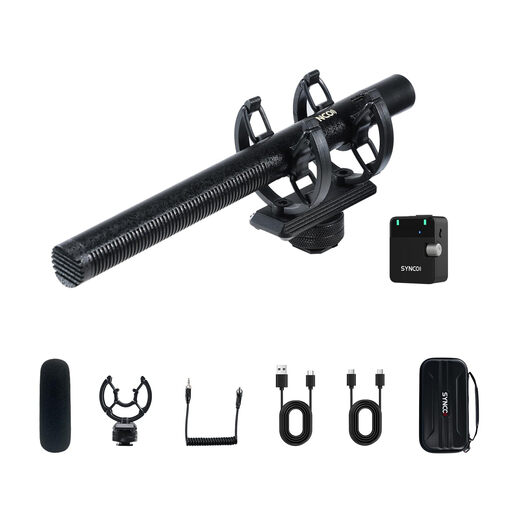 No image available
For recording with the microphone directed towards the speaker, using a compatible recording device.
The product description specifies up to 11 hours of continuous recording and a hypercardioid polar pattern. It lists digital and analogue outputs.
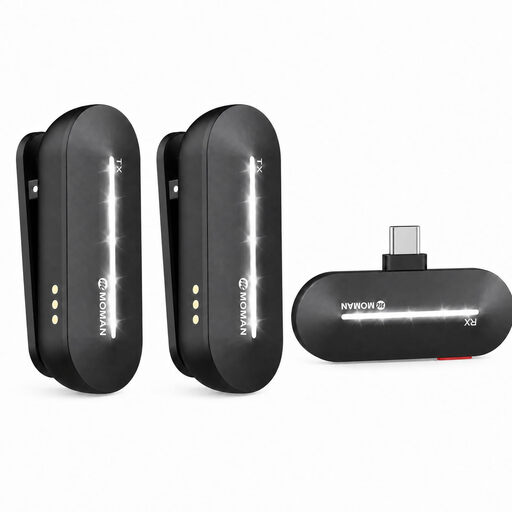 No image available
For recording two speakers with a USB-C receiver, provided it’s compatible with your recording device.
The product description specifies up to 6 hours of operation, real-time monitoring and the ability to charge the receiver while it’s in use.
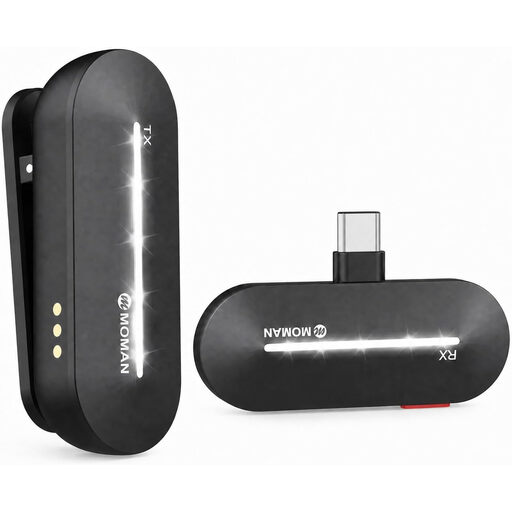 No image available
For recording speech close to the body with one transmitter and a USB-C receiver connected to a compatible device.
The product description specifies an omnidirectional microphone, a clip-on design, a 2.4 GHz connection and up to 6 hours of transmitter operation.
Make a short test recording at the actual location and listen back to it. Check the power supply and available storage for every device in the setup. If you need to keep the recording, plan how you’ll export and back up the file too. A figure for storage capacity tells you nothing about battery life.
No. It describes a recording format, not the microphone position or the room acoustics. According to RØDE, on the Wireless PRO it applies to the internal transmitter files, not automatically to recordings made on a connected device.
There’s no straightforward answer that applies in every case. Section 201 of the German Criminal Code (StGB) makes it a criminal offence to record another person’s non-public speech without authorisation. If people can be identified from the recording, the responsible organisation must also establish the legal basis for processing their data and provide information about how it will be used. If consent is used as the legal basis, the Data Protection Conference’s short paper says it must be freely given, specific to the situation and informed. What matters for a particular take is whose words are being captured and how the recording will be used.
You can’t determine this for every wireless microphone from its name alone. The German Federal Network Agency publishes general frequency assignments with technical and operational conditions. Notice 37/2026, dated 15 April 2026, lists permitted frequency bands and the conditions that apply to them. For your specific system, check its frequency and wireless technology against the current requirements.
Depending on your setup, you may need a compatible mount, connection cables, storage media, batteries or a separate recording device. Check what’s included with the specific product and which connections it has rather than assuming accessories are included.