Limited worktop space
If you want to make broth regularly but have little room for another appliance, its footprint and storage needs matter just as much as its capacity.


For regular small batches, a compact slow cooker could be a good fit, provided its capacity and footprint suit your needs. If you only make mushroom broth occasionally and want it ready quickly, a saucepan you already own may be the more space-saving choice. A larger capacity is useful for bigger batches, but takes up more room. A timer is no substitute for safe cooking conditions or cooling leftovers promptly. Before buying, check the details for the specific appliance and its food-contact parts.
If you want to make broth regularly but have little room for another appliance, its footprint and storage needs matter just as much as its capacity.
If you’re making larger quantities, you’ll need to match the batch size to the pot’s capacity and the space available for cooling leftovers.
If you want to prepare the ingredients and fit the cooking time around your day, check whether the appliance is operated manually or has a timer. Keep-warm is a separate function.
First, decide how much broth you want to make and where you’ll keep or store the appliance. The approximate percentages in the table refer to consumers who consider each factor their top priority when buying.
| Buying priority | What to look for | Who is it important for? |
|---|---|---|
| Worktop space and storage | Compare the external dimensions, including handles and lid, with the space you have available. The pot’s capacity won’t tell you how much room it takes up. | If I have very little free worktop space, the appliance needs to fit with its handles and lid in place. Around 36% of consumers prioritise footprint and storage. |
| Batch size | Check the ingredients and liquid against the filling guidance in the specific manual. Russell Hobbs Deutschland lists a 2 l capacity, Crock-Pot Deutschland 2.4 l and Tristar 3.5 l; these figures don’t indicate how much finished broth you’ll get. | If I want to make more than a small portion, I need enough room for the mushrooms and liquid without overfilling the insert. Around 29% of consumers put batch size first. |
| Cooking time and controls | Check separately whether the appliance has heat settings, a timer or a keep-warm function. For a quicker option, you could use a saucepan on the hob: the Federal Centre for Nutrition describes gently simmering a mushroom soup recipe for around 15 minutes. | If I want to fit slow cooking around my day, I look at the controls and whether I’ll need a timer. Around 21% of consumers prioritise planning their time. |
| Cleaning and leftovers | Check the care instructions for the insert and lid on the specific model. The Federal Centre for Nutrition recommends cooling leftover mushroom dishes quickly and keeping them in the fridge for no more than one day. | If I have little time for cleaning and dealing with leftovers after cooking, I want to be able to plan both. Around 14% of consumers prioritise cleaning and handling leftovers. |
Russell Hobbs Deutschland, Crock-Pot Deutschland and Tristar list insert capacities of 2 l, 2.4 l and 3.5 l respectively. The ingredients and liquid must all fit in the insert; its capacity doesn’t guarantee a particular amount of finished broth.
Plan the full batch and check the filling guidance in the manual for the model you’re considering.
If the insert is too small for your planned batch, you may need to cook in several batches or use an additional saucepan.
A keep-warm function doesn’t prove that the broth reaches a safe temperature throughout. The Federal Institute for Risk Assessment recommends keeping hot food at a minimum of 60 °C throughout; the Federal Centre for Nutrition advises cooling leftover mushroom dishes quickly.
Don’t rely on an unmeasured keep-warm setting overnight. Cool leftovers promptly and store them in the fridge.
A product name alone doesn’t tell you whether an appliance works like a traditional slow cooker. One Joybuy listing describes both slow cooking and rapid heating at 500 W and 1000 W; these functions aren’t automatically equivalent to the heat settings on other models.
Check the cooking programmes and the manual for the specific appliance before choosing it for your broth.
Russell Hobbs Deutschland lists the Compact Home Mini Slow Cooker 25570-56, with a 2-l insert for smaller quantities.
Crock-Pot Deutschland lists the manual CSC046X, with a 2.4 l capacity, as a slow cooker for smaller batches.
Tristar lists the VS-3915 as a slow cooker with a 3.5-l ceramic insert for soups and larger batches.
This selection includes compact slow cookers and multi-purpose appliances, as well as larger models. Check the insert capacity and appliance dimensions against your batch size and the space you have available.
 No image available
The description lists slow cooking and gentle simmering as options for smaller batches.
2.6 l; two manual heat settings; 500 W for slow cooking and gentle simmering. The description also mentions a coated inner pot and a detachable power cable.
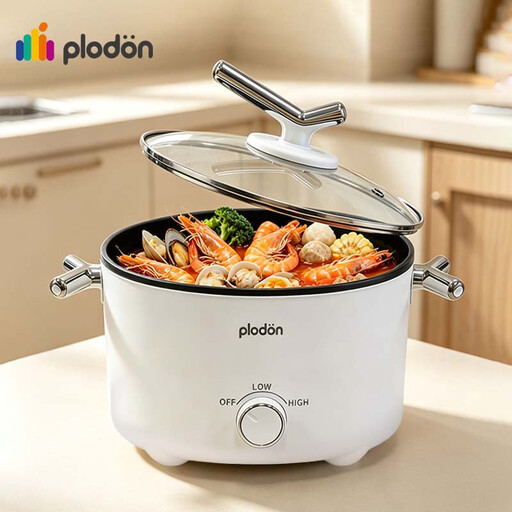 No image available
The product description lists soups and gentle simmering as possible uses; it also describes the appliance as a multi-purpose cooking pot.
2.0 l; LOW/HIGH controls. The instructions say not to fill the pot beyond two-thirds of its capacity.
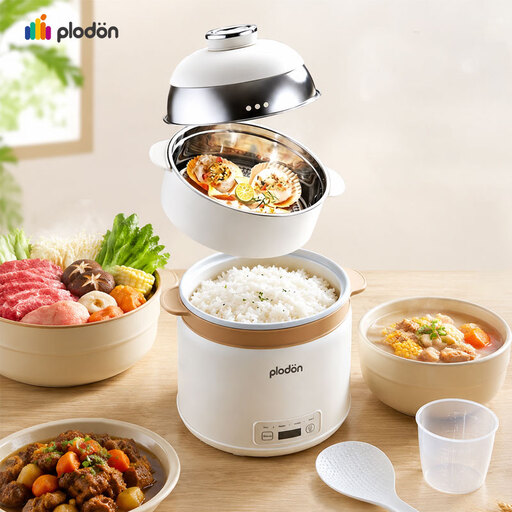 No image available
According to the description, this appliance is designed for smaller batches of soup and includes a soup programme.
2.3 l; the description also mentions a keep-warm function and a steamer insert. The instructions say not to fill the pot beyond two-thirds of its capacity.
 No image available
The title describes it as a slow cooker and soup maker; the description mentions several pots.
The description lists a 2.5-l ceramic pot and four additional 0.4-l pots. Hot steam may escape during cooking and afterwards; the safety advice says to wait a few minutes before opening.
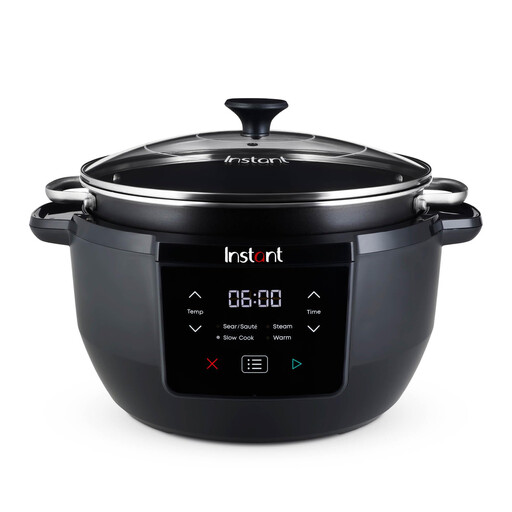 No image available
With a 7 l capacity, this model is designed for larger batches; check that you have enough worktop and storage space for it.
The description lists an adjustable cooking time and temperature, as well as a dishwasher-safe lid and inner pot. According to the description, the inner pot must not be used in an oven, on a hob or on an induction hob; temperatures above 175 °C may damage the coating.
Not necessarily. If you only make mushroom soup or broth occasionally and already have a suitable saucepan, using the hob could be the more space-saving option. The Federal Centre for Nutrition describes gently simmering a mushroom soup recipe for around 15 minutes; this isn’t a general cooking time for every type of broth.
Keeping food warm isn’t the same as storing it. The Federal Institute for Risk Assessment recommends keeping hot food at a minimum of 60 °C throughout; the Federal Centre for Nutrition advises cooling leftover mushroom dishes quickly and keeping them in the fridge for no more than one day. Don’t rely on an unmeasured keep-warm setting to store broth overnight.
Just because the insert or lid is dishwasher-safe doesn’t mean the electrical housing is. For the Crock-Pot CSC046X, the manufacturer says the insert and lid are dishwasher-safe; for the Tristar VS-3915, the housing should be cleaned with a damp cloth. Follow the manual for the specific model.
Check the details for the specific appliance, its electrical safety and its food-contact parts. Appliances covered by the EU Low Voltage Directive must meet electrical safety and labelling requirements; the European Commission and EUR-Lex describe requirements including CE marking and the information that must be provided. Food-contact parts are also subject to EU requirements for food-contact materials. CE marking is not an independent quality seal and does not replace checking the specific product listing.
Only if you can identify them with certainty. The Federal Institute for Risk Assessment warns that confusing poisonous and edible mushrooms can be fatal. A slow cooker won’t make misidentified mushrooms safe, so don’t use them if you’re unsure.