Who are the different camera options suited to?

Photographers focused on mushroom details

If you want to capture gills and surface textures in close-up, compare the close-up capabilities of the specific camera and lens combination. Canon Germany explains that magnification ratio is an important point of comparison in macro photography.

Camping minimalists

If you want to photograph small mushrooms in changeable weather without carrying an interchangeable lens, a built-in lens is practical. OM Digital Solutions lists a microscope mode and water resistance down to 15 m for the Tough TG-7.

Photographers considering woodland light and sharpness

If you’re composing shots close to the ground and want to capture several planes of focus in a stationary mushroom, look for easy operation from a low position and suitable focusing features. Rheinwerk Verlag explains the effect of a low camera position and carefully managed lighting; Canon Academy covers focus bracketing.

What should you look for when buying?

What you need What to look for when buying Who is this particularly important for?
Capturing small details Check the maximum magnification ratio of the specific lens or the documented close-up mode. Also make sure there’s enough space between the lens and the mushroom for light to reach your subject. If you want to show fine gills or surface details, the magnification should suit your subjects. Around 31% of consumers prioritise capturing small details.
Portability and weather protection Compare the weight of the complete kit, including lens and accessories. Check the protection ratings for the camera and lens separately. If you want to carry as little as possible while camping and be ready for changeable weather, consider the whole kit, not just the camera body. Around 31% of consumers prioritise portability and weather protection.
Controlling light and sharpness Check whether you can operate the camera from a low position and what focusing features it offers. For focus bracketing, make sure the feature is confirmed for the specific model. If you want to control the light and sharpness of a subject close to the ground, ease of use and focus control matter. Around 23% of consumers prioritise control over light and sharpness.
Photographing mushrooms and travel subjects Compare the focal length range of the included lens. Separately check whether its close-up capability is sufficient for your smallest subjects. If you want to photograph groups or your surroundings as well as mushrooms, a versatile field of view may matter more than extreme magnification. Around 15% of consumers prioritise versatile travel photography.

Common camera-buying misconceptions

  • “Macro” or “1 cm” doesn’t automatically mean 1:1

    Focusing distance and magnification ratio describe different things. A short focusing distance alone doesn’t tell you how large the mushroom will appear on the sensor. Working very close can also make it harder to manage the lighting.

    For interchangeable lenses, compare the maximum magnification ratio. For a compact camera, check what its stated close-up mode can actually do, and allow space for lighting.

    An interchangeable-lens camera kit for greater detail magnification may require an additional compatible macro lens.

  • Assuming the camera body’s weather protection applies to the lens

    A camera’s protection rating doesn’t automatically apply to the attached lens. OM SYSTEM lists IP53 for the OM-5 Mark II body, but IPX1 for the M.Zuiko 60mm Macro in question.

    Read the protection ratings and usage limits for both components separately, and follow the care instructions after a damp trip.

  • Confusing a camera kit with a complete macro setup

    According to the product details, the Canon EOS R50 kit with RF-S 18–45mm includes an everyday zoom lens; it isn’t listed as including a 1:1 macro lens.

    Check the full model name, mount and what’s included. If you want to capture very small details, look for an additional compatible macro lens.

Key camera brands at a glance

OM SYSTEM

The Tough TG-7 and OM-5 Mark II take different approaches: one is a rugged compact camera with a fixed lens, while the other is an interchangeable-lens camera body that can be paired with a separately selected macro lens.

  • OM Digital Solutions lists a microscope mode for the Tough TG-7, with focusing from 1 cm, and water resistance down to 15 m. These specifications don’t confirm a 1:1 magnification ratio.
  • OM SYSTEM lists Focus Stacking for the OM-5 Mark II. According to the manufacturer, the M.Zuiko Digital ED 60mm F2.8 Macro achieves a 1:1 magnification ratio.
  • Check the protection ratings separately: OM SYSTEM lists IP53 for the OM-5 Mark II body and IPX1 for the macro lens in question.

Canon

The EOS R50 with RF-S 18–45mm is an interchangeable-lens option for a range of travel shots. You’ll need to choose a compatible macro lens separately if you want greater detail magnification.

  • Canon Germany lists a vari-angle screen for the EOS R50, which can be useful when taking photos from a low position.
  • Canon describes the RF-S 18–45mm as a zoom lens for EOS R cameras with an APS-C image circle and a variable focal length range.
  • The kit zoom shouldn’t be mistaken for a 1:1 macro lens. Canon also states that the EOS R50 doesn’t have in-body image stabilisation.

Nikon

The Z50II is a Z-system camera body that can be paired with a separately selected Z macro lens for detailed mushroom photography.

  • Nikon lists a maximum magnification ratio of 1:1 for the NIKKOR Z MC 50mm f/2.8 and also describes its suitability for more general photography.
  • This lens specification doesn’t mean the macro lens is included with a Z50II offer. Check what’s included in the specific kit before buying.

Related products at Joybuy

The products below are action cameras. If you want to capture small mushroom details, check the close-focus capability and magnification ratio of the specific model before buying. The term “action camera” doesn’t tell you whether it can do this.
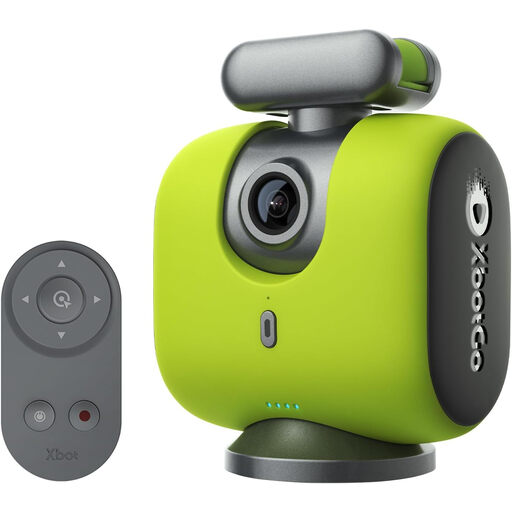
XbotGo Chameleon AI Team Sports Action Cam 4K 60FPS

XbotGo Chameleon AI Team Sports Action Cam 4K 60FPS

If you’re also planning to film sports while camping, the product description mentions automatic tracking for team sports.

The product details list 4K at 60 FPS and connectivity with iOS and Android. Check the close-focus capability of the specific model for mushroom photography.

View at Joybuy
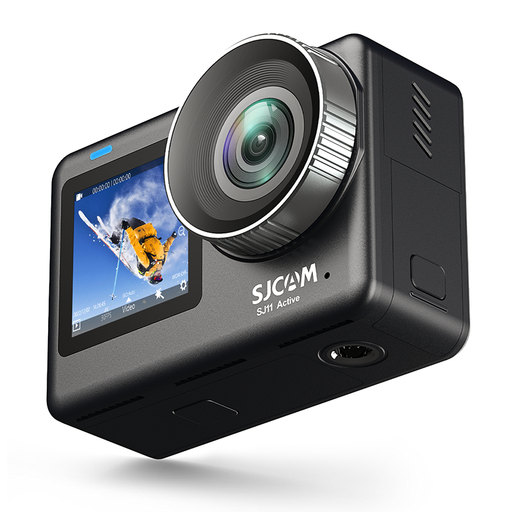
SJCAM SJ11 Active Dual Screen Action Camera

SJCAM SJ11 Active Dual Screen Action Camera

If you also want to capture short clips while camping, the product title lists 4K video at 30 fps and still images up to 20 MP.

The title lists water resistance down to 5 m without a case and down to 30 m with the waterproof case. Check the close-focus capability too if you want to photograph mushrooms.

View at Joybuy
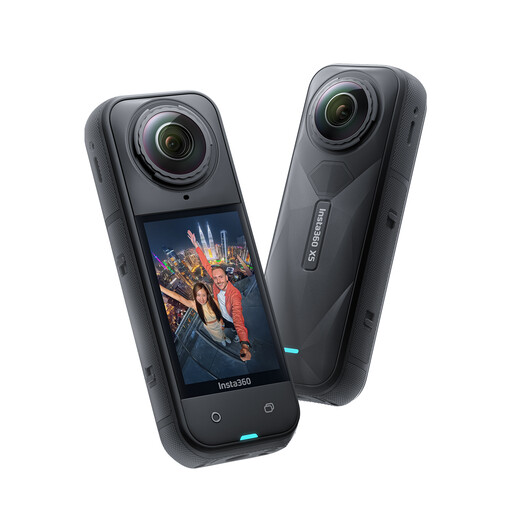
Insta360 X5 Waterproof 8K 360° Action Camera

Insta360 X5 Waterproof 8K 360° Action Camera

If you also want to capture 360° clips on a camping trip, the product title lists 8K video and interchangeable lenses.

The product details describe a 360° action camera. Before choosing it for mushroom photography, check the close-focus capability of the specific model.

View at Joybuy
SJCAM SJ20 Action Camera

SJCAM SJ20 Action Camera

If you want to capture clips as well as photos while camping, the product title lists 4K video at 30 fps and two displays.

The product title mentions day and night lenses, as well as water resistance down to 30 m with the supplied case. Check the focusing distance of the specific model for close-up shots.

View at Joybuy

Frequently asked questions

Is a short minimum focusing distance enough to capture fine mushroom details?

No, it isn’t enough as the only point of comparison. For an interchangeable lens, check its maximum magnification ratio: 1:1 means the subject is reproduced life-size on the sensor. The 1 cm figure for the TG-7’s microscope mode describes a focusing distance; it doesn’t confirm a 1:1 magnification ratio.

How can I photograph a mushroom from a low angle?

Position the camera low and check the composition and lighting before you take the shot. A tilting screen can make it easier to operate the camera close to the ground. If you want several planes of a stationary subject in focus, a stable setup with focus bracketing may be useful.

What should I bear in mind after a damp trip or when changing lenses?

Follow the protection and care instructions for the specific camera and each lens. OM SYSTEM lists IP53 for the OM-5 Mark II body and IPX1 for the macro lens in question, so the body’s rating doesn’t replace the lens rating. With an interchangeable-lens system, moisture or dirt can get inside when you change lenses.

Are a warranty and your statutory rights the same thing?

No. Verbraucherzentrale distinguishes the statutory rights you generally have against the seller from a warranty, which is a voluntary benefit subject to its own terms. Check who your contract is with and what additional warranty terms apply to the camera and lens.

Can I go anywhere in a nature reserve to photograph mushrooms?

There’s no blanket answer that applies to every location. The Federal Agency for Nature Conservation describes nature reserves as legally protected areas, while Berlin’s environmental authority highlights restrictions on activities that conflict with the purpose of protection. Check the specific reserve regulations and signs on site. Being able to take photographs doesn’t mean you can leave the paths or pick mushrooms.