Cooking risotto with a compatible pan
If you want to adjust the heat easily when frying the ingredients and then cooking the risotto, compare the controls and cooking zone of an induction model with your pan base.


An electric hob with easy-to-reach power controls is a good choice for mushroom risotto. Induction is an option if your pan base is compatible with the cooking zone. A second zone is useful if you want to heat stock or prepare something else at the same time. If your existing pans are not confirmed as induction-compatible, radiant ceramic glass is another option. Also check the diameter of your pan base and cooking zone, and, for built-in appliances, the cut-out and connection requirements. The model specifications listed here are not proof of how well a hob cooks risotto.
If you want to adjust the heat easily when frying the ingredients and then cooking the risotto, compare the controls and cooking zone of an induction model with your pan base.
If you’re preparing risotto and stock, or another dish, at the same time, check that there are two separate cooking zones and enough space for both pans.
If you’re not sure whether your pans are suitable for induction and want to keep using them, consider radiant ceramic glass too.
A good fit if: you need an extra or movable hob for a risotto pan that’s suitable for induction.
Bear in mind: A single hob has just one zone, and your pan base must be compatible with the induction zone.
A good fit if: you want to heat risotto and prepare something else at the same time on separate zones.
Bear in mind: Both pans must be suitable for induction, and you’ll need enough space for the hob.
A good fit if: you need several cooking zones permanently and your kitchen cut-out suits the specific model.
Bear in mind: Bosch states that the PXX675DC1E is supplied without a plug and must be connected by a qualified electrician.
A good fit if: you want to keep using pans that are not confirmed as suitable for induction.
Bear in mind: The German Environment Agency says the efficiency gap between hob types is greatest while heating up, and narrows when food is kept warm for longer. A radiant cooking zone remains hot after it has been switched off.
| What to consider | What to check before buying | Who should consider this? |
|---|---|---|
| Adjusting the heat while cooking | Compare the controls and power settings of the specific model, and make sure the cooking zone is suitable. | If I want to change the heat between frying and gently cooking risotto, easy-to-reach controls matter to me. Around 33% of consumers say that adjustable heat is their top priority. |
| Cooking more than one thing at a time | Check for separate zones and enough space for both pan bases. | If I want to heat stock or prepare another dish alongside risotto, I need a second usable cooking zone. Around 27% of consumers put cooking multiple things at once first. |
| Using a portable hob | Check the appliance dimensions, the space you’ll need and the model’s connection details. | If I don’t want to install a permanent hob, I’m looking for a freestanding option that will fit in my kitchen. Around 20% of consumers prioritise a portable hob. |
| Keeping the pans I already own | Compare the material and diameter of your pan base with the cooking zone specifications. | If I’m not sure whether my pans are suitable for induction, I’d like to keep using them if possible. Around 20% of consumers give this priority. |
Ceramic glass describes the surface; the hob underneath may use induction or radiant heat.
Check the heating method and pan requirements for the specific model rather than relying on the surface description alone.
Choosing the wrong type of hob could mean replacing your pans or buying a different hob.
Even with several zones, two pans used at the same time need to fit on the available surface. Built-in appliances also have model-specific cut-out dimensions.
Measure your pan bases and, for built-in appliances, check the exact recess dimensions against the product specifications.
If the hob doesn’t fit your kitchen, you may need a different design or modifications to the installation space.
According to the manufacturers, the Bosch and Siemens built-in appliances mentioned in these examples are supplied without a plug and must be connected by a qualified electrician. They are not the same as a portable hob.
Before buying, check the appliance dimensions, connection requirements and installation arrangements in your kitchen.
Professional connection and any necessary kitchen work involve additional practical considerations.
The CT 2020/IN and CT 2200/E are two portable single hobs with different heating methods.
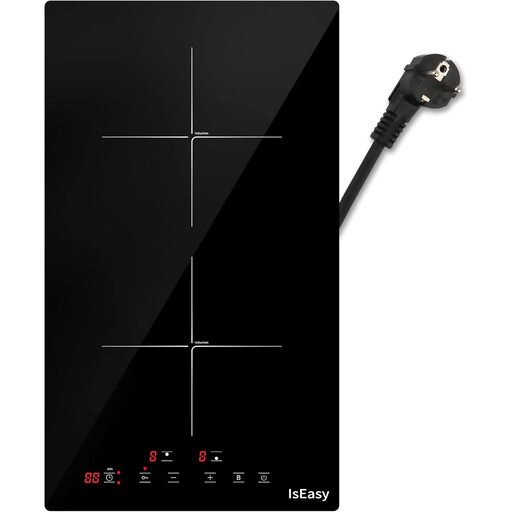
The portable double induction hob DK 1033 is an example of a two-zone hob that doesn’t need to be built in.
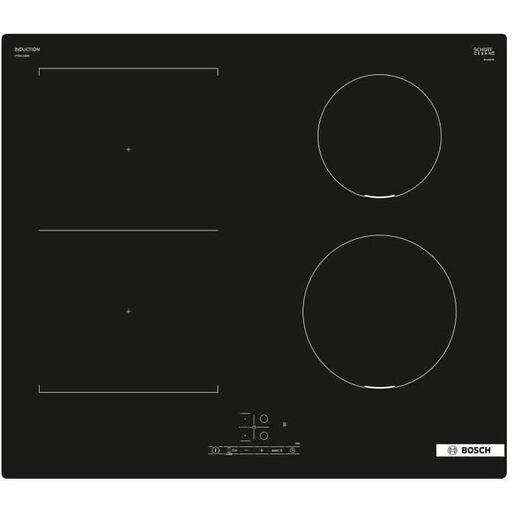
The PXX675DC1E is an example of a 60 cm built-in induction hob with four cooking zones.
The ET645HN17E is an example of a built-in radiant ceramic glass hob with four zones.
The EK60IBI is an example of a standalone 60 cm built-in induction hob with four zones.
The products below include built-in induction hobs, a portable induction hob and a built-in ceramic glass hob.
 No image available
The four listed cooking zones may suit you if you want to use several pans on a permanent hob.
60 cm, 6.900 W, four heating zones and a timer according to the product name.
Before buying, check that the cut-out and connection are suitable for your kitchen.
 No image available
The two listed zones provide space for a risotto pan and another pan, as long as both are suitable for induction.
29,5 cm wide, 3.400 W and nine heat settings according to the product name.
The product name lists built-in and plug-in versions; check the connection details for the specific appliance.
 No image available
The four listed zones provide separate cooking areas for several pans.
59 cm, 6.000 W and four zones according to the product name; the description lists nine heat settings and a timer.
Check the installation dimensions and connection details against your kitchen.
 No image available
This portable single hob may suit you if you’re looking for an extra cooking zone for a compatible pan.
2.100 W, 28 cm and nine heat settings according to the product name; the name also lists an 8-hour timer.
According to the product description, you’ll need magnetic pans that are suitable for induction.
 No image available
The four listed zones may suit you if you want to use several pans on a permanent hob.
60 cm, 6.800 W and nine power settings according to the product name; the description lists a timer and a boost function.
Before buying, check that the cut-out and connection suit your installation.
Check whether the pan base is labelled as suitable for induction or ferromagnetic, and compare its diameter with the cooking zone on the specific appliance. The Federal Office for Radiation Protection recommends using suitable materials and a pan of the right size. Rommelsbacher lists a cooking zone range of 120–230 mm for the CT 2020/IN.
Not with the Bosch and Siemens models mentioned here: both manufacturers state that they are supplied “without a plug” and must be connected by a qualified electrician. If you’re considering another model, check its own connection details; the plug information for a portable hob doesn’t apply to built-in appliances.
With radiant ceramic glass, check the residual heat indicator on the specific appliance; Rommelsbacher says the CT 2200/E has one. Always follow the manufacturer’s instructions and use pans that are suitable for the active zone.
No. The Verbraucherzentrale explains that the EU energy label on a combined cooker refers to the oven, not the hob. Instead, compare the hob technology and consider how you’ll use it.
If this applies to you, get individual advice on whether an induction hob is suitable before buying. The Federal Office for Radiation Protection explains that magnetic fields depend on how the hob is used and where the pan is placed; the Verbraucherzentrale specifically mentions pacemakers. Ask your healthcare professional for advice and follow the implant manufacturer’s guidance.