Families with a large tart tin
If you want to serve the tart in its tin, compare its outside dimensions with the oven’s usable interior space. For example, the NEFF recipe uses a tin measuring around 30 cm in diameter.


A countertop oven may be enough for a single mushroom tart, provided the tin fits and you can set up the appliance safely in line with its instructions. A built-in oven may be a better option if you have a suitable housing unit and regularly cook other dishes too. First, measure your tin, then check the recipe’s cooking mode, the space available for the appliance or built-in installation, and the electrical connection.
If you want to serve the tart in its tin, compare its outside dimensions with the oven’s usable interior space. For example, the NEFF recipe uses a tin measuring around 30 cm in diameter.
A countertop oven could be an option if you don’t have a suitable housing unit for a built-in model. Check that both the tin and the appliance will fit on your worktop, and that you can leave the required clearances. Rommelsbacher specifies installation requirements for the BG 1805/E model.
If you often cook other dishes as well as tarts, additional cooking modes and the cleaning method may be important. The Verbraucherzentrale recommends comparing energy consumption figures for each standard baking cycle and cooking mode.
A good fit if: You want to bake a single tart, don’t have a suitable housing unit for a built-in oven, and have a safe place to set up the appliance. Rommelsbacher states that the BG 1805/E can accommodate tins up to 31.5 cm in diameter.
Things to consider: The usable interior space and the room on your worktop must suit both the tin and the requirements of the specific appliance.
A good fit if: You have a suitable housing unit and connection, and regularly bake other dishes too. The Bosch and NEFF models mentioned have several cooking modes.
Things to consider: Check the housing dimensions and connection requirements for the specific model. Having extra cooking modes doesn’t prove that a particular mushroom tart will turn out better.
For a round tart tin, its outside dimensions and the oven’s usable interior space matter more than the overall capacity alone. NEFF’s mushroom tart recipe calls for a tin around 30 cm in diameter; Rommelsbacher states that the BG 1805/E can take tins up to 31.5 cm and has a usable interior area of 34 × 28 cm.
| What matters when buying | What to check | Who should consider this? |
|---|---|---|
| Tin fit | Measure the tin, including its rim and handles, then compare the dimensions with the usable interior space and the specifications for the specific oven. | If I want to bake a large tart in one tin, it needs to fit safely inside the oven. Around 33% of consumers are likely to prioritise a suitable fit for their tin. |
| Cooking mode for the recipe | Check which cooking mode the recipe and appliance instructions specify. Don’t assume that the temperature and settings will work in the same way with a different mode. | If I’m following a recipe, I want to be able to match its cooking mode and temperature settings. Around 27% of consumers are likely to prioritise using the right cooking mode for their recipe. |
| Space and installation | For countertop appliances, check the space available and the instructions; for built-in models, compare the housing dimensions and connection requirements for the specific model. | If my kitchen doesn’t have a suitable space for a built-in oven, or my worktop space is limited, I need an appliance that fits the space available. Around 20% of consumers are likely to prioritise a good fit for their kitchen. |
| Cooking beyond the tart | Compare the cooking modes and cleaning systems you need. For energy use, check the kWh figures for each standard baking cycle and cooking mode. | If I use the oven regularly for other dishes, I want to consider its features and energy use in everyday cooking. Around 20% of consumers are likely to prioritise regular use beyond baking a tart. |
Dr. Oetker often recommends conventional heat as a starting point for tart and quiche bases. NEFF’s mushroom tart recipe, however, specifically uses a bread-baking setting with a two-stage temperature sequence. So follow the recipe you choose and the instructions for your particular oven. To compare energy use, the Verbraucherzentrale recommends checking the figures for each standard baking cycle and cooking mode.
The capacity in litres doesn’t tell you by itself whether a tin, including its rim and handles, will fit on the oven rack.
Measure the tin at its widest point and compare the dimensions with the usable interior space and the maximum tin size specified for the particular model.
If your existing tin doesn’t fit, you may need a smaller one or a different appliance.
Cooking modes and settings aren’t automatically interchangeable. NEFF’s mushroom tart recipe specifies a bread-baking setting and a two-stage temperature sequence.
Use the cooking mode specified in your chosen recipe as a starting point, and follow the instructions for your particular oven.
For the BG 1805/E, Rommelsbacher refers users to the safety clearances in the instruction manual.
Before you buy, check that the space you have in mind allows for the clearances specified in the instructions for that appliance.
For a single tart, first check that the tin will fit, that the oven has the right cooking mode for the recipe, and that you have space for it in your kitchen. Extra features aren’t automatically essential.
Then decide whether you need additional cooking modes or a particular cleaning method for the way you use your oven regularly.
Built-in installation or connection work may involve extra planning, and you may not end up using features you don’t need.
Countertop ovens; the BG 1805/E is one example designed to take a larger tart tin.
Built-in ovens with several cooking modes, including the HBA574BB3 model.
Built-in ovens with a range of cooking modes; the B5ACH7AG0 comes with a retractable door.
Built-in ovens; the OEF5H50Z is one example with several listed cooking modes.
Mini ovens; the TO 2068 is a more compact countertop option.
The Joybuy models below include built-in and countertop ovens for baking. When choosing, check that the tin, available kitchen space and cooking modes you need are all suited to the specific appliance.
 No image available
For a kitchen with a suitable housing unit and regular baking needs.
The product details list a 71 l capacity, five cooking modes, conventional heat and pyrolytic cleaning. The description says installation should be carried out by a qualified professional.
 No image available
For a kitchen where a built-in oven with several cooking functions is planned.
The product details list a width of 60 cm, a 70 l capacity, hot air, pizza and grill functions, and AquaClean cleaning.
 No image available
For regular use, provided the housing dimensions and connection are suitable for this model.
The product details list a 71 l capacity, ten cooking modes, conventional heat, bottom heat and pyrolytic cleaning. The description recommends that installation be carried out by a qualified professional.
 No image available
For baking without a built-in oven; check that your tart tin fits inside before buying.
The product details list a 32 l capacity, 1,600 W, a temperature range of 100 to 250 °C and a timer.
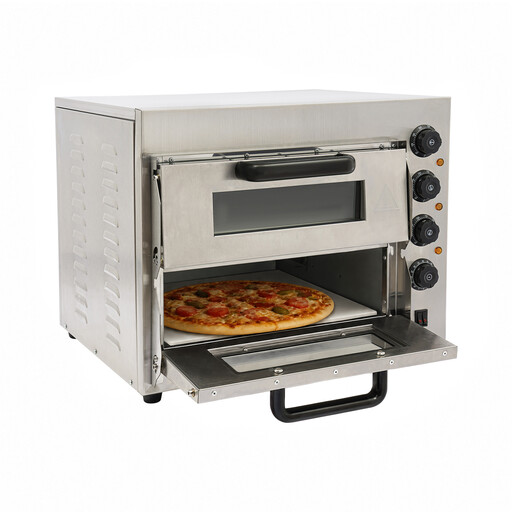 No image available
For baking in a countertop appliance; check that your tin and intended use are suitable for this pizza oven.
The product details list two levels, a 20 l capacity, 3,000 W, a temperature range of 50 to 350 °C and separately adjustable heating elements. The surfaces can become very hot during use.
No. Follow the specific recipe and the appliance instructions. Dr. Oetker often recommends conventional heat as a starting point for tart and quiche bases, while NEFF’s mushroom tart recipe specifically uses a bread-baking setting. So don’t transfer settings to another cooking mode without checking first.
Capacity in litres alone won’t tell you. Rommelsbacher states that the BG 1805/E can take tins up to 31.5 cm in diameter and has a usable interior area of 34 × 28 cm. Also check the outside dimensions of your tin, including its rim and handles.
Compare the kWh figures for each standard baking cycle and cooking mode rather than relying on the energy efficiency class alone. These figures don’t represent the measured energy use for your mushroom tart. For cleaning, the features of the specific model and how you use it are what matter.
Regulation (EU) No 65/2014 governs energy labelling for domestic ovens. Check the energy label and product information sheet for the specific offer. Whether a particular small countertop appliance is covered depends on how it is classified.