What should you look for when buying?
Check that your tin will fit and that you have a suitable place for the oven first, then make sure its heating functions match the recipe. You can assess cleaning and electricity use separately.
| What you need |
What to look for when buying |
Who it matters most to |
| Will the tart tin fit? |
Compare the tin’s outside diameter and rim with the specified tin size and usable interior space of the exact model. Rommelsbacher says the BGE 1580/E can accommodate tins up to 29 cm; Steba gives the KB M19’s interior dimensions as 23.5 × 31 × 25.5 cm (H × W × D). |
If I want to use my existing tin, it needs to fit safely. Around 33% of consumers are likely to put fit first. |
| Do you have a suitable place for the oven? |
Check the oven’s external dimensions, ventilation clearances and positioning instructions against the space you have in mind. The Steba KB M19 manual specifies a 10 cm gap between the back of the oven and the kitchen wall; this doesn’t automatically apply to other models. |
If you have little spare worktop space in your holiday cottage, you’ll need an oven that can be positioned safely with all the required clearances. This is likely to be the main consideration for around 27% of consumers. |
| Do the heating functions suit the recipe? |
Check that the heating function, temperature range and timer match the recipe you’re using. LECKER specifies 200 °C with top and bottom heat, or 175 °C with fan-assisted heat. |
If I want to follow a recipe for my mushroom tart, I need to be able to select the heating function it calls for. Around 20% of consumers are likely to give this particular consideration significant weight. |
| How much effort do cleaning and servicing involve? |
Check the cleaning instructions and whether the accessories can be removed. Spare parts and repair services may also matter, depending on how long you plan to use the oven. Rommelsbacher lists a crumb tray for the BGE 1580/E, while Severin offers a repair service for the TO 2067. |
If you want to keep cleaning to a minimum after baking or value access to servicing, you’ll want to pay close attention to these points. Around 13% of consumers are likely to prioritise care and servicing. |
| What will it cost to run? |
For a fair comparison, use energy consumption figures recorded under comparable baking conditions and consider your own electricity tariff. The Verbraucherzentrale points out that actual electricity consumption is what matters. |
If I’m focusing on running costs, I need comparable consumption figures rather than relying on wattage or oven capacity alone. Around 7% of consumers are likely to put electricity consumption first. |
Joybuy products for your holiday cottage kitchen
This selection includes freestanding appliances with baking or oven functions. Before buying, compare your tin with the specifications for the exact model and check its positioning instructions.
 No image available
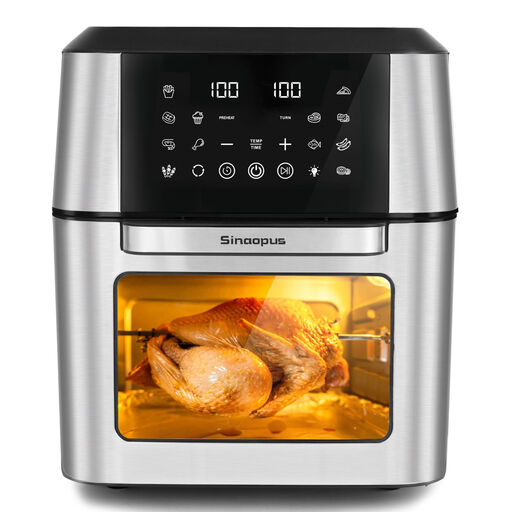
Sinaopus 12L XXL air fryer and mini oven, 1800W
The product description lists baking as one of its uses and gives a temperature range of 80 to 200 °C. Check separately whether your tart tin will fit.
12 l capacity, 360° hot air circulation, touchscreen display and 12 programmes.
View at Joybuy
 No image available
Woltu BF12sz mini oven, 32 litres, 1600 W
The product specifications say this mini oven is designed for baking and grilling. Check the exact appliance to make sure it will accommodate your tin.
Temperature settings from 100 to 250 °C, timer and removable crumb tray. External dimensions: 52.3 × 36 × 32.2 cm.
View at Joybuy
 No image available
Woltu mini oven with a 10-litre capacity and pizza function
The specifications list top and bottom heat and baking as one of its uses. Compare the appliance’s dimensions with the space available and the size of your tin.
Temperature settings from 100 to 230 °C, 60-minute timer and external dimensions of 37 × 26.5 × 21 cm. The description says it’s suitable for 1 to 2 people.
View at Joybuy
 No image available
Woltu mini convection oven, 28 litres
The product description lists three heating functions, including combined top and bottom heat. It gives a 26 cm pizza as an example of what the oven can accommodate; this doesn’t confirm that your tart tin will fit.
Temperature settings from 100 to 230 °C, three shelf levels and a 60-minute timer.
View at Joybuy
 No image available
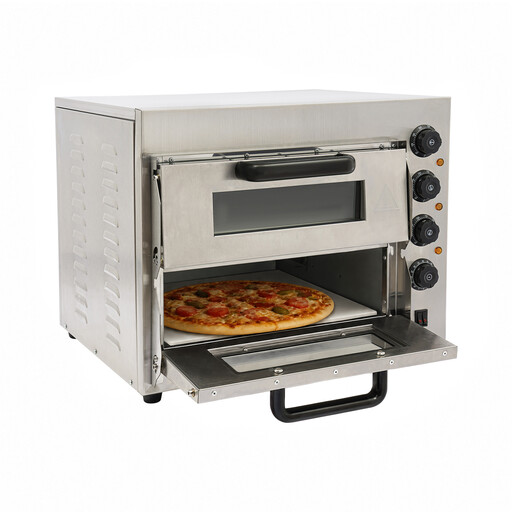
Electric double-decker pizza oven, 20 litres, 3000 W
The description lists pastries as one of its uses and specifies two baking levels. Compare the external dimensions of 57 × 47.5 × 44 cm with the space you have available.
Temperature settings from 50 to 350 °C and a timer from 1 to 60 minutes. The product description warns that the surfaces become very hot during use.
View at Joybuy
Frequently asked questions
Can I use the baking time in a recipe unchanged in a mini oven?
No. The recipe’s cooking time isn’t guaranteed to be the same for every appliance. For its preheated mushroom quiche, LECKER gives a baking time of 45 to 50 minutes and specifies 200 °C with top and bottom heat or 175 °C with fan-assisted heat. Choose the appropriate function and keep an eye on the tart as it bakes.
Can I put a countertop oven in a tight alcove?
It depends on the positioning instructions for the specific appliance. The Steba KB M19 manual specifies a 10 cm gap from the kitchen wall; this model isn’t designed to be built in. That clearance isn’t a general requirement for other appliances.
Who should I contact if a product I bought in Germany is faulty?
For a consumer purchase, the retailer is generally responsible for statutory claims; a voluntary manufacturer’s guarantee is separate. The Verbraucherzentrale says that new goods are generally covered by a two-year statutory warranty period. Keep your proof of purchase and the model details.
What product safety information should I check for an electric countertop oven?
Check the information for the appliance actually being offered and make sure you’re aware of the safety requirements that apply to it. Appliances covered by relevant harmonised EU legislation must carry the CE marking where that legislation requires it. The European Union explains that the marking isn’t an independent assessment of performance.
Will an oven with a lower wattage automatically cost less to run per tart?
No. Running costs depend on the electricity used when baking under comparable conditions, not just the stated power rating or oven capacity. The Verbraucherzentrale recommends taking the appliance’s actual consumption into account.


