
Lieferung heute & morgen

Qualitätsgarantie

Willkommens-Angebote freischalten: KOSTENLOSE Lieferung | Bis zu 80 % RABATT | Kostenlose 30-Tage-JoyPlus-Testphase
App herunterladen
Musical toys can encourage babies and toddlers to reach, press, tap and listen. But products can vary considerably in their age recommendations, volume controls, materials, cleaning requirements and power supply. If you focus only on lots of features or eye-catching packaging, you may end up with a toy that quickly proves impractical.
A product with a piano, drum, telephone, lights and animal sounds may seem versatile. But for a six-month-old baby, large buttons, complicated controls or removable small parts may not be suitable. Conversely, a simple musical box may not offer enough variety for a three-year-old.
That’s why the manufacturer’s age recommendation matters. It should match your child’s abilities and how you plan to use the toy. A baby toy doesn’t need as many modes as possible; it should be easy to hold and simple to activate.
Melodies and sounds can quickly seem loud in small rooms. Volume controls, a mute function or clearly defined play modes are especially useful. Without these, the toy may be less practical in everyday settings – such as at home, in the car or during quiet time.
Volume controls are no substitute for attentive use. Don’t place the toy directly next to your child’s ear. If it’s battery-operated, check the battery compartment and make sure it locks securely.
Plush musical toys are often used in the nursery, pushchair or on the floor. If the music module can’t be removed, cleaning becomes more complicated. With electronic musical toys for babies, charging ports, battery compartments and casings can be vulnerable areas.
Look for clear cleaning instructions, strong seams and securely closed compartments. Small parts, loose accessories and removable music modules should be kept out of babies’ reach. Safety warnings are important guidance for your decision, not just a formality.
For babies aged 0 to 6 months, simple, easy-to-grip products are usually best, such as a musical box or a soft rattle or sound toy. From around 6 months, buttons, drum pads, shapes and colours can become more interesting. A learning toy for babies aged 6 months and over should stand firmly or be safe to use on the floor.
For children aged 1 and over, more complex musical features become an option. An activity table or sensory toy with turning and pressing elements can encourage different types of play. From age 3, interactive learning cards, stories and additional language features may be suitable – as long as small parts are kept out of reach of younger children.
For plastic toys, rounded edges, a sturdy casing and a stable base are practical minimum requirements. Information from the supplier, such as BPA-free ABS plastic or compliance with EN 71, should be clearly shown in the product description or on the packaging. A CE mark indicates that the manufacturer declares the product meets relevant EU requirements; it is not, however, an independent quality mark.
For plush toys, material details, washing instructions and how to handle the music mechanism are particularly important. According to the product information, the music module can be removed from several Sterntaler models before washing using a safety zip.
Battery-operated products need compatible replacement batteries. Check whether batteries are included and whether the compartment can only be opened with a tool or secure screw. Rechargeable models reduce the need for disposable batteries, but they do need regular charging.
For longer car journeys or visits to grandparents, a carry handle, loop, compact size and long battery life may matter more than extra lighting effects. A musical toy for toddlers should also be easy to use, so your child can understand cause and effect for themselves.
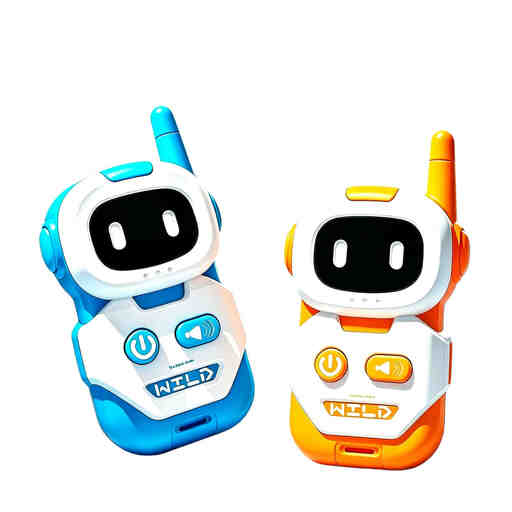
Why this product suits this need: This 4-in-1 play centre combines drum pads, lights, animal sounds, and shape and colour sorting for children aged 6 to 36 months.
The age recommendation and the play areas described help make it easier to understand how the toy can be used. According to the product information, this model has a non-slip base and rounded edges.
Four clearly defined types of play, ABS plastic according to the supplier, and a stated volume control.
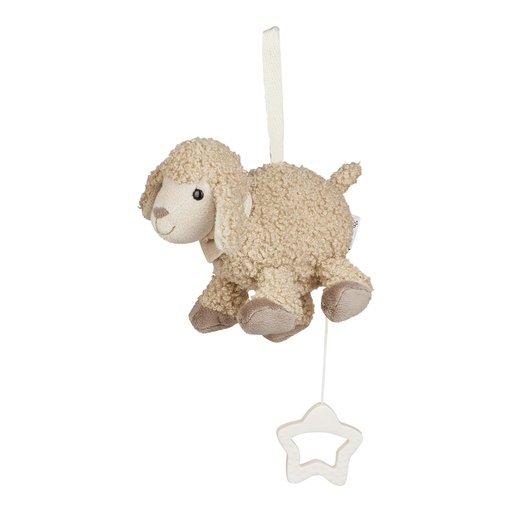
Why this product suits this need: This mechanical musical box is suitable from birth and, according to the product description, can be attached to a pushchair, car seat or baby carrier.
The music module can be removed before washing. The warning about the module is important: it must be kept out of reach of babies and toddlers.
Attachment straps, mechanical operation with no batteries, and a washable cover once the music mechanism has been removed.
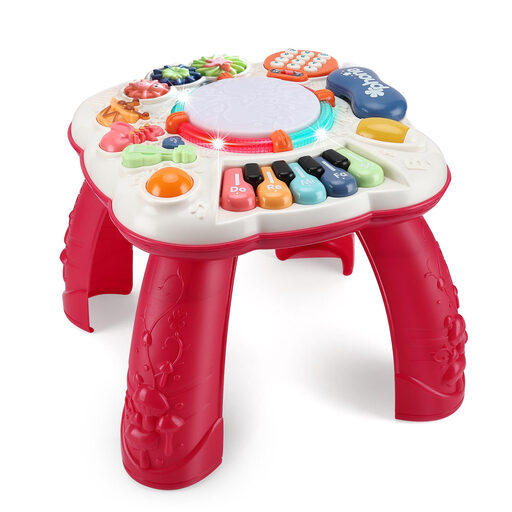
Why this product suits this need: The table has six play areas and, according to the product description, can also be used without its legs as a floor play panel.
Its flexible set-up suits different stages of development. According to the supplier, it has volume control and a quiet mode.
A piano, drum, gears and other controls in one product; stated dimensions of approximately 30 × 30 × 31 cm.
We’ve put together a complete, regularly updated list of products that meet these strict selection criteria and comply fully with the safety regulations in force in the EU.
It depends on the product. Some musical boxes and simple grasping toys are suitable from 0 months. Electronic learning toys with shapes, lights and several buttons are often recommended from 6 months or 1 year. Learning pens with cards and small accessories are often recommended for children aged 3 and over.
You can’t determine a universally safe volume from a product description without specific measurements. Models with a volume control or mute function are useful. Keep the toy at a suitable distance and stop using it if your child is startled or seems visibly uncomfortable.
Lifespan depends on the materials, batteries, care and how intensively the toy is used. Regularly check seams, buttons, zips, battery compartments and loose parts. Stop using a toy if its casing, cables, music module or fastenings are damaged.