
Lieferung heute & morgen

Qualitätsgarantie

Willkommens-Angebote freischalten: KOSTENLOSE Lieferung | Bis zu 80 % RABATT | Kostenlose 30-Tage-JoyPlus-Testphase
App herunterladen
A baby musical instrument can invite little ones from around six months old to grasp, press and listen. When choosing one, what matters isn't the number of flashy features, but whether the age suitability, operation, volume and safety information match your child and your daily life. If you're buying musical baby toys online, it's worth critically examining some typical marketing claims.
Labels like "multifunctional" or "early learning" don't tell you much about suitability on their own. A toy with small sorting shapes may be unsuitable for a baby from 6 months, whereas a simple keyboard or drum toy is easy to reach. What matters are the manufacturer's age recommendation, the size of any removable parts, and the level of supervision required.
Electronic instruments, children's pianos and children's drums can quickly become very loud in small rooms. An adjustable volume or a quiet mode is especially handy in flats with multiple neighbours. If this information is missing from the product description, it's worth checking before you buy.
Many products don't come with batteries included. What's more, hard-to-reach casings, open openings or sensitive electronics can make cleaning difficult. For regular use, we recommend a model with a securely closed battery compartment, a wipe-clean surface and clear care instructions.
For a learning toy from 6 months, your child should be able to reach the controls without complicated steps. Large buttons, easily movable wheels and a stable base encourage independent exploration. A baby activity centre with removable legs can adapt to different play situations: first as a floor or tummy-time panel, later as a table for playing while sitting or standing.
From the first year onwards, more advanced functions become suitable. A children's piano with several keys or a children's drum with different sound surfaces offers more opportunities for rhythm and cause-and-effect play. For children up to around 5 years old, a microphone, melodies and various sound modes are also interesting, provided the volume can be adjusted.
Look out for:
The CE and EN 71 markings are important indicators of intended compliance with European safety requirements. They do not replace checking the age suitability or adult supervision. Before each use, check for cracks, loose parts and damaged battery compartments.
Light and sound effects can enhance a sensory toy, but they shouldn't be the only play idea. Features where your child triggers a reaction themselves – by pressing, shaking or drumming – are most beneficial. Also check whether batteries are needed, what type of batteries are required, and whether there is a volume control. Claims like "BPA-free", "battery-free" or "batteries not included" should come directly from the specific listing and not be generalised.
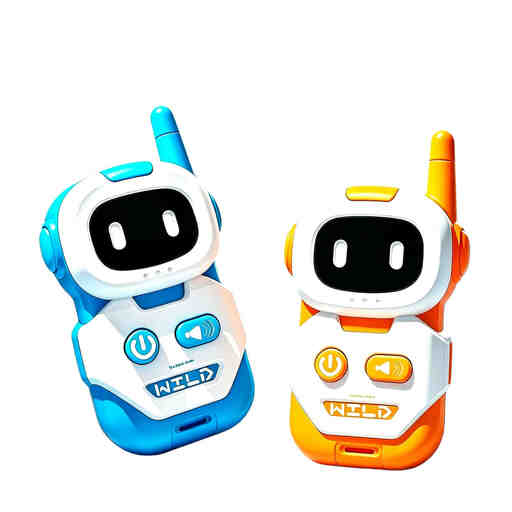
Why this product fits the profile: This compact baby musical instrument combines drum pads, lights, animal sounds and shape sorting. According to the product details, it is intended for 6 to 36 months; the listing title highlights 6 to 18 months as the main focus.
The functions are clearly stated: two drum pads, five shapes and several animal sounds. According to the listing, batteries are not included and need to be budgeted for separately.
ABS plastic, BPA-free according to the product details, rounded edges, non-slip base and combined music and sorting functions.
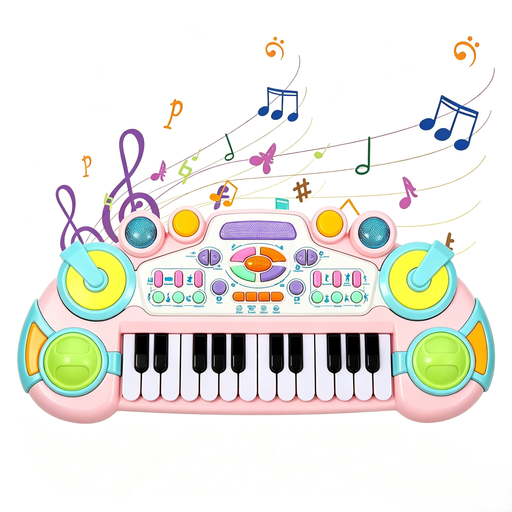
Why this product fits the profile: This electronic children's piano is designed for ages 1 to 5 according to the listing, and offers 24 keys, several sound modes and volume control for home use.
The volume can be adjusted according to the product description; a silent mode is also mentioned. This is practical for shared living situations.
24 keys, light function, animal and drum sounds, plus ABS plastic and BPA-free material claim according to the listing. Microphone and batteries are not included.
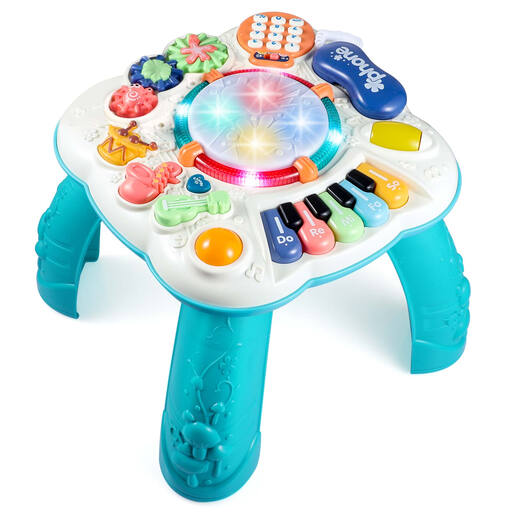
Why this product fits the profile: According to the description, this baby activity centre combines six play areas, including a piano, drum, gears and a telephone. The removable legs allow it to be used as a floor panel or a table.
The adjustable use reduces the risk of the toy becoming impractical after a short time due to an unsuitable height. The volume is adjustable according to the listing.
Six play zones, removable legs, ABS plastic, BPA-free material claim and rounded edges according to the product information. Batteries are not included.
We've put together a full, regularly updated list of products that fully meet these strict selection criteria and the safety regulations in force in the EU.
A musical learning toy doesn't need to offer as many effects as possible. What's more important is a suitable age recommendation, easily reachable controls, controllable volume and clear safety information. That way, you can choose a gift for babies and toddlers that suits their developmental stage and your living situation.
That depends on the specific product. Some models are intended from 6 months according to the seller, others only from 1 or 3 years. The key factors are the age recommendation, the size of any parts and the level of supervision required. For babies, the toy should have particularly large, firmly attached controls.
A general volume recommendation isn't possible without a measurement for the specific model. Where possible, choose a product with a volume control and use a low setting. For acoustic drums, short play sessions and a greater distance can also be helpful.
The length of use depends on age, play interest and the range of functions. A simple baby musical instrument often works well for initial exploration. Models with several play modes, adjustable height or differentiated keys can be used for longer, provided the age limit and safety conditions still apply.