
Lieferung heute & morgen

Qualitätsgarantie

Willkommens-Angebote freischalten: KOSTENLOSE Lieferung | Bis zu 80 % RABATT | Kostenlose 30-Tage-JoyPlus-Testphase
App herunterladen
Musical toys for babies and toddlers combine sounds, colours, movement and simple cause-and-effect experiences. However, choosing the right product is not always straightforward for parents, grandparents and other family members. Many products promote numerous learning functions, illuminated effects and extensive accessories. What matters is not the number of promises, but whether the toy is suitable for the child’s age, the available space and the type of play you want to encourage.
A toy with a piano, drum, telephone, cogs and light effects may sound versatile. For babies, however, too many stimuli at once can be confusing. Check whether the most important functions are easy to reach and whether individual elements can also be used independently.
Electronic toys with lights and music can quickly seem too loud indoors. A volume control is therefore particularly useful. If there isn’t one, your only options may be switching the toy off or avoiding certain functions. Descriptions such as ‘child-friendly’ are no substitute for clear information about how the toy is operated.
A baby drum kit designed for tummy time needs to be configured differently from a children’s drum kit with a stand and microphone. Pay attention to the recommended age group, stability and the size of the controls. A product suitable for one-year-olds will not automatically be right for a six-month-old baby.
For babies from around six months, large, easy-to-reach buttons, drum surfaces and shapes are useful. A flat activity centre is suitable for playing on the floor or during tummy time. For children aged one and over, additional spinning, pulling and pressing elements may be appropriate. An activity cube for babies offers several play surfaces and can therefore remain engaging for longer, but it requires more space than a single instrument.
For toys intended for babies and toddlers, rounded edges, a smooth surface and sturdy construction are important points to check. The product descriptions presented here state that the toys are made from BPA-free ABS plastic and have a design without loose parts. Such details should be verifiable in the product listing and on the packaging.
The product descriptions also mention the European CE and EN71 markings. This information comes from the respective manufacturers’ specifications. Nevertheless, buyers should check before purchasing that the markings, warnings, age recommendation and German-language product information are actually present. Even with robust toys, adult supervision is still essential.
When choosing electronic educational toys, you should check:
The batteries are not included with the models mentioned. This should be taken into account when buying a gift for babies and toddlers.
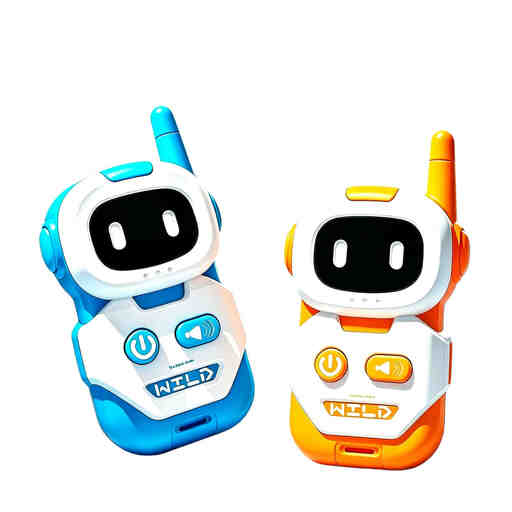
Why this product suits this profile: This compact musical toy combines drum surfaces, light effects, animal sounds and five shapes and colours. According to the product information, it is intended for children aged 6 to 36 months, with the description particularly highlighting use from six months.
The functions are brought together on a manageable play surface. Before buying, compare the contradictory short description ‘6–18 months’ with the more detailed age recommendation.
ABS plastic, stated BPA-free material, rounded edges, two drum surfaces and shape sorters in one product.
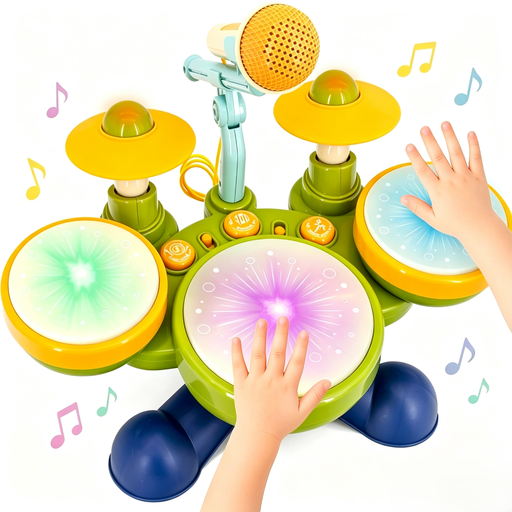
Why this product suits this profile: According to the product information, this children’s drum kit is designed for 1- to 3-year-olds and features three illuminated drum surfaces, two adjustable cymbals, a microphone and volume control.
The volume can be adjusted to suit your home environment. The removable stand also allows the kit to be used as a flat floor toy.
Adjustable cymbal height, removable stand, microphone and stated BPA-free ABS construction.

Why this product suits this profile: According to the product information, this activity cube for babies measures 23 × 23 × 24 cm and combines a piano, guitar, telephone, cogs, windmill and other play elements. The carry handle is useful for trips or visits to restaurants.
The dimensions and carry handle make it easier to assess how practical it will be for everyday use before buying. Nevertheless, the many functions should be used under supervision rather than all at once for extended periods.
Eight specified play modes, compact design, carry handle and several spinning, pressing and interactive movements.
For quieter play sessions, a small musical educational toy or a baby drum kit with a few clear functions is ideal. Families with plenty of space can choose a larger children’s drum kit with a microphone. For use on the go, an activity cube with a carry handle is the more obvious choice. If you are specifically looking for Montessori toys, sensory toys or educational toys for one-year-olds, look for independent actions such as pressing, turning, sorting and grasping.
The volume in your home is also relevant. In a flat or during quiet times, a volume control can make everyday use easier. With every electronic product, the battery compartment, switches and cables or microphone should be checked regularly for damage.
We have put together a complete, regularly updated list of products that fully meet these strict selection criteria and the safety regulations applicable in the EU.
That depends on the design. According to the product information, some models are intended for babies from six months, while others are suitable from one year. Large controls, a stable base and the absence of easily detachable small parts are key considerations. The manufacturer’s specific age recommendation should always take precedence.
Their lifespan depends on use, storage and battery replacement. Clean the toy according to the manufacturer’s instructions, keep it away from moisture and regularly check the casing, battery compartment and fastenings. If there are visible cracks or damaged parts, it should no longer be used.
The main ongoing cost is batteries. As these are not included with the products mentioned, you should plan to buy suitable batteries at the same time. Depending on how it is used, a model with a volume control and switchable light effects can affect battery consumption in everyday life.