
Lieferung heute & morgen

Qualitätsgarantie

Willkommens-Angebote freischalten: KOSTENLOSE Lieferung | Bis zu 80 % RABATT | Kostenlose 30-Tage-JoyPlus-Testphase
App herunterladen
Musical toys for babies and children combine sound, movement and entertainment. Depending on their age, a baby may use a musical toy to practise their first grasping and pressing movements, while a children's keyboard or children's drum kit from the age of 3 supports free-form music-making. However, choosing the right product is not always easy for parents, grandparents and other family members. Many products advertise a wide range of features without clearly explaining their practical benefits.
Lights, melodies, animal sounds and buttons may seem versatile at first glance. However, what matters is whether the features suit the child's stage of development. Babies need large controls that are easy to reach. Toddlers are more likely to benefit from turning, inserting and rolling movements. For children aged 3 and over, instruments with several tones and simple ways to play may be more appealing.
“ For babies and children” is not enough information. Look for a specific age recommendation, safety warnings and any small parts. For example, a children's xylophone with beaters is not suitable for younger babies, even if the instrument itself appears sturdy.
Toys with lights and music can quickly seem loud in small rooms. A volume control or quiet mode is therefore useful. With battery-operated toys, you should also check whether batteries are included, how securely the battery compartment is closed and whether the product is easy to clean.
For babies from 6 months, large buttons, drum surfaces and moving elements that can be reached while sitting or during tummy time are suitable. An Activity Cube Baby is better suited to children who can deliberately grasp, turn and press objects. For products aimed at ages 1 to 3, several play surfaces can be useful, provided the toy does not offer too many difficult-to-understand functions at once.
Look for:
For plastic toys, rounded edges, a smooth surface and a fully enclosed casing are important practical features. Information such as ABS or BPA-free should be clearly verifiable in the product description or on the packaging. Check the toy for cracks, loose parts and damaged cables before every use.
The CE mark is a manufacturer's declaration that the product complies with relevant EU requirements. The EN 71 series of standards covers safety requirements for toys. Such information does not replace supervision by an adult: even a correctly labelled product must be used in an age-appropriate way.
A musical learning toy should not simply play lots of sounds; it should also allow controlled use. Volume controls are useful on keyboards, baby drums and electronic play tables. Mechanical instruments such as xylophones and junior drum kits do not require batteries, but they can also become loud if played forcefully.
Electronic products should generally be cleaned with a lightly damp cloth only and should not be immersed in water. Do not use batteries in the toy if the compartment is damaged or corrosion is visible.
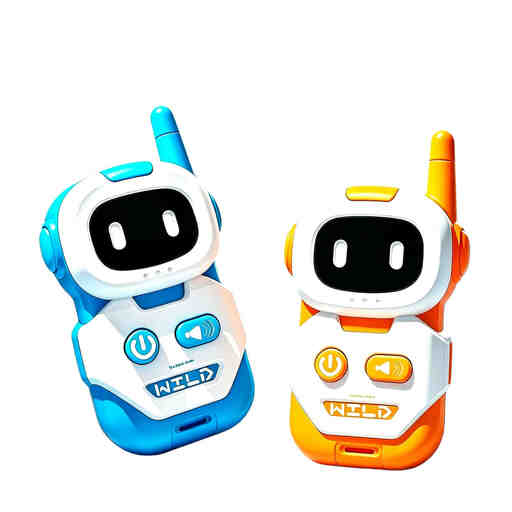
Why this product suits this profile: The combination of drum surfaces, lights, animal sounds and five shapes offers several simple ways for children aged 6 to 36 months to get started.
The functions are immediately visible through the large surfaces and shapes. According to the product description, the edges are made from rounded ABS plastic; batteries are not included.
Four combined ways to play, a non-slip base and shape sorting in one compact toy.

Why this product suits this profile: Designed for children aged 1 to 3, this cube combines a piano, guitar, toy telephone, gears and other controls across a surface measuring approximately 23 × 23 × 24 cm.
The age range and compact dimensions are clearly specified. The rounded ABS construction is designed to help prevent loose small parts; a visual inspection is still required before use.
Eight play modes, a carry handle and several mechanical and electronic activities.
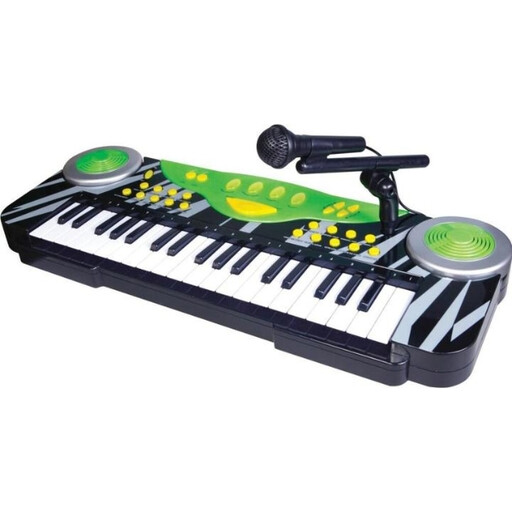
Why this product suits this profile: For children aged 3 and over who want to sing, try out the keys and record their own sequences, this children's keyboard with microphone offers several clearly labelled functions.
According to the product details, both volume and tempo can be adjusted. This model is not suitable for children under 3; four AA batteries must be supplied separately.
37 keys, 16 rhythms, recording and playback functions, plus a microphone.
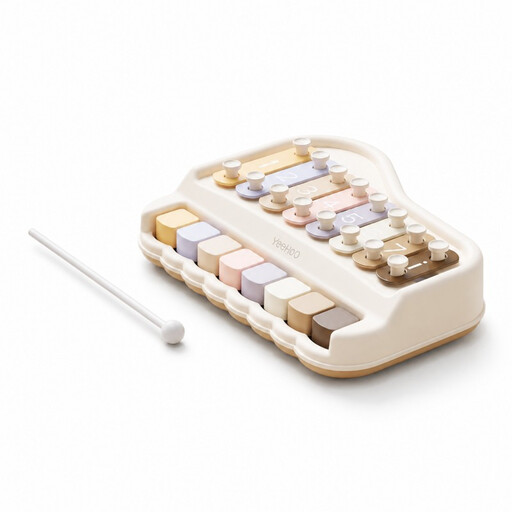
Why this product suits this profile: This mechanical instrument is designed for children aged 3 and over and does not require batteries. It is ideal for playing together at home.
It is designed to be played by tapping with the beaters or fingers. The beaters can be stored behind the instrument; adult supervision is recommended.
Eight tones, two ways to play and no ongoing battery costs.
We have put together a complete, regularly updated list of products that fully meet these strict selection criteria and the safety regulations applicable in the EU.
That depends on the design. From around 6 months, babies can use large, securely integrated buttons, drum surfaces and simple cause-and-effect games. An Activity Cube Baby is often offered for children aged 1 to 3. The xylophone, children's keyboard with microphone and children's drum kit in the selection above are intended for children aged 3 and over. The age recommendation for the individual product is the deciding factor.
It is not possible to specify a generally suitable volume without measuring the specific product. Wherever possible, choose models with a volume control or quiet mode. Do not hold electronic sound sources directly next to the ear, and stop play if the child is startled or appears uncomfortable. Mechanical instruments should also be used at a safe distance from the ear.
Their lifespan depends on the materials, build quality and how they are used. A smooth ABS surface can usually be cleaned with a cloth; battery compartments and moving elements should be checked regularly. For instruments with beaters, cables or small accessories, a visual inspection before every play session is advisable. Damaged products or loose parts should no longer be used.