
Lieferung heute & morgen

Qualitätsgarantie

Willkommens-Angebote freischalten: KOSTENLOSE Lieferung | Bis zu 80 % RABATT | Kostenlose 30-Tage-JoyPlus-Testphase
App herunterladen
Musical toys for babies and toddlers combine buttons, colours, sounds and movement. However, choosing the right one is not always easy for parents, grandparents and other family members. Many products promote a wide range of features, while important details such as volume control, the battery compartment or the recommended age may be less prominently displayed.
Three common buying misconceptions are particularly widespread:
A toy should suit your child’s current stage of development. Musical toys from 6 months are often suitable for keeping babies occupied during tummy time or while sitting. A flat play surface is practical for babies who are not yet able to stand securely. An Activity Centre for Babies with legs, on the other hand, is generally more suitable for children who can already sit or stand steadily.
Look out for:
The specifications may vary between individual versions. Before buying, check the product page and the enclosed instructions.
For electronic baby toys with lights and sounds, volume control is particularly useful in everyday family life. In a flat, during naptime or when travelling, a quiet or silent mode can be helpful. However, volume control is not a medical safety measure. The toy should not be held directly against the ear, and play should be paused if your child appears visibly overstimulated.
The following features are also useful:
For plastic toys, BPA-free materials, smooth surfaces and robust construction are useful features to look for. However, they do not replace checking the specific product for damage. The toy should be inspected regularly for cracks, loose parts and a loose battery compartment.
The EN 71 standard sets out requirements for toy safety in Europe. The CE mark indicates the manufacturer’s declared conformity with applicable EU requirements. Both details should be considered as part of your purchase checks, rather than as a blanket guarantee for every usage situation.
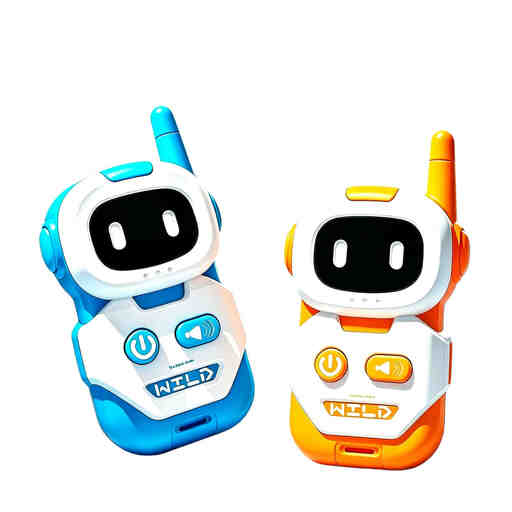
Why this product suits this profile: The combination of drum surfaces, lights, animal sounds and shape and colour sorting offers several simple play activities in a compact format.
The product details state an age range of 6 to 36 months, BPA-free ABS and rounded edges. Batteries are not included and need to be purchased separately.
Five geometric shapes, two drum surfaces and a non-slip base support a variety of grasping and pressing movements.
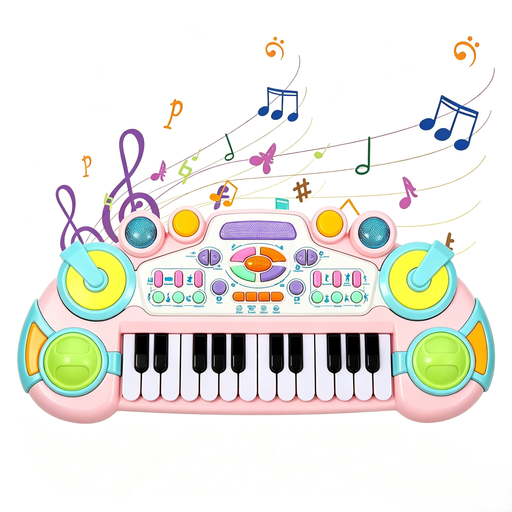
Why this product suits this profile: This children’s piano is designed for extended use from 1 to 5 years and offers keys as well as sound and rhythm functions.
The product description lists 24 keys, volume control and a silent mode. This makes it possible to adapt the range of functions to different everyday situations.
The device offers piano keys, animal sounds, drum rhythms and light effects. According to the product details, batteries are not included.
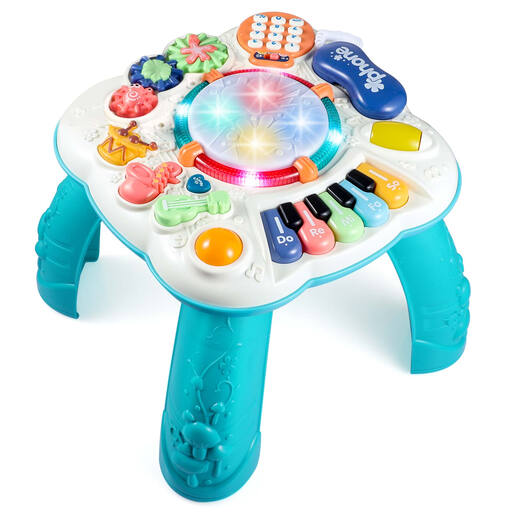
Why this product suits this profile: As a musical activity table, this model is suitable for families looking for several play stations and with enough space for a larger baby activity centre.
According to the product description, the detachable legs also allow it to be used as a flat floor play board. Volume control and a silent mode are also provided.
Six play areas include piano keys, a drum, gears and instrument sounds. The stated dimensions are approximately 30 × 30 × 31 cm.
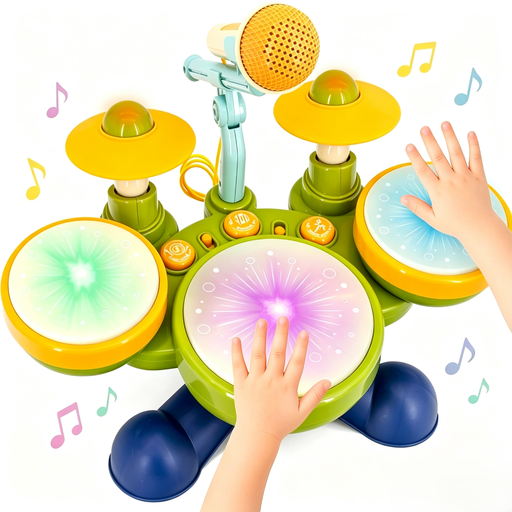
Why this product suits this profile: This children’s drum kit is aimed at children aged 1 to 3 who want to drum, sing and try out different play modes.
According to the product details, the volume can be adjusted. The detachable stand allows the kit to be used as a flat play surface; check the available space before buying.
The listed features include three illuminated drum pads, two movable cymbals and a microphone. Batteries are not included.
Electronic learning toys usually require batteries. Before buying, check whether they are included and which battery size is required. An automatic shut-off mechanism can help reduce consumption. If the toy is used frequently, it is worth comparing the cost of disposable batteries with rechargeable ones, provided the instructions confirm that they are suitable.
Clean plastic toys with a slightly damp cloth and follow the care instructions. Do not allow water to enter the speakers, button openings or battery compartment. With Montessori toys and sensory toys, the number of functions is less important than whether the child can independently grasp, turn and sort objects and discover cause-and-effect relationships.
That depends on the model. Some products are recommended from 6 months, while others are intended for children aged 12 months or 3 years and over. The age label, any small parts and the child’s motor skills are the key considerations. Babies should always use these toys under supervision.
Yes, it makes it easier to adapt the toy to different rooms and times of day. It does not replace attentive use: the toy should not be used directly next to the ear. A silent mode can be practical when travelling, during waiting times or in homes with poor sound insulation.
How long a child remains interested depends on their age, how easy the toy is to use and the range of functions. Models with several types of play, such as sorting, piano keys, drumming and rotating elements, can appeal to different interests. However, a wider recommended age range does not guarantee that every child will use the toy for the same length of time.
We have put together a complete, regularly updated list of products that fully meet these strict selection criteria and the safety regulations applicable in the EU.