
Lieferung heute & morgen

Qualitätsgarantie

Willkommens-Angebote freischalten: KOSTENLOSE Lieferung | Bis zu 80 % RABATT | Kostenlose 30-Tage-JoyPlus-Testphase
App herunterladen
Musical toys for babies and toddlers can combine buttons, drum surfaces, lights and sorting activities. However, choosing the right product is not always easy for parents, grandparents and other family members. Many products advertise a wide range of features, while important details about age suitability, volume, batteries and small parts may be less prominently displayed.
To ensure the toy is genuinely useful in everyday family life, you should watch out for three common pitfalls before buying:
For toys from 6 months, large, easily accessible controls are useful. Babies often start by playing on their tummy or while sitting. An activity panel that can be used on the floor without support legs is therefore more suitable than a tall baby activity table if the child is not yet standing securely.
From around one year old, requirements change. An activity cube for babies or a small activity table offers several turning, pressing and sliding functions. For educational toys from 1 year, the elements should be easy to grip and must not contain small parts that can come loose easily.
From the age of three, children can take on more complex tasks. A Montessori toy featuring colours, numbers or a magnetic maze can then complement musical toys. The manufacturer’s age recommendation remains the deciding factor.
Look out for:
For several of the products mentioned here, the manufacturer states that they feature ABS plastic, BPA-free materials, and CE and EN71 compliance. This information comes from the respective product descriptions and should also be checked against the details on the packaging and product page. A CE mark is not a substitute for age-appropriate use and adult supervision.
A toy with volume control can be adapted more easily to your home environment. A mute or quiet mode is also practical when your child wants to play with buttons or drum surfaces without playing melodies.
Before buying, check:
Electronic musical toys should not be left permanently within reach of water. For use in the bath, only products specifically designed for this purpose are suitable.
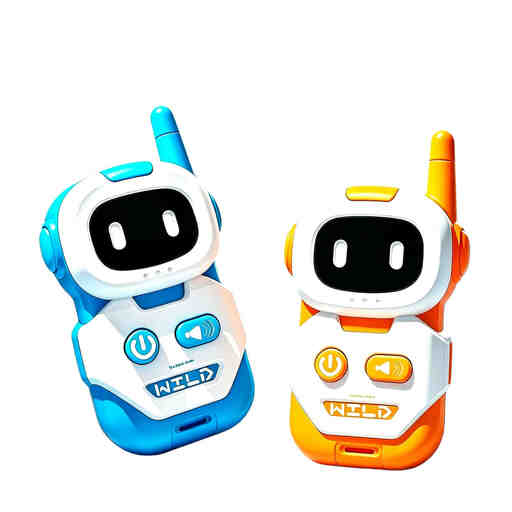
Why this product suits this profile: This compact educational toy combines drum surfaces, lights, animal sounds, and shape and colour sorting for early play stages.
The product description states an age range of 6 to 36 months and a non-slip base. This makes it easier to assess the playing position and stability.
Four play areas, BPA-free ABS plastic according to the manufacturer, and large controls; batteries are not included.
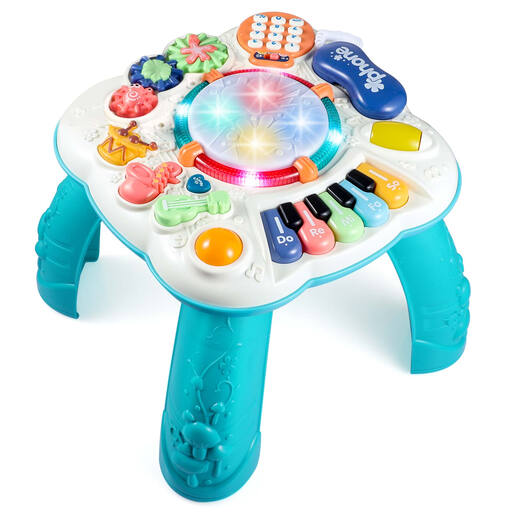
Why this product suits this profile: The table offers six clearly described play zones and can initially be used as a floor panel with its removable legs taken off.
The 2-in-1 design reduces the risk of the toy being left unused because it is the wrong height. A volume control and quiet mode are listed.
Piano, drum, telephone, gears and instrument keys in one product; dimensions of approximately 30 × 30 × 31 cm according to the description.

Why this product suits this profile: With a carry handle and compact dimensions, the cube is suitable for travelling, restaurant visits or smaller children’s bedrooms.
Instead of numerous individual parts, the cube combines eight types of activity. Check the 1–3 years age recommendation and the information about rounded edges before use.
Piano, guitar, telephone, gears and musical functions; the description states that it is made from BPA-free ABS plastic and measures approximately 23 × 23 × 24 cm.
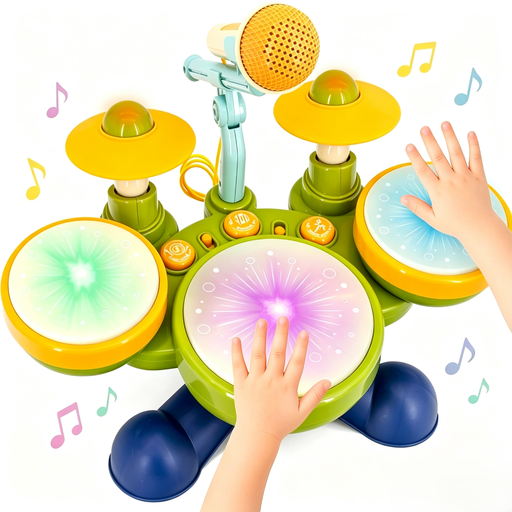
Why this product suits this profile: For children aged 1–3 who want to drum, sing and try out different sound modes.
The integrated control allows you to adjust the volume. The removable stand can make it easier to use the product as a floor panel.
Three illuminated drum surfaces, two cymbals, microphone and adjustable cymbal height; according to the product information, batteries are not included.
We have put together a complete, regularly updated list of products that fully meet these strict selection criteria and the safety regulations applicable in the EU.
Musical toys do not need to make sounds constantly to remain interesting. Alternate between free play and short shared activities:
A children’s piano is suitable for quiet keyboard play, while a children’s drum kit requires more room to move around. Sensory toys with lights, sounds and turning functions can offer variety, but should not replace all other play options.
From 6 months, products with large, easily accessible controls, a stable base and clear age labelling are suitable. A floor panel or multifunctional drum toy may be more appropriate for babies than a tall table. Use should always take place under supervision.
It is not possible to give a universally reliable volume level without measuring the specific product. Choose a toy with volume control wherever possible and use the lowest setting at which your child can still perceive the functions. Do not hold speakers directly against your child’s ear, and limit long periods of play with sound.
Service life depends on the materials, workmanship, batteries and intensity of use. Rounded plastic housings and a stable base can make everyday use easier, but they do not replace regular checks. If you notice visible cracks, loose parts or a damaged battery compartment, stop using the product.