
Lieferung heute & morgen

Qualitätsgarantie

Willkommens-Angebote freischalten: KOSTENLOSE Lieferung | Bis zu 80 % RABATT | Kostenlose 30-Tage-JoyPlus-Testphase
App herunterladen
Musical toys for babies and toddlers combine sounds, colours, movement and simple controls. To avoid buying something that will soon be outgrown or become an unnecessary source of noise, parents should look beyond the number of features. Age suitability, volume control, materials, stability and whether the toy matches your child’s stage of development are all important.
Toys with lights and sounds often look versatile in product photos. But too many small buttons, moving parts or complicated play modes can be overwhelming for a six-month-old baby. For toys for babies aged 6 months and over, large, easy-to-reach controls and a clear response to touch are usually more useful than lots of features with no obvious structure.
A built-in speaker can quickly become unpleasantly loud in a small room. Look for a volume control, a mute function or several volume settings. The actual volume will depend on the distance, the room and how long the toy is used. Volume control is no substitute for adult supervision.
A product labelled “6 to 36 months” isn’t automatically equally suitable for every stage of development. Check whether your child can sit, grasp or stand safely. Follow the manufacturer’s safety instructions for small parts, battery compartments and detachable components. A children’s drum kit with a microphone may interest a one-year-old, but may not yet be suitable for a younger baby.
For babies aged 6 to 12 months, good options often include flat play panels, toddler drum toys with large playing surfaces, or a baby activity table that can initially be used on the floor without its legs. From around 12 months, models with a stand, piano keys, drums and spinning elements may be more engaging.
Check that:
For plastic toys, details such as ABS, BPA-free and rounded edges can be useful points of reference. “BPA-free” means the product is free from bisphenol A; it doesn’t provide general information about all of its material properties. Smooth surfaces are easier to clean, while a wide or non-slip base can help reduce the risk of the toy tipping over during play.
The CE mark indicates that the manufacturer declares the product meets the relevant EU requirements. The EN 71 series of standards is also relevant to toys. However, consumers should still check the manufacturer’s information, warnings and details of the responsible person in the EU. Safety markings are no substitute for supervising young children.
Many models need batteries, which aren’t included. Before you buy, check:
A sensory toy with lights and music shouldn’t be used continuously right next to your baby’s head. For longer play sessions, take breaks and keep the volume moderate.
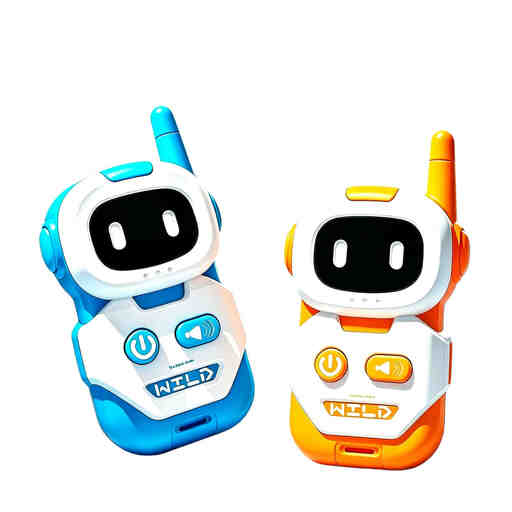
Why this product suits this type of shopper: This compact play centre combines drum pads, shape and colour sorting, and animal sounds. According to the product information, it’s suitable for ages 6 to 36 months.
Large controls and several clearly distinct ways to play help avoid a toy that relies solely on lights or sound effects.
According to the product description, it’s made from BPA-free ABS, has rounded edges and a non-slip base, and includes five shape pieces. Batteries aren’t included.
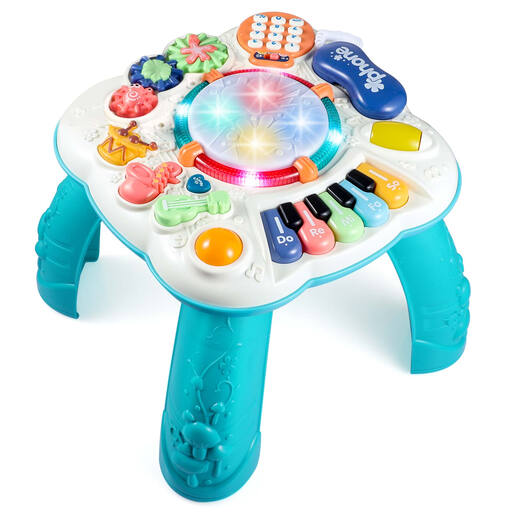
Why this product suits this type of shopper: This model offers six play areas, including piano keys, a drum, spinning elements and instrument sounds. According to the supplier, the legs can be removed.
Using it as a floor panel or a table can extend its useful life. A volume control and quiet mode help tackle the common problem of excessive noise.
The stated dimensions are approximately 30 × 30 × 31 cm. The table is made from BPA-free ABS and has rounded edges. Check that all parts are securely fitted before use.
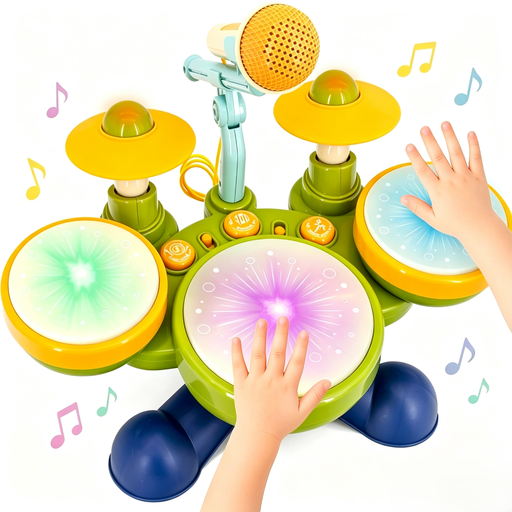
Why this product suits this type of shopper: For children from around 1 year who enjoy drumming and singing, this set has three illuminated drum pads, two cymbals and a microphone.
The built-in control lets you adjust the volume. The removable stand also allows children to play with the kit flat on the floor.
According to the product information, the parts are made from BPA-free ABS and have rounded edges. The base is described as a non-slip, four-point design.
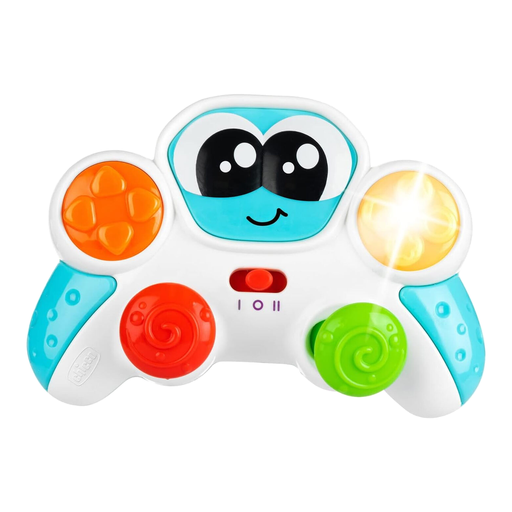
Why this product suits this type of shopper: According to the product information, this handy model is designed for children aged 6 months to 3 years. It’s made for easy gripping and short play sessions.
According to the description, a three-position switch lets you adjust the volume or switch the toy off.
Product features include two handles, two buttons, moving levers, and more than 20 sounds and melodies.
We’ve put together a complete, regularly updated list of products that meet these strict selection criteria and fully comply with the safety regulations in force in the EU.
From six months, you can consider models with large buttons, drum pads, simple cause-and-effect responses and easy-to-grasp elements. At this age, an activity table should only be used in a suitable position on the floor and under supervision. The manufacturer’s specific age recommendation should always be followed.
Battery life depends on the type of battery, volume, lights and how long the toy is used. As batteries aren’t included with several of the products featured, parents should check the specified battery type before buying. If the toy won’t be used for a while, it’s best to remove the batteries, following the manufacturer’s instructions.
Perceived volume depends on the distance, the room and how long the toy is played with. Models with a volume control or quiet mode make it easier to adjust the sound. Don’t hold the toy directly to your child’s ear, and stop using it if the speakers seem unusually loud or are damaged.