
Lieferung heute & morgen

Qualitätsgarantie

Willkommens-Angebote freischalten: KOSTENLOSE Lieferung | Bis zu 80 % RABATT | Kostenlose 30-Tage-JoyPlus-Testphase
App herunterladen
Musical toys for babies and toddlers combine buttons, sounds, lights and movement. This can provide varied opportunities for play in everyday life – provided the toy’s age suitability, volume, materials and controls are right for the child. However, choosing the right product is not always easy for parents, grandparents and other family members. Many products advertise a wide range of functions, while important details appear only in small print in the product description.
A toy with music, lights, animal sounds and several play modes may initially seem versatile. For a baby from 6 months, however, large, easy-to-reach buttons may be more useful than a complex control panel. Check whether the child can activate the functions independently and whether the responses are clear.
Baby toys with lights and music should not only offer lots of melodies. They should also have an easily accessible volume control or an on/off function. Moderate volume is particularly practical in flats, during quiet periods or when the toy is used for longer stretches. If this information is missing, it is difficult to assess how practical the toy will be in everyday use.
A product may be advertised as a gift for babies and toddlers even though it is only suitable for older children. Pay attention to the specific age recommendation, warnings and the size of any removable parts. Products containing small parts must not be given to children who could swallow them.
For learning toys from 6 months, simple cause-and-effect games are usually suitable: the baby presses, taps or touches a surface and receives a light or sound response. A sensory toy for babies can combine visual, auditory and tactile stimulation.
From around one year old, interactive vehicles, animal sounds, simple melodies and movement become more interesting. For children aged 1 to 5, a children's drum toy or a small instrument with a microphone can encourage longer, more creative play sequences. The age recommendation for the specific product always takes priority.
Check the following before buying:
Battery-operated toys incur ongoing costs because the batteries need replacing. For frequent use, a model with a rechargeable power supply may be more practical. With mains-operated products, such as a decorative children's lamp, the cable must be kept out of the child's reach.
Smooth edges, a stable base and a securely closed battery compartment are important features for everyday use. Plastic toys should include information about the material and any possible warnings. The CE marking is a compulsory conformity marking for certain product groups in the European Economic Area; it does not replace an individual check by an adult.
Products that refer to EN 71 are displaying information from the relevant seller about the European toy safety standard. You should also check the product information, age recommendation and condition of the toy. Even an apparently robust developmental toy should be checked regularly for cracks, loose parts and damaged battery compartments.
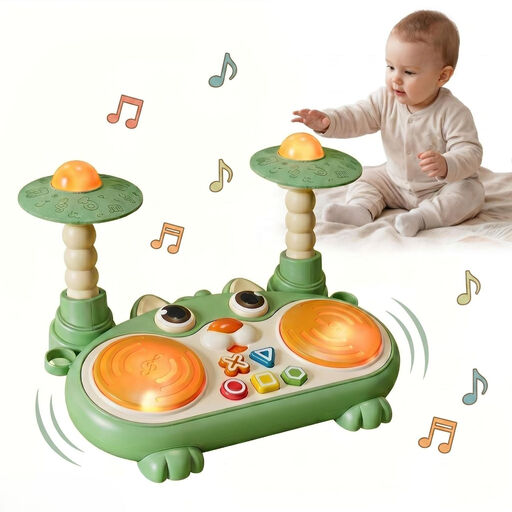
Why this product suits this profile: According to the product description, this model combines drum surfaces, lights, animal sounds, and shape and colour sorting in one compact toy. It is designed for children aged 6 to 36 months; batteries are not included.
The age recommendation and individual play modes are clearly stated. Nevertheless, check the volume, battery compartment and package contents before buying.
Several ways to play, including lights, rhythmic drumming, shapes and animal sounds; ABS plastic according to the product description.
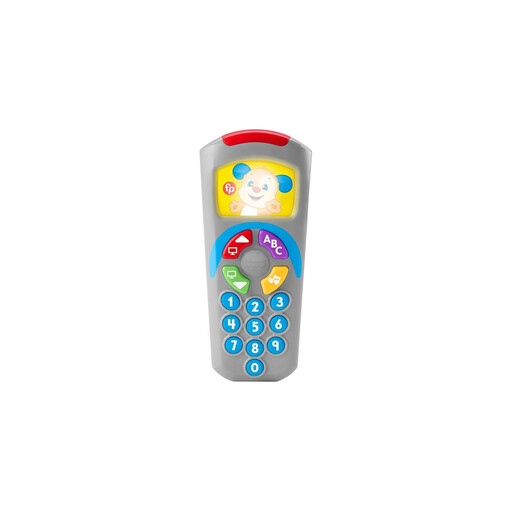
Why this product suits this profile: According to the product description, the remote control offers more than 35 songs, sounds and phrases, as well as volume control. It is suitable for babies and toddlers aged 6 months to 3 years.
The adjustable volume addresses an everyday issue that is often overlooked. The age recommendation and required 2 AAA batteries are listed in the product information.
German version according to the listing, volume control and several learning topics, including the alphabet, colours and opposites.
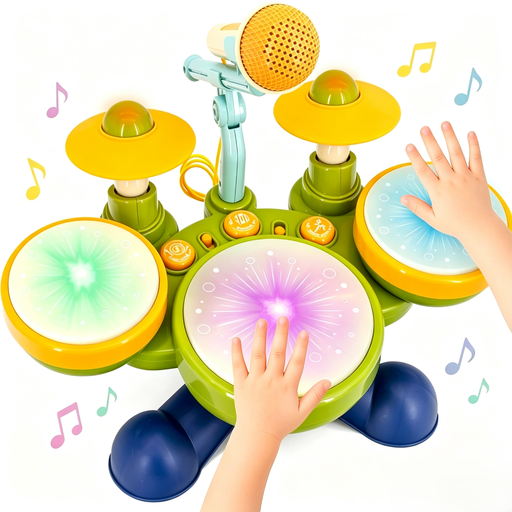
Why this product suits this profile: According to the listing, this drum set is designed for children aged 1 to 3 and features illuminated drum surfaces, cymbals, a microphone and volume control. The removable stand may make it easier to use on the floor.
The volume can be adjusted according to the description. Nevertheless, check the exact package contents and batteries before buying, as these are reportedly not included.
Microphone, adjustable cymbal height and removable stand; suitable for making music together under supervision.
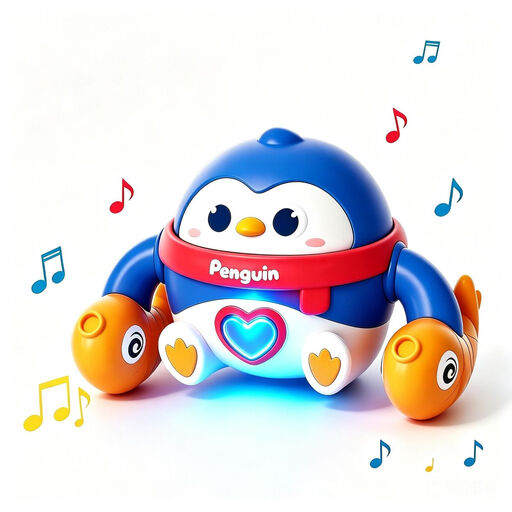
Why this product suits this profile: The rolling penguin combines movement, music and a light-up feature. According to the product information, it is suitable for children aged 6 to 36 months and can be activated by clapping or touching it.
The movement function is clearly described rather than being listed merely as a decorative light feature. Young children need a clear floor area and supervision.
360-degree rolling movement, motion sensor and light/music functions; batteries are not included according to the listing.
We have put together a complete, regularly updated list of products that fully meet these strict selection criteria and the safety regulations applicable in the EU.
This depends on the specific model. According to the seller, some products are suitable from 6 months, while others are only suitable from 1 or 3 years. The age recommendation, warnings and nature of any small parts are always decisive. Babies should use toys under supervision.
There is no universally suitable volume level that can be specified without measuring the sound at the child's ear. Where possible, choose a model with volume control and avoid using it next to the child's head for extended periods. If the sounds are noticeably loud or unpleasant, switch the toy off.
The lifespan depends on the materials, battery consumption, frequency of use and care. Check the casing, buttons, cables, battery compartment and removable parts regularly. Remove the batteries if the toy will not be used for an extended period, and store it in a dry, clean place.