
Lieferung heute & morgen

Qualitätsgarantie

Willkommens-Angebote freischalten: KOSTENLOSE Lieferung | Bis zu 80 % RABATT | Kostenlose 30-Tage-JoyPlus-Testphase
App herunterladen
Musical toys for babies should entertain, encourage grasping and introduce babies to the first connections between movement and response. The choice ranges from soft music boxes and rattles to baby toys with lights and music. However, not every product is suitable for every stage of development or for the family’s everyday routine.
Three common buying misconceptions particularly often lead to unsuitable purchases:
With toys from 6 months, parents should read the complete safety information rather than just the product title. Check:
A music box for babies from 0 months may be intended for the cot or changing area, but it is not automatically a grasping toy. With soft musical toys from Sterntaler, Sigikid or Fehn, the music module must be removed before washing and then securely put back in place.
Toys with sounds and melodies should have volume control or an off function. This is particularly practical in flats, when travelling or during shared quiet times. An automatic shut-off can also prevent batteries from being drained unnecessarily.
You should also check:
According to the product information, the Chicco Baby Controller features more than 20 sounds and melodies, two buttons for light and music effects, and a three-stage switch for volume and switching off. The activity table does not include batteries, according to the product description. Differences like these directly affect ongoing costs and whether the toy is ready to use.
Different surfaces, colours, shapes and handles are interesting for sensory baby toys. Plastic products should have rounded edges and a closed, sturdy casing. With textile products, removable modules and care instructions are important.
The CE marking is a manufacturer’s declaration that certain EU requirements have been met. It does not replace checking the specific age recommendation or regularly inspecting the product for damage. Information such as “BPA-free” or “EN71-compliant” should be verifiable directly in the product information and should not be understood as a blanket promise for every type of use.
The play environment also matters: rolling products need a clear, level surface. An activity table should be placed securely. Soft music boxes should not be positioned in the cot in such a way that ribbons or parts could become wrapped around the child’s neck or limbs.
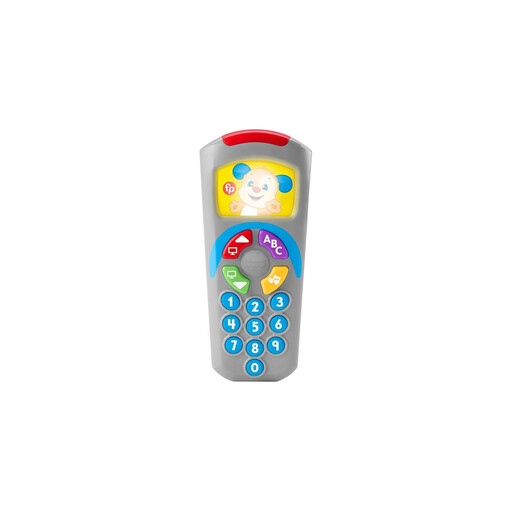
Why this product suits this profile: Its compact remote-control design is made for first experiences with pressing buttons and is easy to incorporate into the daily routine. According to the product information, the model is intended for babies and toddlers from 6 months to 3 years.
Volume control is specified. The responses are also activated using buttons rather than simply playing automatically.
More than 35 songs, sounds and phrases, plus two AAA batteries according to the product data.
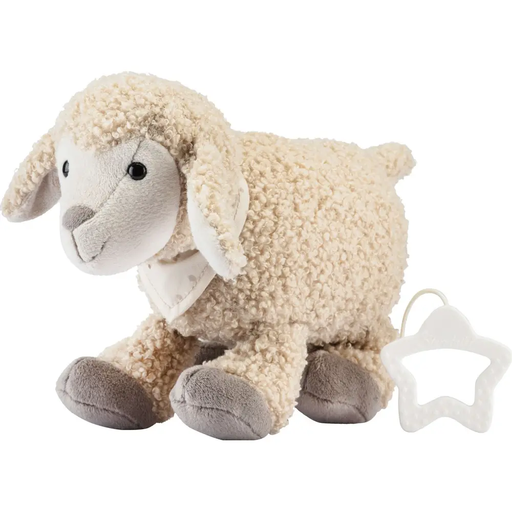
Why this product suits this profile: The soft music box is suitable as a calming companion for babies from 0 months and as a birth gift. It focuses on a single lullaby rather than a wide range of electronic functions.
The removable music module makes cleaning easier. It must be removed before washing and stored out of babies’ reach.
No batteries required; removable module and washable plush cover according to the product information.
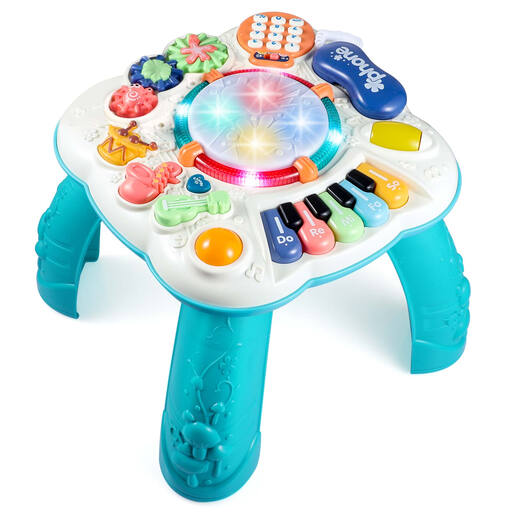
Why this product suits this profile: According to the product information, the table is intended for children from 6 to 36 months and combines a keyboard, drum, spinning parts, telephone and instrument sounds. Removable legs allow it to be used as a floor play panel.
The specified volume control and quiet mode help you adapt the sound level to your home, travel plans or the time of day.
Six play areas, removable legs and ABS plastic with rounded edges according to the product description.
We have put together a complete, regularly updated list of products that fully meet these strict selection criteria and the safety regulations applicable in the EU.
Before buying musical toys for babies, it is worth running through this quick checklist:
It depends on the product. Soft music boxes and certain rattles are stated as suitable from 0 or 3 months. Activity tables, drum toys and many interactive models often start from 6 months. The information on the relevant product page and the warnings are always decisive.
It is not possible to give a reliable general volume limit without measuring the specific product. Choose a model with volume control wherever possible and do not place it directly next to the child’s ear. Moderate volume and breaks are advisable during longer play sessions.
How long a toy remains useful depends on the child’s age, how it is operated and the range of functions. Products with several types of play can accompany different stages of development. An activity table with removable legs or a toy with buttons, lights and sounds usually offers more varied ways to play than a single melody. Nevertheless, regularly check cables, seams, the battery compartment and casing for signs of wear.