
Lieferung heute & morgen

Qualitätsgarantie
App herunterladen
Kategorien
Mounting objects on walls or other surfaces has traditionally required tools like drills and screws, often resulting in permanent damage and hassle. Nano Tape presents an alternative mounting technology. This double-sided tape, based on a gel-acrylic formulation, functions through adhesion via a micro-structured surface, enabling a strong yet removable bond. This article analyses the technical characteristics of Nano Tape and presents a selection of products to support an informed purchasing decision for drill-free mounting.
The effectiveness of Nano Tape depends on specific material and physical parameters. A proper selection should be based on the following criteria.
The base of Nano Gel Tape is typically an acrylic gel. Instead of a chemical adhesive, it relies on physical adhesion forces (Van der Waals forces) that form between the countless microscopic structures on the tape and the contact surface. This allows for a strong bond while also ensuring it's a residue-free tape upon removal. The quality of the acrylic gel is crucial for its longevity and reusability.
The maximum load-bearing capacity of Nano Tape is influenced by its width and thickness. A wider and thicker tape provides a larger contact area and can therefore support heavier loads. Manufacturers often specify a maximum load capacity per unit of area. For hanging pictures without drilling or mounting heavier objects, it is advisable to choose a tape with greater width and thickness and to check the manufacturer's specifications carefully.
Nano Tape adheres most reliably to smooth, non-porous, and clean surfaces. These include:
On porous, uneven, dusty, or delicate surfaces such as untreated wood, rough wallpaper, plaster, or freshly painted walls, its adhesive performance may be reduced. Testing on an inconspicuous area is recommended before final application.
A key feature is its property as a reusable tape. When its adhesive strength diminishes due to dust or dirt particles, the tape can be rinsed under clean water. After air-drying, the surface's adhesive property is restored. This process can be repeated multiple times, extending the product's lifespan.
Based on technical specifications and application scenarios, we have analysed the following products.
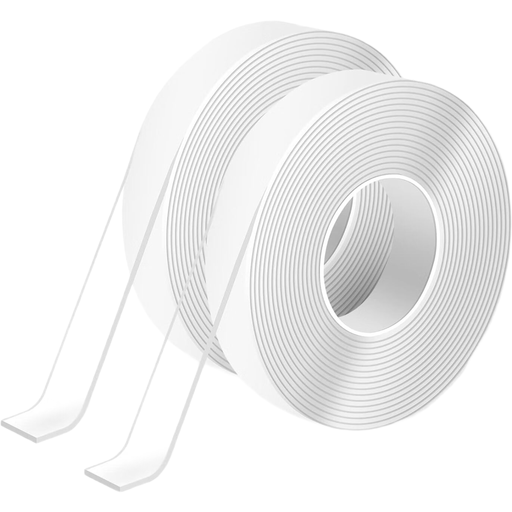
Why we recommend this product: With a total of six metres across two rolls, this package offers a generous length, making it suitable for various small to medium-sized household projects. The 1.3 cm width is a standard size for versatile applications, from mounting photo frames to securing rugs.
Advantages:
Who it's for: Users looking for a flexible and economical solution for general mounting tasks in the home or office, such as putting up decorations, organising cables, or securing floor mats.
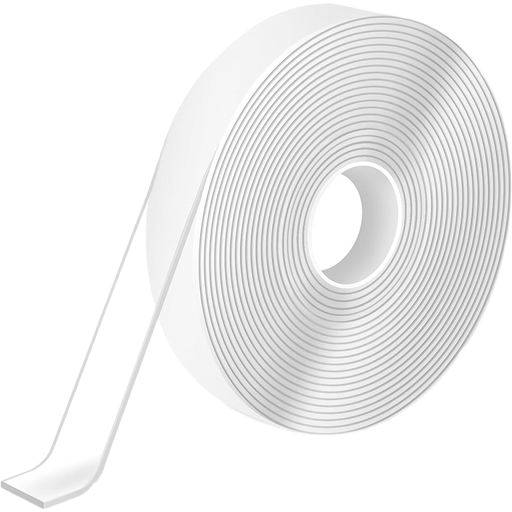
Why we recommend this product: At 0.2 cm thick, this mounting tape is thicker than many standard versions. The increased material thickness provides improved cushioning and a potentially higher load capacity, qualifying it for more demanding mounting tasks.
Advantages:
Who it's for: Users who want to mount heavier items like small mirrors, wall panels, or tools and need a heavy-duty double-sided tape with increased material thickness.
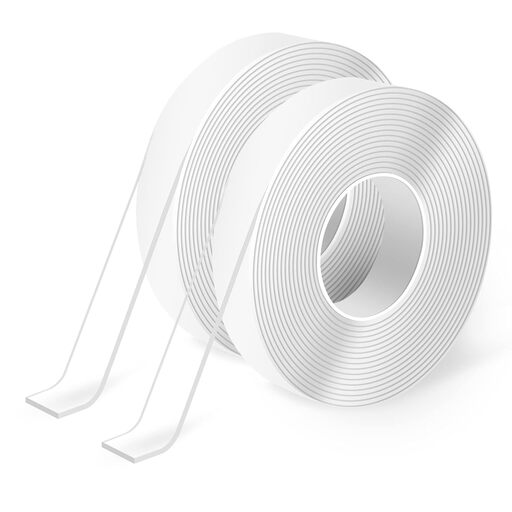
Why we recommend this product: This product combines a long total length of eight metres with an increased width of 2 cm. The wider contact area is advantageous for distributing the load of larger or heavier objects and provides high stability.
Advantages:
Who it's for: DIY enthusiasts and users with larger projects, such as installing kitchen backsplashes, securing large rugs, or mounting multiple picture frames, who will benefit from the greater width and length.
While Nano Tape is a functional solution for modern mounting needs, certain interior design styles, like the farmhouse style, often call for a different aesthetic. In these cases, decorative hooks, rustic shelving systems, or traditional picture frames can be a fitting complement. Exploring different accessory categories can provide additional inspiration for your interior design.
1. How exactly does Nano Tape work? Nano Tape uses the principle of physical adhesion. Its surface is covered with a multitude of microscopic, suction-cup-like structures. When it comes into contact with a smooth surface, intermolecular forces (Van der Waals forces) create a strong but non-permanent bond, without the need for a chemical adhesive.
2. Can Nano Tape damage walls? On stable, sealed surfaces like tiles, glass, or painted wood, Nano Tape generally leaves no residue or damage when removed correctly (by peeling it off slowly and evenly). On delicate surfaces such as paper wallpaper, poorly bonded paint, or porous plaster, there is a risk that parts of the surface may be pulled off during removal. Therefore, testing on an inconspicuous spot is always recommended.
3. How much weight can Nano Tape hold? The load-bearing capacity depends on several factors: the tape's width and thickness, the size of the adhesive area, the surface's condition, and the object's shape. Manufacturer specifications serve as a guideline but usually refer to ideal conditions. It is advisable not to push the stated maximum load to its limit and to regularly check the bond when mounting heavy or valuable items.