
Lieferung heute & morgen

Qualitätsgarantie

Willkommens-Angebote freischalten: KOSTENLOSE Lieferung | Bis zu 80 % RABATT | Kostenlose 30-Tage-JoyPlus-Testphase
App herunterladen
Hanging pictures, organising cables, or securing a rug presents a recurring challenge for many: How do you securely fasten items without permanently damaging walls or surfaces with drills or nails? The concern over unsightly holes or adhesive residue is especially high in rented flats. A modern solution to this problem is Nano Tape.
This article serves as your guide. It explains how nano tapes work, outlines their key features, and presents various mounting solutions to help you choose the right product for your project.
Before you decide on a product, it's wise to consider a few fundamental criteria. The right choice largely depends on your specific use case.
Holding power is a crucial factor. A double-sided tape must be able to reliably support the weight of the object you're mounting. Always check the manufacturer's specifications for maximum load capacity. The nature of the surface is equally important. While smooth surfaces like glass, metal, or tiles provide an ideal base for adhesion, not all tapes are suitable for rough, porous, or delicate materials such as wallpaper or freshly painted walls. For heavy items, a strong mounting tape is often the more appropriate choice.
A key advantage of many nano tapes is their reusability. Products labelled as washable can be cleaned with water after use and reused once dry. This not only saves money but is also eco-friendly. The ability to be removed without a trace is particularly important for renters and when decorating delicate surfaces. Look for products that guarantee clean removal without leaving sticky residue behind.
Do you need a mounting solution for outdoor use or in damp environments like the bathroom? In that case, a tape declared as waterproof is necessary. For hanging light decorations such as posters, special adhesive pads or strips are often sufficient, whereas tapes with high temperature resistance and vibration damping can be advantageous for attaching car accessories or for use in workshops.
Here is a selection of products designed for various needs.

Why it stands out: This tape is based on a gel-acrylic formula using nanotechnology. It is designed to combine strong adhesion with the option of reusability.
Advantages:
Who is it for? For users looking for a flexible, reusable, and damage-free mounting solution for various household items, decorations, or cable management.
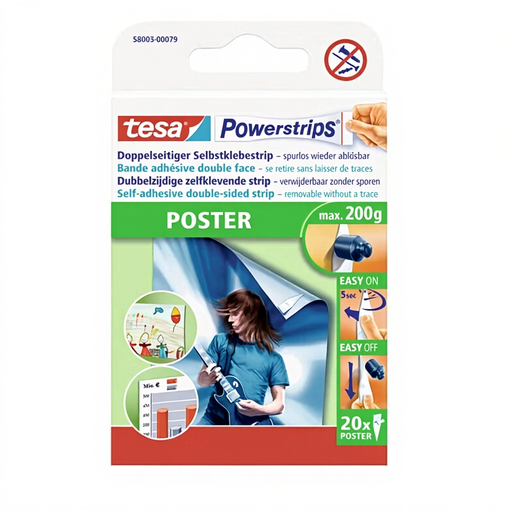
Why it stands out: These adhesive strips are specially designed for lightweight objects and delicate surfaces like wallpaper or painted areas, utilising the well-known Powerstrips technology.
Advantages:
Who is it for? For renters and decoration enthusiasts who want to attach lightweight items to walls or ceilings without leaving holes or damaging delicate surfaces.

Why it stands out: This acrylic foam tape is designed as a robust mounting solution for more demanding indoor and outdoor applications.
Advantages:
Who is it for? For DIY enthusiasts, car owners, and anyone who needs a durable and weather-resistant mounting solution for heavier objects or for use in demanding conditions.
The products featured already cover a broad spectrum of applications. If you haven't found the right solution for your specific project yet, you can find more alternatives in our comprehensive category.
Discover our range of paper tape
Nano tape adheres best to smooth, clean, and non-porous surfaces like glass, metal, tiles, or painted wood. On rough, dusty, damp, or delicate surfaces such as wallpaper, untreated wood, or certain plastics, its adhesion may be limited. It is recommended to thoroughly clean and dry the surface before application.
To remove the tape without a trace, it should be peeled or twisted off the surface slowly and evenly. Avoid tearing it off abruptly. For very firmly adhering tapes, gently heating with a hairdryer can help loosen the adhesive. Always follow the manufacturer's specific instructions.
The number of possible reuses depends on the wear and tear and the care taken during cleaning. After each use, dust and dirt particles accumulate, reducing its stickiness. Rinsing with clean water and then air-drying restores the adhesive strength. However, the adhesive power may gradually decrease over time.