
Lieferung heute & morgen

Qualitätsgarantie

Willkommens-Angebote freischalten: KOSTENLOSE Lieferung | Bis zu 80 % RABATT | Kostenlose 30-Tage-JoyPlus-Testphase
App herunterladen
Nappy pants for babies and children should combine freedom of movement, a secure fit and sufficient leak protection. The choice ranges from classic pants for everyday use to special night-time nappies for older children. However, anyone who relies solely on age recommendations or advertising claims can easily buy an unsuitable pack.
A nappy size does not automatically fit just because a child has reached a certain age. Body shape, waist size and leg shape vary considerably. The most important factor is therefore the body weight stated on the packaging. Depending on the product, sizes 4 to 8 cover different weight ranges.
Nappy pants that are too large may leak around the legs and back. On the other hand, a model that is too small can cause pressure marks or chafing. Choosing “nappies by weight” is therefore usually more reliable than selecting them by months or years.
Claims such as “up to 12 hours” or “100% leak protection” come from the respective manufacturer’s communications and do not guarantee the same result for every child and every sleeping situation. Fluid intake, sleeping position, fit and changing time all affect performance.
With Pampers Night Pants, Pampers Baby-Dry Pants and other products, you should therefore look beyond absorbency and also check the leg cuffs, back area and waistband fit.
A pack containing lots of nappy pants may appear cheaper at first glance. However, if your child moves up a size or does not tolerate the material, many of the pants may go unused. When trying a new model, it is best to start with a smaller pack. Once the fit and skin compatibility are right, buying a larger pack may be worthwhile.
Before buying, check:
For babies from around 4 months old, pants can be useful if they are very active or changing them while lying down becomes more difficult. For very young babies, traditional tab nappies may still be more practical, depending on their stage of development.
For night-time use, a highly absorbent core, leak guards at the sides and a suitable back closure are important. Pampers Night Pants, for example, highlight anti-leak cuffs, a Stop-&-Protect back pocket and a 360° fit. Pampers Baby-Dry Pants offer a comparable system consisting of leg cuffs, a back area and an absorbent core.
This information comes from the manufacturers and should be treated as guidance. If leaks occur repeatedly, changing the size often helps more than choosing a model with even stronger marketing claims.
Many disposable nappy pants are made from non-woven fabrics, elastic fibres, cellulose and superabsorbents such as sodium polyacrylate. According to the manufacturer, some of the Pampers and Ninjamas products mentioned here are dermatologically tested, certified to OEKO-TEX STANDARD 100 and contain no intentionally added EU fragrance allergens in accordance with the EU Cosmetics Regulation.
This does not mean that every skin reaction can be ruled out. If redness, a rash or discomfort occurs, stop using the product and seek medical advice if the symptoms persist.
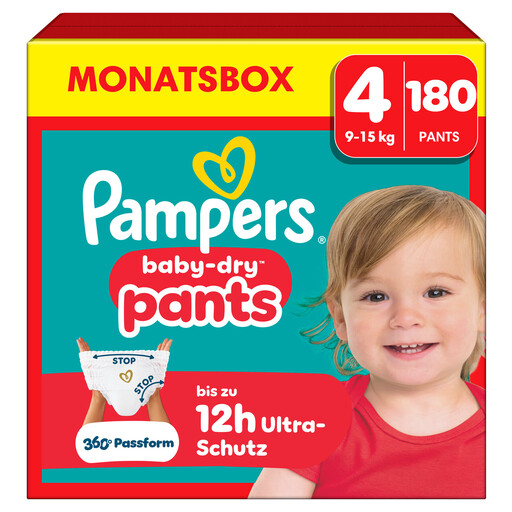
Why this product suits this profile: According to the product information, the pack is intended for babies weighing 9 to 15 kg and is suitable for day and night. The number of pieces can be practical for families with regular usage.
The specific weight information makes choosing easier than relying solely on an age recommendation. Even so, the fit around the tummy and legs should be checked before buying.
360° fit, leg cuffs, back area and, according to the manufacturer, up to 12 hours of protection.
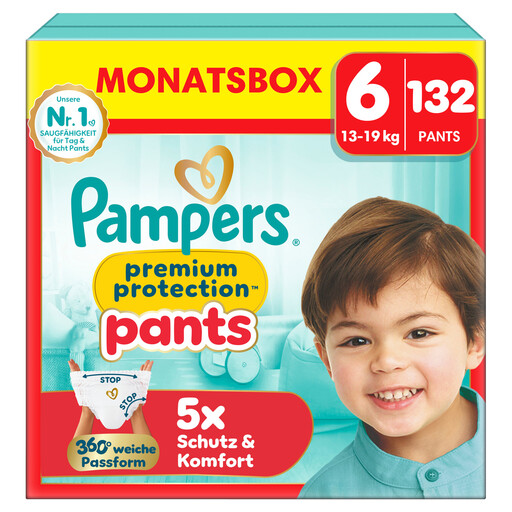
Why this product suits this profile: For active babies weighing 13 to 19 kg, the manufacturer describes a soft 360° waistband, soft leak guards and additional back protection.
Soft, elastic edges can help reduce chafing caused by a fit that is too tight. It is still essential to ensure that the cuffs sit on the outside and have not been folded inwards.
360° waistband, superabsorbent core and Stop-&-Protect pocket; according to the manufacturer, with no intentionally added EU fragrance allergens.
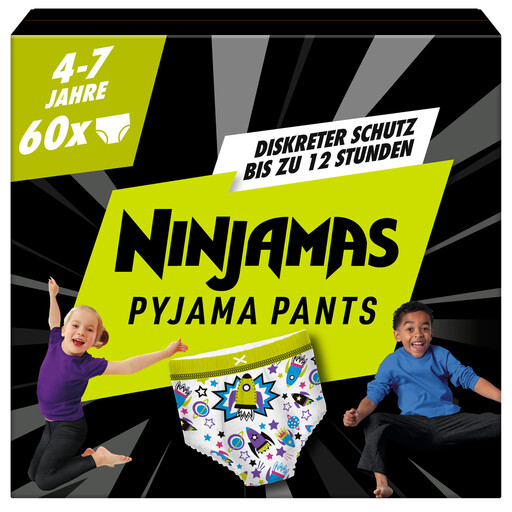
Why this product suits this profile: According to the product information, these pyjama pants are intended for children aged 4 to 7 weighing 17 to 30 kg, and are specifically described for night-time use and bedwetting.
The clear weight limit helps prevent children’s pyjama pants from being confused with a baby size. Older children require suitable DryNites or Ninjamas sizes.
360° FormFit waistband, quieter QuietCloth material and, according to the manufacturer, a fast-absorbing core.
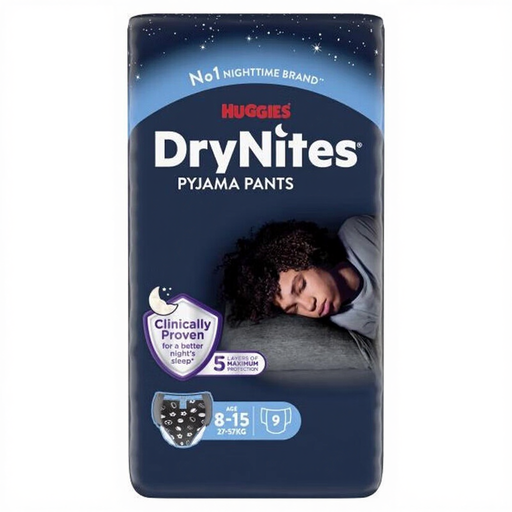
Why this product suits this profile: According to the product information, this model is designed for 27 to 57 kg and is aimed at older boys looking for a discreet night-time solution.
The age- and weight-specific design reduces the risk of choosing baby pants that are too small for an older child. The pack contains 9 pieces, making it suitable for trying out the product without committing to a large pack.
Five protective layers, elasticated sides and, according to the product information, quiet material in a design resembling underwear.
We have put together a complete, regularly updated list of products that fully meet these strict selection criteria and the safety regulations applicable in the EU.
The possible wearing time depends on the product, amount of fluid and skin sensitivity. Some night nappies are advertised as lasting up to 12 hours, but this is not a blanket guarantee. Wet or soiled nappy pants should be changed promptly.
For children who wet the bed at night, Ninjamas Pyjama Pants and Huggies DryNites Pyjama Pants are designed for this purpose. The key factors are the weight limit, waistband fit and a discreet design that suits the child. If bedwetting continues, it may also be helpful to speak to your child’s GP or paediatrician.
Large packs often reduce the price per piece if your child stays in the same size regularly. When trying a new product or if your child’s weight is changing quickly, a smaller pack carries less risk. Calculate the price per piece and take into account potential wasted purchases caused by choosing the wrong size.