
Lieferung heute & morgen

Qualitätsgarantie

Willkommens-Angebote freischalten: KOSTENLOSE Lieferung | Bis zu 80 % RABATT | Kostenlose 30-Tage-JoyPlus-Testphase
App herunterladen
If you live in a compact apartment or a room with limited space, you know the struggle: the area next to the bed is often just a narrow niche, yet the need for surface space and charging options for smartphones, tablets, and other devices is greater than ever. A narrow bedside table with a power outlet seems like the ideal solution. However, there are a few pitfalls to watch out for during selection that can quickly turn a supposed lifesaver into a source of frustration.
Before you make a decision, you should be aware of the three most common flaws that are often overlooked in narrow bedside tables:
This guide will show you which objective criteria matter to avoid these problems and find a functional and safe space-saving nightstand.
To make an informed purchasing decision, you should focus on measurable product features rather than relying on marketing promises.
While width is the most obvious measurement for a narrow nightstand, depth and height are just as crucial for daily use.
A well-proportioned small nightstand offers stable and comfortable use despite its narrow width.
A side table with a charging station is extremely practical, but safety is the top priority. Look for the following features:
The available storage space should match your needs. A narrow bedside cabinet with drawers offers different advantages than a model with open shelves.
Based on the objective criteria mentioned, we have identified several models that are suitable for specific requirement profiles.
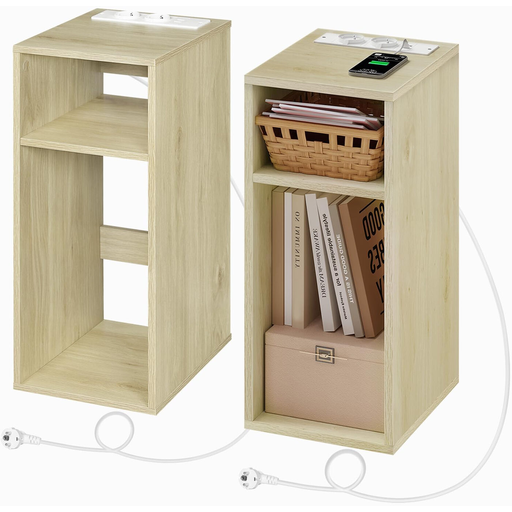
Why this model fits: Ideal for couples or for creating a symmetrical bedroom layout. The set provides a uniform look and equips both sides of the bed with charging functions and storage space simultaneously.
According to the manufacturer, the integrated power strip is CE and RoHS certified, addressing the safety risk. The 60 cm height is well-suited for many modern beds, including high divan models.
Delivered in a practical set of 2. Each table features 2 power outlets and 2 USB ports. The open back panel simplifies cable management.
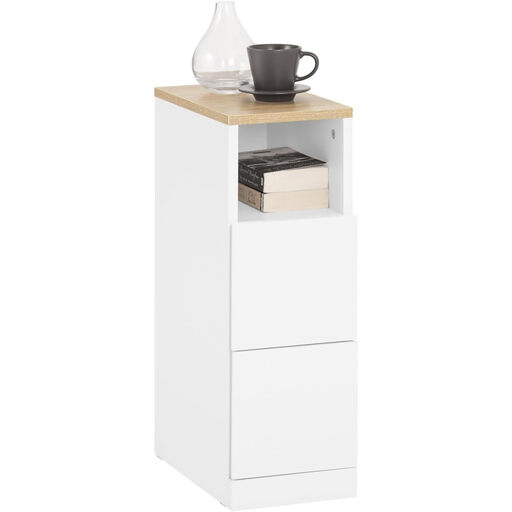
Why this model fits: At just 20 cm wide, this nightstand is specifically designed for extremely tight gaps, such as those often found between a wall and a high bed. The two drawers offer maximum storage in a minimal footprint.
The 35 cm depth and an included anti-tip kit counteract instability. The 60 cm height is designed for tall beds. The closed drawers protect contents from dust.
Extremely narrow design (20 cm). Offers a combination of concealed and accessible storage with two drawers and an open shelf.
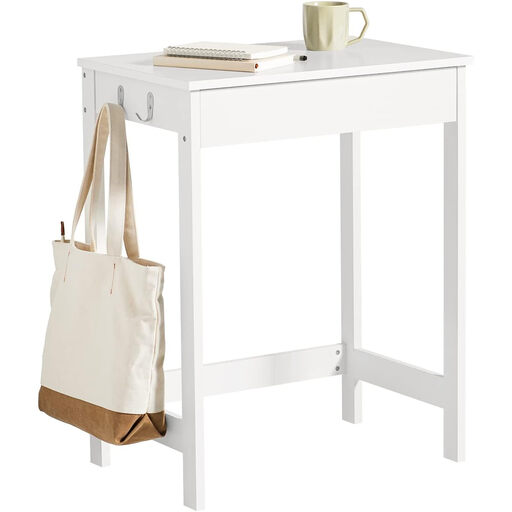
Why this model fits: For studio apartments or student rooms where one piece of furniture must serve multiple functions. It acts as a nightstand alternative with a large surface, a small workspace, and a storage unit all in one.
The sturdy iron frame with a load capacity of up to 60 kg prevents any instability. Although no outlets are integrated, the large tabletop (60x40 cm) provides enough space for a separate, certified power strip.
High load capacity (60 kg) and stability. Features a drawer and side hooks for additional organisation. Versatile for use as a nightstand, desk, or side table.
We have compiled a complete, up-to-date list of products that fully meet these strict selection criteria and UK safety regulations.
1. How high should a nightstand for a divan or ottoman bed be? The ideal height for a nightstand next to a high bed is typically between 60 cm and 70 cm. As a rule of thumb, the top of the nightstand should be level with the top of the mattress or a maximum of 5-10 cm below it. This ensures convenient access to your alarm clock, lamp, or glass of water.
2. Are nightstands with integrated power outlets safe? Yes, provided they meet the relevant safety standards. When buying, be sure to look for the CE marking on the power strip or in the product description. This seal confirms that the product complies with EU safety standards. Avoid models without this certification.
3. How much storage does a narrow bedside cabinet actually offer? A narrow bedside cabinet with a width of 20-30 cm can offer a surprising amount of storage if it is intelligently designed. A drawer measuring 20 cm (width) x 30 cm (depth) x 10 cm (height) already provides 6 litres of volume – enough for a book, charging cables, headphones, and other small items. The combination of drawers and open shelves maximises the use of limited space.