
Lieferung heute & morgen

Qualitätsgarantie

Willkommens-Angebote freischalten: KOSTENLOSE Lieferung | Bis zu 80 % RABATT | Kostenlose 30-Tage-JoyPlus-Testphase
App herunterladen
By a Joybuy Product Recommendation Officer, 30 August 2026
In many city apartments and homes, space is a precious commodity. The right storage solution can make all the difference, especially in narrow hallways, small bathrooms, or unused niches. A narrow dresser often seems like the ideal answer. But before you make a purchase, it's crucial to understand the common pitfalls that can quickly turn a practical piece of furniture into a source of frustration.
Many models on the market suffer from flaws that only become apparent with everyday use. These mainly include three problems:
This guide will help you avoid these problems and make an informed decision.
To ensure your new dresser serves its purpose, you should carefully examine three core aspects. These details determine its functionality, safety, and longevity.
A narrow hallway dresser shouldn't obstruct the walkway. Models with a depth of under 30 cm are often a good choice here. However, with very little depth (e.g., under 25 cm) and a tall profile, the risk of tipping increases.
Therefore, always look for an anti-tip kit. This is a small bracket used to secure the furniture to the wall. It's not an optional accessory but an essential safety feature, especially in households with children or pets. A good niche cabinet makes use of vertical space but must be securely anchored.
The material is crucial for longevity, especially in specific environments.
The external dimensions alone say little about the actual storage for small spaces. Check the internal dimensions of the drawers and compartments. A key advantage is adjustable shelves, as they allow you to flexibly adapt the space to your needs—whether for tall cleaning bottles or stacks of towels.
Also, check the maximum load capacity for the top surface and each drawer. These specifications, provided by the manufacturer, give an indication of the overall structural stability.
Instead of presenting an overwhelming list, we have matched a few models to typical use cases.
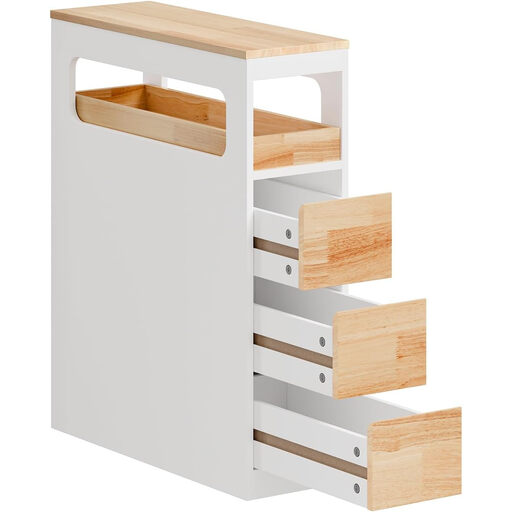
Why it's a good fit: Ideal for tight bathrooms where moisture is a concern and flexibility is needed. The wheels make it easy to clean the floor underneath and reposition the cabinet.
According to the manufacturer, the cabinet is made of E1-grade MDF and a rubberwood top, materials better suited for humid environments than unprotected particleboard. The lockable castors provide a stable yet mobile base.
Mobile thanks to four castors (two with brakes) and extremely compact for the smallest niches with a depth of just 23 cm.
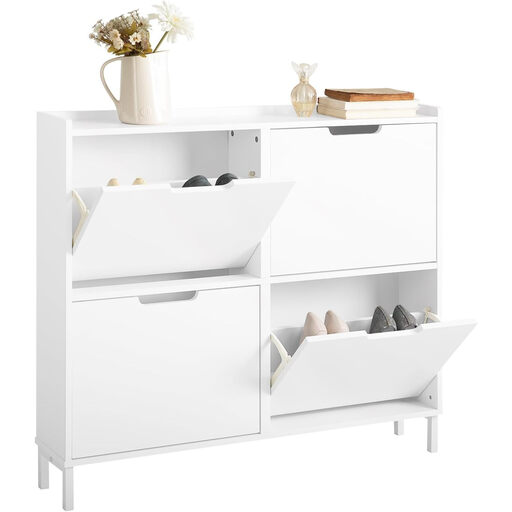
Why it's a good fit: Perfect for narrow entryways to keep shoes tidy and out of sight. The extremely slim design, with a depth of only 19 cm, takes up minimal floor space.
An included anti-tip kit directly addresses the stability problem of tall, narrow furniture. The flip-drawers are a highly space-efficient solution specifically for shoes, avoiding impractical, deep compartments.
Extremely shallow depth of 19 cm and a special design for shoe storage. Includes hardware for secure wall mounting.
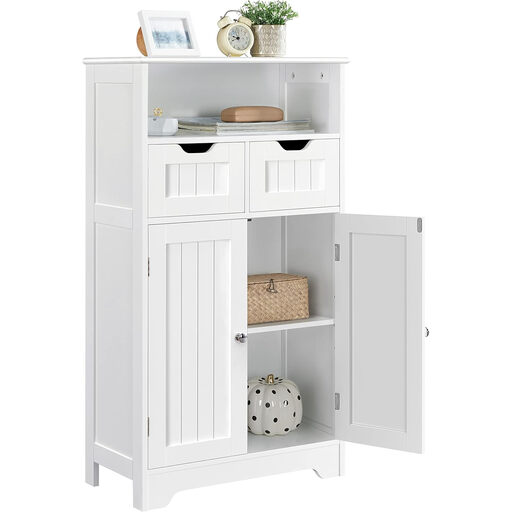
Why it's a good fit: For anyone looking for a flexible storage solution for a living room, hallway, or larger bathroom. It offers a mix of an open compartment, drawers, and a closed cabinet section.
The adjustable shelf behind the cabinet door makes the interior customisable, avoiding the problem of impractical, fixed compartments. The 30 cm depth offers a good compromise between compactness and stability.
A combination of open and closed storage, plus an adjustable shelf for maximum flexibility in use.
We have compiled a complete, up-to-date list of products that fully meet these strict selection criteria and German safety regulations.
Most narrow dressers come with an anti-tip kit. This usually consists of a bracket or strap that is screwed to the back of the furniture and to the wall. For wall mounting, use wall anchors and screws that are appropriate for your wall type (e.g., concrete, drywall). The manufacturer's assembly instructions will provide detailed guidance.
For humid environments like the bathroom, you should choose materials that are resistant to water vapour and splashes. Furniture made of MDF with a high-quality lacquer finish that prevents moisture penetration is a good choice. Solid woods like bamboo or rubberwood, which are naturally more resistant, or furniture made of plastic are also excellent options. Avoid unsealed particleboard.
Measure the width of your hallway and ensure that there is still sufficient clearance after placing the dresser (a clearance of at least 80 cm is usually recommended). For very narrow hallways, dressers with a depth of under 25 cm are ideal. In slightly wider corridors, a narrow sideboard with a depth of 30 to 40 cm can also work well without blocking the path.