
Lieferung heute & morgen

Qualitätsgarantie

Willkommens-Angebote freischalten: KOSTENLOSE Lieferung | Bis zu 80 % RABATT | Kostenlose 30-Tage-JoyPlus-Testphase
App herunterladen
By Joybuy Product Recommendation Officer, August 30, 2026
In many modern homes, living space is a precious commodity. Narrow hallways, unused corners, and small rooms present a particular challenge when it comes to creating storage. A slim shelf seems like the obvious solution, but the market is flooded with products whose quality and functionality often only become apparent after purchase. Before you make a decision, it's crucial to understand the common pitfalls that can lead to a bad purchase.
Many buyers focus on an appealing design or a low price, overlooking critical flaws. The most common problems include:
To avoid these issues, an objective evaluation of the product's features is essential.
A functional and durable space-saving shelf is defined by more than just its appearance. Pay attention to the following three core parameters to make an informed decision.
The stability of a shelf depends heavily on its frame. A metal shelf generally offers higher structural integrity than constructions made purely of plastic or engineered wood, especially in slim and tall designs.
Measure not only the available space in your home but also the items you plan to store.
The planned location determines the requirements for the shelf. An open shelf for the hallway should be robust and easy to clean. A corner shelf in the living room can also meet aesthetic demands. A modular modular system offers the flexibility to adapt to changing needs by being expanded or reconfigured.
Based on these objective criteria, we have identified several products that provide a suitable solution for specific requirement profiles.
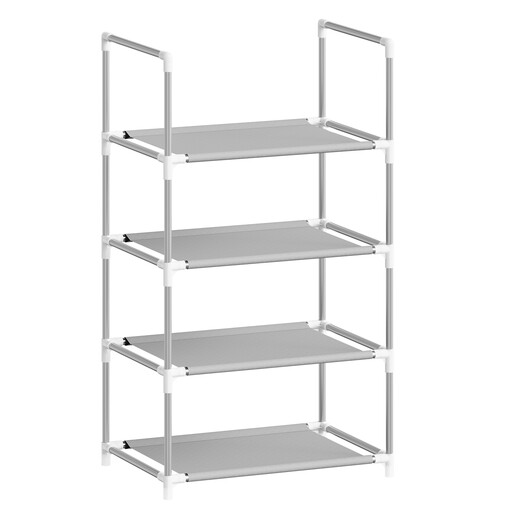
Why This Fits Their Persona: Ideal for students or a first flat, where a quick, straightforward, and cost-effective solution is needed to bring order to the entryway. Its compact dimensions fit into almost any narrow hallway.
It sidesteps the "unsuitable material" trap because the non-woven fabric shelves are designed for their intended purpose—storing shoes. The metal frame provides the necessary foundational stability.
Very lightweight and features tool-free assembly via a snap-together system. The shelves are removable to create space for taller shoes or boots.
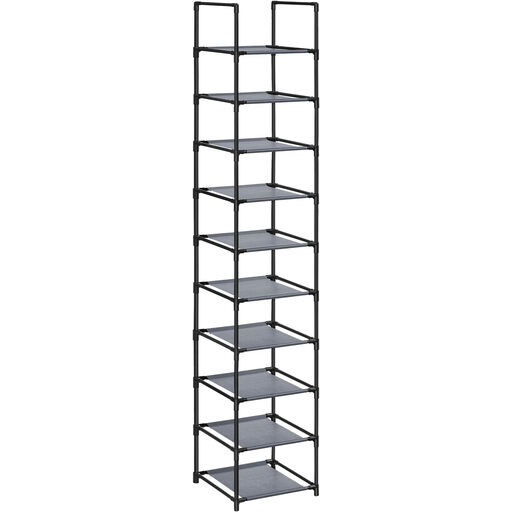
Why This Fits Their Persona: Perfect for families or shoe enthusiasts who need to accommodate a large number of shoes on a minimal footprint. The vertical design makes optimal use of room height.
This rack avoids the "misleading dimensions" trap as its purpose is clearly defined: maximum shoe count on a minimal footprint. The narrow 33 cm depth is optimised for shoes.
High capacity for up to 30 pairs of shoes, according to the manufacturer. The non-woven fabric shelves protect shoes from dust and are easy to clean.
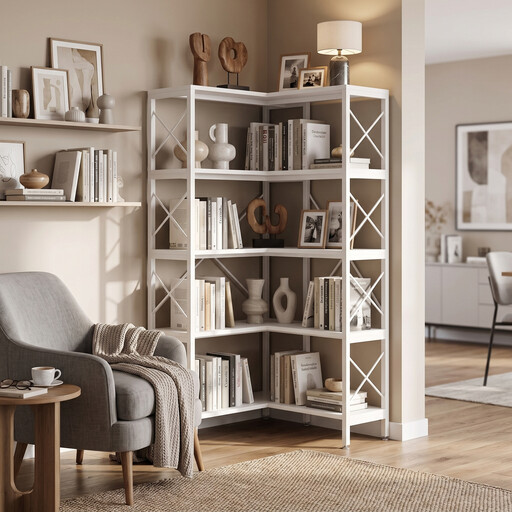
Why This Fits Their Persona: For users who want to transform an unused corner in their living room or office into a functional and aesthetically pleasing storage space for books and decorative objects.
It solves the "wasted space" problem with its special design for 90-degree corners. The combination of a metal frame and wood shelves avoids the instability trap when assembled correctly.
High load capacity of up to 20 kg per shelf, according to the manufacturer. Adjustable feet ensure stability even on uneven floors. The X-brace design further enhances stability.
We've compiled a complete, up-to-date list of products that fully meet these strict selection criteria and safety standards.
The most important measure to secure a tall, narrow shelf is to use an anti-tip device. This is a fastening kit (usually a bracket or a strap) that anchors the shelf to the wall. Many manufacturers include this hardware. Additionally, always place the shelf on a level, solid surface and be careful not to exceed the maximum load capacity specified by the manufacturer.
For a shelf in the hallway, a combination of a metal frame and easy-to-clean shelves is often the most practical choice. Metal is robust against bumps, which are more common in a narrow passageway. Shelves made of coated engineered wood (MDF) or high-quality plastic are easy to clean and resistant to moisture from wet shoes. Shelves with non-woven fabric tiers are a cost-effective alternative but are primarily suitable for lightweight shoes.
Yes, many modern shoe racks, especially those with a snap-together assembly system, offer this flexibility. With these models, you can simply leave out one or more shelves during assembly. This creates a taller compartment that is ideal for storing boots, ankle boots, or even small storage boxes. Check the product description for terms like "removable shelves" or "flexible assembly."