
Lieferung heute & morgen

Qualitätsgarantie

Willkommens-Angebote freischalten: KOSTENLOSE Lieferung | Bis zu 80 % RABATT | Kostenlose 30-Tage-JoyPlus-Testphase
App herunterladen
A narrow shoe cabinet can make your hallway much tidier, but it needs to suit the space available and the number of shoes you own. A poor design, rather than the price, is often what leads to a disappointing purchase: doors hit other furniture, shelves are too low or the unit feels unstable without adequate securing.
This buying guide explains which measurements, materials and features to consider before buying a shoe cabinet or shoe rack.
When choosing a shoe cabinet for the hallway, width isn’t the only measurement that matters. You also need to consider depth, door clearance and walkway width. A model with a depth of 23 to 30 cm may be suitable for a narrow entrance. If it has drop-down or hinged doors, check that they can open fully.
Height is often overlooked, too. A vertical shoe rack measuring 170 or 173 cm makes good use of wall space, but may not be suitable for rooms with low ceilings or sloping roofs.
A claim such as ‘holds 20 or 30 pairs’ is only useful if it takes your shoe sizes and styles into account. Trainers, boots and shoes with high tops need more room than flat slippers. If you’re considering a shoe cabinet with 10 compartments, check that each one is high and deep enough.
Adjustable or removable shelves offer greater flexibility. Fixed compartments, on the other hand, may leave some space unused.
Tall, narrow furniture has a relatively small base. Loading several compartments can shift the centre of gravity forwards. A wall-mounted anti-tip restraint is therefore advisable for tall cabinets and should be fitted according to the assembly instructions.
For a metal shoe rack or a rack with plastic connectors, check the permitted load per shelf, too. Don’t exceed the stated weight capacity.
First, measure the available space:
An open shoe rack is handy for shoes you wear often, as you can reach your pairs quickly. A shoe rack with doors or a closed shoe cabinet offers better protection from visible dust and creates a tidier look.
For furniture made from MDF or chipboard, careful assembly and cleaning with a dry or only slightly damp cloth are important. Plastic panels are generally easy to wipe clean and less sensitive to brief exposure to moisture. Fabric shelves should not be left wet.
A metal shoe rack has a sturdy frame, provided the connections and shelves are assembled correctly. For non-woven or fabric shelves, check the maximum load. If you have children or pets, an anti-tip restraint or wall fixing is also worth considering.
Open shoe storage gives you direct access to your shoes. Closed compartments look tidier in the hallway, but shouldn’t be filled with shoes that are still damp. Models with ventilation holes or open sides can help air circulate.
For stackable shoe boxes, transparent fronts are handy because you can see what’s inside without opening them. Before buying, though, compare the boxes’ external measurements with the size of your shoes.
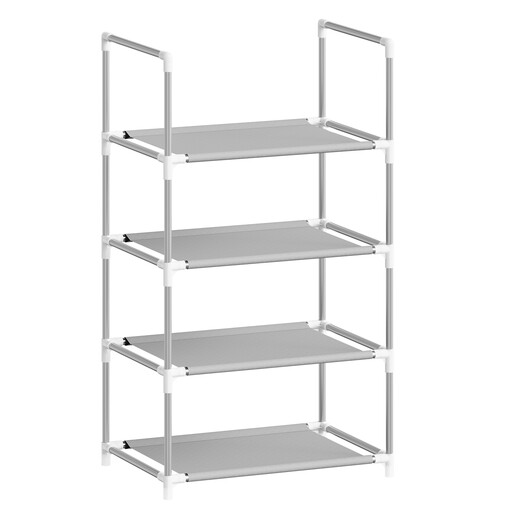
Why this product suits this type of buyer: Measuring 41 × 28 × 72 cm, it’s a good fit for smaller hallways, bedrooms or living areas where floor space is limited.
Its compact depth reduces the risk of the rack making the walkway feel cramped. The shelves are easy to access.
Metal frame, four tiers and removable shelves made from laminated non-woven fabric. Assembly required.
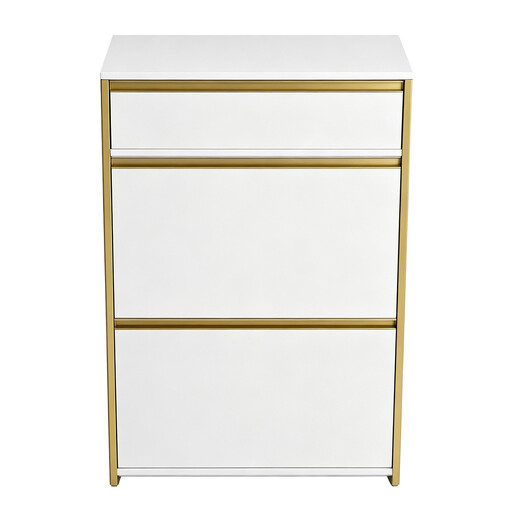
Why this product suits this type of buyer: This unit combines concealed shoe storage, adjustable shelves and a drawer in a footprint of 60 × 24 × 104,5 cm.
The adjustable, removable shelves make it easier to store shoes of different heights and small items. An anti-tip restraint is provided.
Four adjustable shelves, two doors, a drawer and a top surface; according to the product description, it holds up to 12 pairs of shoes.
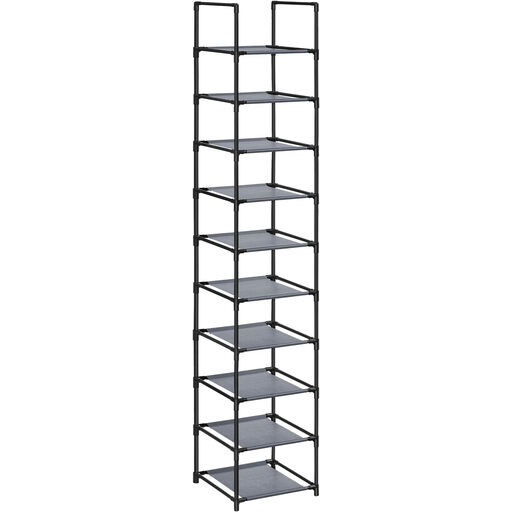
Why this product suits this type of buyer: Its vertical design, measuring 33 × 33 × 173 cm, is ideal for households with lots of shoes and little floor space.
Its small footprint keeps the amount of floor space needed to a minimum. Ten tiers add storage upwards; avoid overloading the rack.
Metal frame, ten tiers and storage for up to 30 pairs of shoes according to the product details. Assembly instructions included.
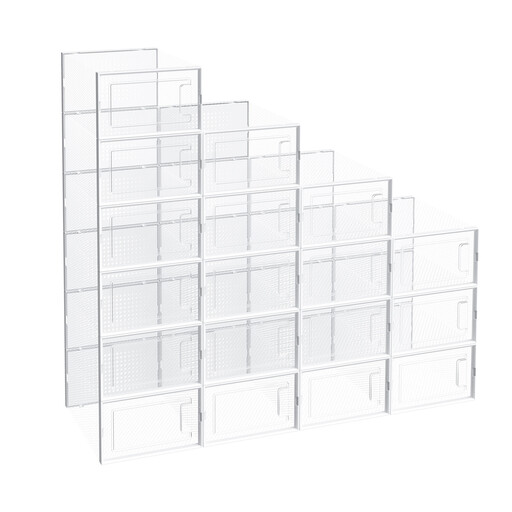
Why this product suits this type of buyer: These boxes work well in wardrobes, on shelves or in the entrance, when you want to store each pair of shoes separately.
Before buying, compare the dimensions of 35 × 25,2 × 19 cm with your shoe size. The transparent front makes it easy to identify what’s inside.
18 stackable boxes made from PP plastic, with front doors and ventilation holes. Assembly required.
We’ve put together a complete, regularly updated list of products that meet these strict selection criteria and fully comply with the safety regulations in force across the EU.
For many hallways, a depth of around 23 to 30 cm is practical. What matters most is how much space remains to walk through once the cabinet is in place, and whether its doors or flaps can open fully. You should also check that the internal dimensions suit the shape of your shoes.
Place the cabinet on a level surface and assemble it according to the instructions. For tall, narrow models, we recommend using the specified wall fixing or anti-tip restraint. Store heavier items in the lower compartments where possible, and never exceed the stated weight limit.
It depends on how you plan to use them. An open shoe rack is ideal for shoes you wear often and need to reach quickly. Stackable shoe boxes make flexible use of the space available and protect individual pairs from visible dust. A closed shoe cabinet for the hallway keeps things looking tidy and provides dedicated compartments, but you’ll need to check the door and internal measurements carefully.